

30-Day Fitness Plan for Veterans: Rebuild Strength
Health, Veterans Fitness, 30-Day Workout, Strength Training
30-Day Fitness Plan for Veterans to Rebuild Strength and Discipline
Transitioning out of the military can feel like stepping into a different world. Your routines shift, your mission changes, and sometimes your physical conditioning takes a back seat to everything else going on. This friendly, practical 30-day fitness plan is designed specifically for veterans who want to rebuild strength, sharpen discipline, and reconnect with their bodies in a safe, sustainable way. Think of it as a mission-focused rehabilitation plan that honors where you've been and supports where you want to go with your fitness goals.
Why a 30-Day Fitness Plan for Veterans Matters
Military life gives you structure, camaraderie, and a clear sense of purpose. When that structure changes, it's completely normal for veterans fitness habits to slip. Maybe you've been dealing with injuries, chronic pain, stress, sleep issues, or just a lack of motivation. None of that means you're weak. It simply means your environment changed, and your body and mind are responding to it.
A structured 30-day workout gives you something familiar: a clear plan, daily tasks, and measurable progress. It's not about trying to relive your basic training days. Instead, it's about building a new foundation of strength and discipline building that fits your current life, responsibilities, and health status. With the right approach, this month can become a powerful reset button for your body and your mindset.
💡 Friendly Reminder: This plan is a guide, not a rigid order. Listen to your body, adjust as needed, and talk with your doctor or VA provider before starting if you have medical concerns or serious injuries.
Setting Realistic Fitness Goals for the Next 30 Days
Before we dive into the day-by-day plan, let's talk fitness goals. You might be used to pushing hard and aiming high, but this 30-day window is about building momentum, not breaking records. Clear, realistic goals keep you motivated and reduce the risk of burnout or injury, especially if this doubles as a rehabilitation plan after time off or medical issues.
Goal 1: Reestablish a daily movement habit. Aim to move with intention at least 20–40 minutes a day, 5–6 days per week.
Goal 2: Improve basic strength and mobility. Focus on foundational strength training moves: squats, pushes, pulls, and core work at a level that feels challenging but safe.
Goal 3: Rebuild discipline one small win at a time. Instead of relying on willpower alone, we'll use structure, routines, and simple tracking to support discipline building.
You can absolutely add your own personal mission, too. Maybe you want to feel confident doing a ruck again, keep up with your kids, reduce back pain, or prepare for a specific physical test. Write your top two or three reasons down and keep them somewhere visible. That clarity will carry you through the days when motivation dips.
Safety First: Turning This into a Smart Rehabilitation Plan
Many veterans carry physical reminders of their service: old sprains, joint issues, back pain, or more serious injuries. That's why this veterans fitness program is intentionally flexible. Think of it as a structured but gentle rehabilitation plan that can be scaled up or down depending on how you feel each day. You're not "falling behind" if you swap an exercise, reduce the reps, or take an extra rest day. You're adapting, which is a skill you already know well.
If an exercise causes sharp pain, stop immediately and choose a gentler alternative (for example, wall push-ups instead of floor push-ups).
Use a pain scale from 1 to 10. Try to stay in the 3–6 range: challenging but tolerable. Anything above that is your cue to modify or rest.
If you have a service-connected disability or are in physical therapy, share this 30-day workout outline with your provider and ask what should be adjusted for you.
📌 Key Takeaway: You're not in basic training anymore. Pushing through serious pain isn't a badge of honor here; smart adjustments are.
The Structure of Your 30-Day Workout Plan
To keep things simple and sustainable, this 30-day fitness plan is broken into three 10-day phases. Each phase builds on the last, gradually increasing your workload while reinforcing discipline building through consistent routines. You can do most of this at home with minimal equipment: a chair, a wall, maybe a set of light dumbbells or resistance bands if you have them.
Phase 1 (Days 1–10): Reset and Reconnect
The first 10 days are about easing your body back into regular movement and reestablishing the mental habit of showing up. Expect lighter strength training, more focus on mobility, and moderate cardio. Your main objective: finish the sessions, not crush them.
Day 1–3: Full-Body Foundations
3 rounds of:10–15 bodyweight squats (use a chair for support if needed)
8–12 incline or wall push-ups
10 glute bridges (lying on your back, lifting hips)
20 seconds of plank (from knees or toes)
Finish with a 10–15 minute walk at a comfortable pace.
Day 4: Active Recovery
20–30 minutes of easy walking, light stretching, or gentle yoga. Focus on breathing and loosening tight areas.Day 5–7: Strength and Stability
3 rounds of:10–12 step-back lunges (hold a wall or chair if needed; swap for squats if lunges hurt)
10 bent-over rows (with light dumbbells, bands, or water bottles)
10–15 standing calf raises
15–20 seconds side plank per side
Add a 10–20 minute walk or light bike ride if you feel up for it.
Day 8: Active Recovery
Gentle movement again. This is where the rehabilitation plan mindset really matters. Let your muscles recover so you can keep progressing.Day 9–10: Light Conditioning
5 rounds of:30 seconds brisk walk or marching in place
30 seconds of bodyweight squats or sit-to-stands from a chair
Rest 60–90 seconds between rounds. Finish with stretching for hips, hamstrings, and shoulders.
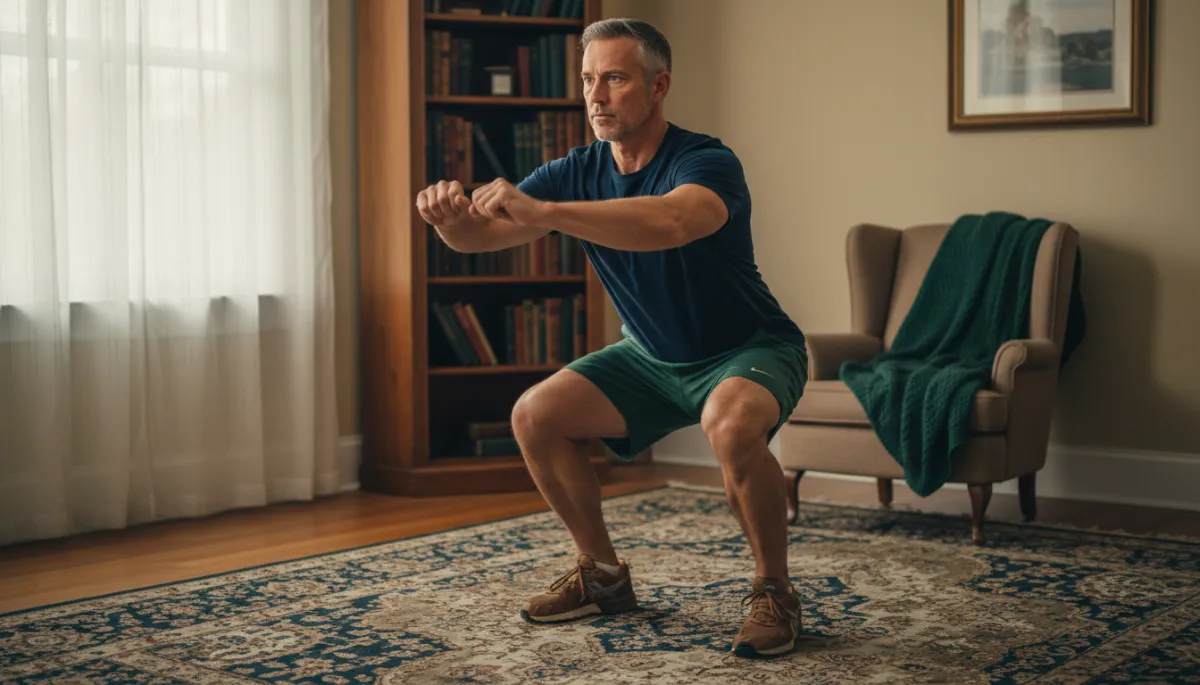
Simple bodyweight movements can safely rebuild strength and confidence in just 30 days.
Phase 2 (Days 11–20): Build Strength and Discipline
By now you've reminded your body what regular movement feels like. Phase 2 leans more into structured strength training and deliberate discipline building. You'll increase intensity slightly while keeping the sessions manageable. The key here is consistency: showing up for yourself day after day, even when the novelty wears off.
Day 11–13: Push–Pull Strength
4 rounds of:10–15 squats or goblet squats (hold a backpack or weight if able)
8–12 push-ups (floor, incline, or wall depending on your level)
10–12 rows (bands, dumbbells, or sturdy backpack)
20–30 seconds plank
Rest 60 seconds between rounds. Aim to keep good form on every rep.
Day 14: Conditioning and Core
6 rounds of:30 seconds brisk walk, light jog, or cycling
30 seconds of alternating reverse lunges or step-ups
Then:
10–15 dead bugs (core exercise lying on your back)
15–20 bird-dogs (on hands and knees, opposite arm and leg lift)
Day 15: Active Recovery and Reflection
Light walk and stretching. Take 5–10 minutes afterward to reflect: What feels stronger? What still feels tight or painful? This reflection is a powerful part of your rehabilitation plan.Day 16–18: Lower-Body Focus
4 rounds of:12–15 squats or sit-to-stands
10–12 hip hinges or Romanian deadlifts (with light weight or backpack if available)
10–12 step-ups per leg (use a sturdy step or low bench)
20–25 seconds wall sit
End with a 10-minute easy walk to flush out your legs.
Day 19: Upper-Body and Core
4 rounds of:8–15 push-ups (any variation)
10–12 overhead presses (bands, dumbbells, or water jugs)
10–15 band pull-aparts or reverse flys (strengthening upper back)
20–30 seconds side plank per side
Day 20: Active Recovery
Gentle movement again. Hydrate well, stretch, and prepare mentally for the final phase of your 30-day workout.
💡 Pro Tip for Discipline Building: Schedule your workouts like appointments. Put them in your calendar, set reminders, and treat them as non-negotiable time for your health.
Phase 3 (Days 21–30): Performance and Confidence
In the final 10 days, you'll notice something powerful: movements that felt awkward or tiring at the start now feel more natural. This phase brings everything together with slightly higher intensity and more purposeful conditioning. It's not about punishment; it's about proving to yourself how far you've come in a short time with a clear veterans fitness strategy.
Day 21–23: Total-Body Circuits
4–5 rounds of:12–15 squats or lunges (alternate each round if you like)
8–12 push-ups
12 rows per arm
20–30 seconds plank
Rest 45–60 seconds between rounds. Move with purpose, focusing on quality over speed.
Day 24: Conditioning Challenge (Scaled to You)
Choose one:20–30 minutes brisk walk or light jog, noting your distance
10 rounds of 30 seconds marching or jogging in place, 30 seconds rest
This is a friendly check-in on your endurance, not a pass/fail test.
Day 25: Active Recovery and Mobility
Focus on longer stretches, controlled breathing, and joint circles for shoulders, hips, knees, and ankles. These details help keep your rehabilitation plan sustainable.Day 26–28: Strength with Intention
4 rounds of:10–12 squats holding weight (if safe for you)
8–10 push-ups with slow, controlled lowering phase
10–12 single-leg Romanian deadlifts (bodyweight or light weight, holding onto a support if needed)
20–30 seconds hollow hold or dead bug for core
This is where your strength training really pays off in terms of balance, control, and everyday power.
Day 29: "Then vs. Now" Check-In
Repeat the workout from Day 1 or Day 2. Notice how your body responds. Are the movements smoother? Is your breathing more controlled? This is a powerful way to see how your 30-day fitness plan has moved you forward.Day 30: Victory Lap and Goal Reset
Choose your favorite workout from the month and repeat it at a comfortable intensity. Afterward, take 10–15 minutes to write down:3 physical changes you've noticed (strength, energy, sleep, mobility)
3 mindset or discipline wins (consistency, confidence, stress relief)
Use these reflections to shape your next set of fitness goals.
Discipline Building: Bringing Your Military Mindset into Civilian Fitness
One of your biggest strengths as a veteran is your ability to follow a mission, even when you don't feel like it. This 30-day workout is a chance to use that same mindset in a kinder, more sustainable way. Instead of barking orders at yourself, think of your inner voice as a supportive squad leader: clear, firm, but on your side.
Create a simple daily ritual. Maybe it's putting on your workout shoes at the same time every day, or doing five deep breaths before you start. Rituals signal to your brain that it's go-time, which supports discipline building.
Use a visible tracker. Mark each completed session on a calendar or in a notebook. Watching the streak grow taps into that same mission-completion satisfaction you felt in uniform.
Plan for low-motivation days. Decide in advance what your "minimum standard" is—maybe a 10-minute walk and 10 squats. On tough days, hit that minimum and call it a win.
📌 Key Takeaway: Discipline isn't about being harsh with yourself. It's about showing up consistently, even when the effort is smaller than you originally planned.
Supporting Your Veterans Fitness Journey: Sleep, Nutrition, and Mindset
A strong veterans fitness program is about more than just reps and sets. Your recovery, nutrition, and mental health all play major roles in how you feel and how well this 30-day plan works for you. You don't need a perfect lifestyle to see progress, but a few small tweaks can make the journey smoother and more rewarding.
Sleep: Aim for 7–9 hours a night if possible. Turn off screens 30 minutes before bed, keep your room cool and dark, and try a simple wind-down routine like light stretching or reading. Better sleep means better recovery and fewer aches.
Nutrition: You don't need a complicated diet plan. Focus on basics: lean protein, colorful vegetables, whole grains, and plenty of water. Try to include a source of protein (like eggs, chicken, beans, or Greek yogurt) in each meal to support your strength training results.
Mental Health: Exercise can help with stress, anxiety, and mood, but it's not a magic cure. If you're dealing with PTSD, depression, or other mental health challenges, consider pairing this plan with counseling or support services through the VA or local organizations. Taking care of your mind is part of your rehabilitation plan too.
Adapting the Plan for Different Ability Levels
No two veterans have the same story, and your 30-day fitness plan should reflect that. Whether you're dealing with joint pain, limited mobility, or you're already fairly active and just need more structure, you can tweak this plan to fit your current level while still honoring your fitness goals.
If you're returning after a long break: Cut the number of rounds in half for the first week, and focus on perfect form rather than intensity. Add rounds gradually as you feel more confident.
If you have joint or back pain: Swap high-impact moves (like lunges) for lower-impact options (like sit-to-stands, step-ups, or wall sits). Keep your core engaged and avoid any movement that causes sharp pain. This is where working with a physical therapist can be a huge asset to your rehabilitation plan.
If you're already fairly fit: Add light weights, shorten rest periods, or add an extra conditioning round to keep the workouts challenging. Just remember, the heart of this program is structure and discipline, not punishment.
What Happens After the 30 Days?
Reaching Day 30 isn't the end of your journey; it's the end of your first mission in this new chapter of veterans fitness. You've proven that you can follow a structured plan, adapt when needed, and rebuild both strength and discipline in a relatively short time. That's something to be genuinely proud of.
From here, you have options. You might repeat the same 30-day workout with slightly higher intensity, explore a gym program, join a local veterans fitness group, or focus on a specific goal like running a 5K, hiking a local trail, or improving your push-up or plank numbers. Whatever you choose, keep the core lessons from this plan in mind:
Consistency beats perfection. Missing a day doesn't erase your progress; getting back on track is what matters.
Small, sustainable changes add up over time. Keep building on the routines that worked for you this month.
Your body deserves respect, not punishment. Let your future strength training and conditioning choices support your long-term health, not just short-term ego.
Final Thoughts: Your Service Continues—with Yourself as the Mission
You've already proven that you can handle demanding challenges, adapt under pressure, and show up for a mission bigger than yourself. This 30-day fitness plan for veterans simply invites you to turn some of that dedication inward—to treat your own health, strength, and well-being as a mission worth your time and energy. Because it is.
Whether you're just getting back into movement or fine-tuning an existing routine, remember that every walk, every set of squats, and every stretch is a vote for the future you want. Your uniform may be hanging in a closet now, but the qualities that made you a strong service member can absolutely make you strong in this next chapter too. One day at a time, one workout at a time, you're rebuilding not just your body, but your confidence and your sense of control.
If you're ready, mark today as Day 1. Lace up your shoes, choose the first workout, and take that first step. Your fitness goals don't have to be perfect—they just have to be yours. And this friendly, structured rehabilitation plan is here to walk beside you for the next 30 days and beyond.