
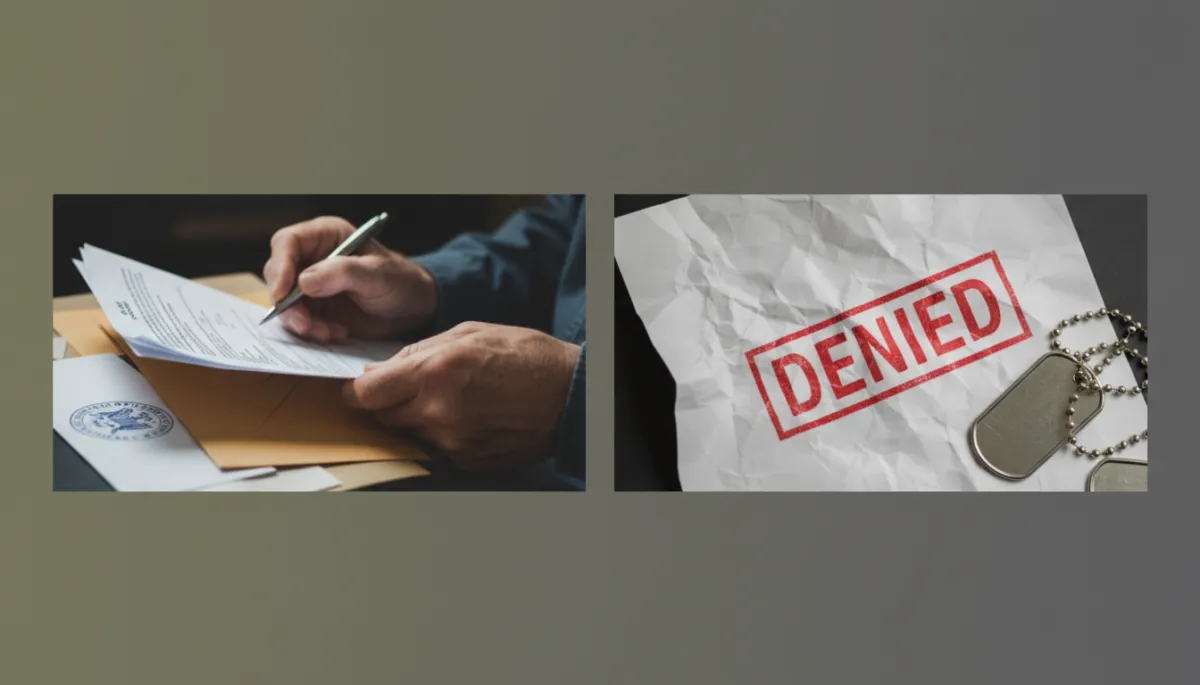
Avoid Mistakes on VA Disability Claims
VA Disability, Veteran Claims, Claim Process, Veteran Benefits
7 Costly Mistakes Veterans Make on VA Disability Claims
If you served this country, you earned every inch of your VA Disability benefits. Yet far too many veterans walk straight into a system designed with red tape, confusing rules, and unforgiving deadlines—and pay the price with denied or underpaid claims. You do not have to be one of them. This guide exposes seven costly Disability Mistakes that quietly wreck Veteran Claims every single day and shows you exactly how to fight back in the claim process.
Why VA Disability Claims Go Wrong So Often
The VA Disability system is not built for speed, clarity, or simplicity. It is a bureaucracy—massive, slow, and unforgiving. When a veteran stumbles on paperwork, misses a deadline, or fails to use the right evidence, the VA rarely gives the benefit of the doubt. Instead, the result is predictable: lowball ratings, endless delays, or outright Disability Denial.
The good news is simple: most of the worst outcomes can be avoided. The seven mistakes below are common, costly, and completely preventable if you approach the claim process with a clear strategy and zero tolerance for sloppiness. You fought too hard to let paperwork beat you now.
Mistake #1: Assuming “The VA Knows My Story”
The VA does not know your story. It knows whatever is written in your records and whatever you submit. That is it. Too many veterans assume their service alone speaks for itself, or that the VA will “connect the dots” between their deployment, their injuries, and their current health. That assumption is deadly to your VA Disability case.
The VA wants three things to grant service connection: an in-service event or injury, a current diagnosed condition, and a medical nexus linking the two. If you do not spell this out clearly, the rater will not do it for you. They are not your advocate; they are an adjudicator following a rigid rule book. When veterans skip details, downplay symptoms, or rely on vague statements, their Veteran Claims crumble before they even reach the decision stage.
📌 Key Takeaway: Treat your claim like a legal case, not a casual conversation. Assume the VA knows nothing about you until you prove it in writing.
How to Fix This Mistake
Write a clear, detailed statement in support of claim explaining what happened, when, where, and how it affects you now.
Use buddy statements from fellow service members or family who saw the impact of your injury or condition over time.
Make sure your medical records, service records, and lay statements tell a consistent story about your disability and your service.
Mistake #2: Filing Sloppy or Incomplete Applications
The VA claim process is brutal on half-finished work. Missing signatures, unchecked boxes, or incomplete medical information can stall your case for months—or worse, lead to a denial that should never have happened. Sloppy applications scream one thing to the VA: “easy to deny.”
When you submit a VA Disability claim, you are putting your health and your income on the line. Treating those forms like an afterthought is a direct hit to your own Veteran Benefits. The VA will not chase you down to fix every error. It will simply move on and leave you waiting for a decision that never had a fighting chance.
What a Strong Application Looks Like
Every condition you are claiming is clearly listed, even if it seems “minor” or secondary to another disability.
You attach or identify all relevant medical records—VA and private—so the rater does not have to guess where to look.
You double-check dates, service information, and contact details so the VA cannot blame “incomplete information” for a delay or denial.
💡 Pro Tip: Before you hit submit, pretend you are the VA rater. Could you understand exactly what the veteran is claiming and why with just the paperwork in front of you? If not, fix it.
Mistake #3: Ignoring the Power of Medical Evidence
Your testimony matters—but medical evidence is what wins VA Disability claims. The VA is obsessed with documentation: diagnoses, test results, treatment notes, and professional opinions. When veterans rely only on their memory and pain tolerance, they hand the VA an easy excuse for Disability Denial: “not enough evidence.”
If your doctor has not formally diagnosed your condition, if your symptoms are not recorded, or if there is no clear statement linking your condition to service, the VA will happily conclude that your disability is not service-connected or not severe enough to justify higher Veteran Benefits. You cannot let that happen.

Close-up of a veteran and a physician in a quiet medical office reviewing a printed VA...
Strong, detailed medical evidence can turn a weak claim into an undeniable case for benefits.
Build Relentless Medical Support for Your Claim
Get current evaluations for every condition you claim—physical and mental. Outdated records give the VA room to downplay your limitations.
Ask your providers to clearly document how your condition limits your work, daily activities, sleep, relationships, and overall functioning.
When possible, secure an independent medical opinion that directly states your condition is “at least as likely as not” related to your service. Those words matter in VA language.
Mistake #4: Downplaying Symptoms at C&P Exams
Veterans are trained to push through pain, minimize weakness, and never complain. That mindset saves lives in combat—and destroys VA Disability ratings back home. The Compensation & Pension (C&P) exam is where many Veteran Claims live or die. If you sugarcoat your symptoms for the examiner, you are handing the VA ammunition to cut your rating or deny your claim entirely.
The VA is not rating how tough you are. It is rating how disabled you are according to strict criteria. Saying “I’m fine” when you are not, or insisting “it’s not that bad” when it wrecks your sleep or your job, tells the examiner your condition is mild. The result? Lower Veteran Benefits and a claim decision that does not reflect your reality.
How to Show the Truth Without Exaggeration
Before the exam, write down your worst days—how far you can walk, how often you wake up, how frequently you have panic attacks or flare-ups. Bring that list with you.
Answer every question based on your average or worst days, not your best days. The VA needs to know how bad it really gets.
If something hurts, say it. If you need help dressing, bathing, or walking, say it. This is not the time for pride; it is the time for blunt honesty.
⚠️ Warning: If you miss a scheduled C&P exam without a solid reason, the VA can deny your claim outright. Show up. On time. Prepared.
Mistake #5: Failing to Connect Secondary Conditions
Many veterans lock in on the most obvious injury—bad knee, back pain, tinnitus—and completely ignore the chain reaction those conditions trigger. Depression from chronic pain, sleep apnea aggravated by weight gain from limited mobility, nerve damage from surgery—all of these can be secondary disabilities tied to your primary service-connected condition. Ignoring them is a direct hit to the VA Disability rating you deserve.
The VA claim process allows you to build a connected web of conditions that all stem from your service. When you fail to claim secondary conditions, you leave money on the table, reduce long-term Veteran Benefits, and weaken your overall case. Worse, if you never document them, it becomes harder to connect them later when they get worse—as they often do.
Spot and Claim Your Secondary Disabilities
Ask yourself: what new health problems started or worsened because of my primary service-connected condition or the medication I take for it?
Talk to your doctor about whether those issues are medically linked. Request that connection be clearly documented in your records and, if possible, in a written opinion.
File claims for those secondary conditions with the same intensity as you did for the primary disability. They count. They add up. They matter.
Mistake #6: Letting Deadlines and Decisions Slide
The VA loves time limits. You have strict windows to appeal, submit new evidence, or challenge a Disability Denial. Miss those windows, and you may have to start from scratch with a new claim, losing months or years of potential back pay. Too many veterans toss a decision letter in a drawer, tell themselves they will “deal with it later,” and quietly surrender their rights by doing nothing.
The VA’s letter is not the final word unless you let it be. If your rating is too low, if the claim process was sloppy, or if the VA ignored key evidence, you have every right to push back—but only if you act fast. Silence equals acceptance in the VA world, and that silence can cost you thousands of dollars in lost Veteran Benefits.
Take Aggressive Control of Your Deadlines
As soon as you receive a decision, read it line by line. Do not just look at the percentage—study the reasoning, the evidence cited, and what the VA ignored or misunderstood.
Mark your calendar with every appeal deadline. Do not rely on memory. Treat those dates like mission-critical objectives.
If you disagree with the decision, move quickly—file a Higher-Level Review, submit a Supplemental Claim with new evidence, or appeal to the Board. Waiting rarely helps; it usually hurts.
📌 Key Takeaway: The VA counts days. You should too. Every missed deadline is a gift to the bureaucracy and a blow to your financial future.
Mistake #7: Trying to Fight the System Alone
You were trained for combat, not for navigating federal benefits law. The VA Disability system is packed with rules, regulations, and case law that change constantly. Walking into that maze alone is like going into battle without intel, backup, or a plan. Some veterans get lucky. Many more get crushed with confusing letters, endless delays, and repeated Disability Denial that could have been avoided with the right support.
You are allowed to have help. Accredited Veteran Service Officers (VSOs), experienced VA-accredited attorneys, and knowledgeable claims agents exist for one reason: to help you win the Veteran Benefits you earned. Trying to “go it alone” may feel independent, but it is often the costliest mistake in the entire claim process.
Build a Strong Support Team Around Your Claim
Connect with a reputable VSO from organizations like DAV, VFW, American Legion, or state and county veteran offices. They live and breathe VA Disability rules every day.
For complex or long-denied claims, consider working with an VA-accredited attorney who focuses on Veteran Claims and only gets paid if you win back pay on appeal.
Involve your family. They see the day-to-day impact of your disabilities and can provide powerful lay statements that back up your case.
Turning Disability Denial into a Strategic Comeback
A VA Disability denial is not a verdict on your service, your integrity, or your injuries. It is a bureaucratic decision based on the evidence in front of a rater at one moment in time. That decision can be challenged, broken apart, and overturned—but only if you refuse to treat it as the end of the road. Many of the strongest Veteran Claims started as flat rejections and turned into life-changing awards on appeal.
When you receive a Disability Denial, your first job is not to get angry; it is to get focused. Where did the VA say your claim fell short? Lack of medical evidence? No nexus? “Condition not severe enough”? Every reason they give is a target you can attack with stronger evidence, better documentation, and clearer arguments in the next stage of the claim process.
Appeal with Precision, Not Emotion
Match your appeal path to your situation: Higher-Level Review if the VA misapplied the law or ignored evidence; Supplemental Claim if you have new and relevant evidence; Board appeal if you need a deeper review.
Attack the denial point by point. If they said “no diagnosis,” get the diagnosis. If they said “no nexus,” secure a medical opinion. If they said “mild symptoms,” provide detailed statements and records proving otherwise.
Stay relentless. The VA counts on veterans getting tired and giving up. The ones who win are the ones who refuse to walk away.
Own Your Claim Process from Day One
You cannot control how fast the VA moves. You cannot control which rater gets your file. But you can absolutely control how strong, organized, and undeniable your VA Disability claim is when it lands on that desk. That is your battlefield now—and it demands the same discipline, preparation, and persistence you brought to your service.
Avoiding the seven costly Disability Mistakes is not complicated, but it does require intention: tell your story clearly, file complete applications, stack your medical evidence, be brutally honest at exams, claim secondary conditions, hit every deadline, and get the right help. Do those things, and you radically increase your odds of securing the Veteran Benefits you earned—not the watered-down version the system tries to hand you.
💡 Pro Tip: Treat your claim like a mission. Set objectives (evidence, forms, deadlines), track your progress, and refuse to accept half-measures. Your future income and your family’s stability depend on it.
Your Service Was Bold. Your Claim Should Be Too.
The VA Disability system will not hand you anything. It will not reward silence, humility, or patience alone. It responds to evidence, persistence, and veterans who refuse to be brushed aside. You already proved your courage in uniform. Now you need that same boldness on paper, in exams, and in every step of your Veteran Claims journey.
Do not let bureaucracy rewrite the story of your service. Do not accept a rating that ignores your reality. Do not walk away from a Disability Denial that can be overturned. You earned these Veteran Benefits the hard way. Stand your ground, build an unshakable claim, and make the VA live up to its promise—because you have already lived up to yours.
Ready for backup on your claim? Get step-by-step support and resources at www.warriorbenefits.com.