

Avoid VA Claim Mistakes: Plan Your Filing Strategy
VA Claims, Filing Mistakes, Claim Planning, Veteran Benefits
Filing Without a Plan: The Biggest VA Claim Mistake Veterans Keep Making
If you’re thinking about filing a VA claim by “just getting something in,” stop right now. Walking into the VA claims process without a clear, aggressive plan is the fastest way to get denied, underrated, and stuck in appeals for years. In this guide, you’ll see exactly why filing without a plan is the biggest VA claim mistake—and how to take control of your Veteran benefits with intention, strategy, and zero apologies.
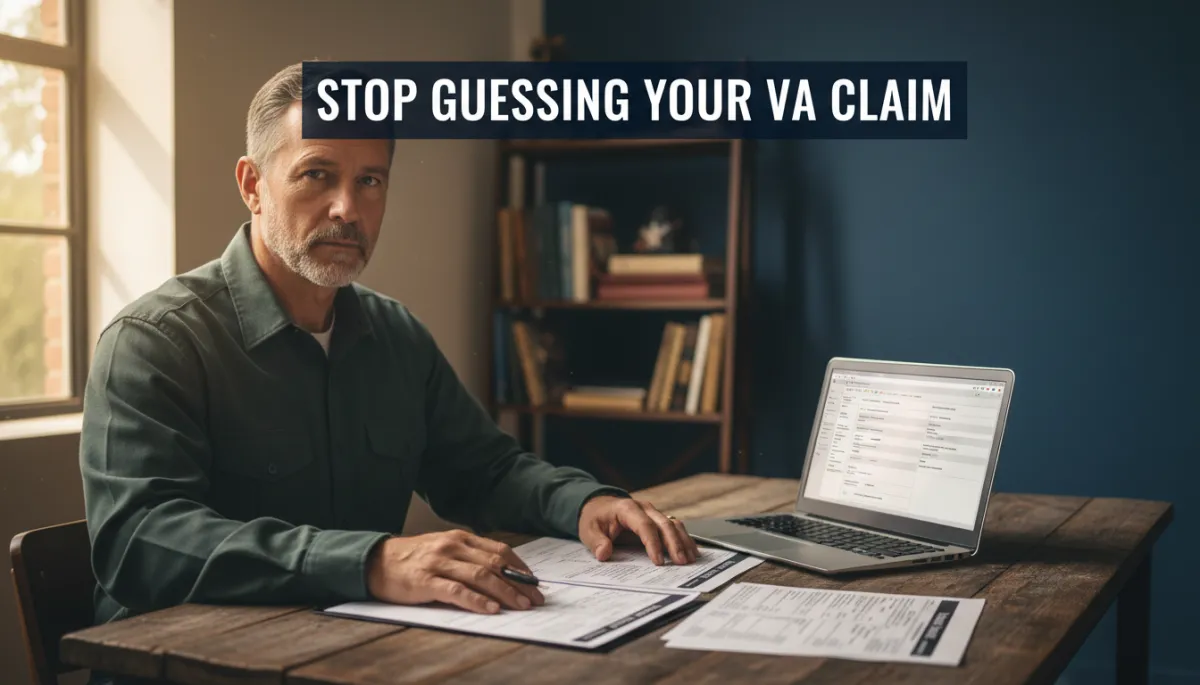
Scene of a determined veteran at a wooden desk, paperwork and laptop open with VA claim forms...
The Hard Truth About VA Claims: Hope Is Not a Strategy
The VA claims system is not built on sympathy. It’s built on evidence, rules, and deadlines. You can be a combat veteran with a stack of injuries and still walk away with a denial if your claim is sloppy, incomplete, or unfocused. That’s why “just file and see what happens” is not only weak—it’s dangerous to your long-term Veteran benefits.
Every VA claim you file becomes part of your record. Every denial, every lowball rating, every missed condition you should have claimed can haunt you later. When you submit without a plan, you’re essentially asking the VA to guess what you meant, what you deserve, and how bad your conditions really are. That’s not a strategy; that’s surrender.
📌 Key Takeaway: The VA pays what you can prove, not what you feel. Planning your claim is how you bridge that gap.
What “Filing Without a Plan” Really Looks Like
Filing without a plan isn’t just about rushing. It shows up in specific, costly filing mistakes that crush VA claims every single day. If any of these sound familiar, you’re walking straight into trouble:
Submitting a claim with vague statements like “back issues” or “knee pain” and no real detail or strategy behind them.
Relying only on VA to “pull your records” instead of gathering and organizing your own medical evidence and lay statements.
Filing for conditions you “think” might be connected without understanding how service connection actually works.
Ignoring secondary conditions—like depression from chronic pain or sleep problems from PTSD—that could significantly increase your rating.
Walking into a C&P exam with no preparation, no notes, and no idea what the examiner is actually evaluating.
These aren’t minor claim submission errors. They’re structural problems that start with one root issue: no claim planning. You wouldn’t walk into a legal battle, a job interview, or a mission without preparation. Your VA claim deserves the same level of discipline and focus—if not more.
Why Planning Your VA Claim Is Non-Negotiable
Let’s be blunt: Claim planning is power. When you plan your VA claim, you stop reacting and start leading. You decide:
Which conditions you’re claiming—and why.
What evidence you need to back each condition—service records, medical records, buddy statements, private doctor opinions, and more.
How your conditions are connected—direct, secondary, or aggravated by service.
What rating level you’re realistically targeting based on the rating criteria, not wishful thinking.
The VA is not going to build that case for you. That’s your job. If you don’t take control of your VA claim, the system will gladly process your file, stamp it with a low rating or denial, and move on. Meanwhile, you’re left with less income, less healthcare, and less stability than you earned through your service.
💡 Pro Tip: Before you even open the VA application, write down every condition you believe is connected to service and how it affects your daily life. That list is the foundation of your claim planning.
The Cost of Filing Mistakes: What’s Really at Stake
When you make preventable VA filing mistakes, you’re not just risking a little frustration—you’re risking years of lost Veteran benefits. A denied or underrated claim can mean:
Hundreds or even thousands of dollars every month that never hit your bank account.
Lost back pay that could have covered debts, medical bills, or a more stable life for your family.
Reduced access to healthcare, mental health support, and other critical services tied to your rating level.
A longer, more complicated appeal process that drains your time, energy, and patience.
This isn’t about being greedy. It’s about demanding the full measure of Veteran benefits you earned. You paid for those benefits with your time, your body, your mental health, and sometimes your blood. Filing without a plan is like walking away from that investment and hoping someone else will fight for you. They won’t. You must fight for yourself—smartly and relentlessly.

A single rushed claim can cost a family years of hard-earned VA compensation.
The Three Pillars of a Strong VA Claim Plan
A powerful VA claim isn’t an accident. It stands on three solid pillars: strategy, evidence, and execution. Ignore any one of these, and you’re back to guessing. Nail all three, and you give yourself a real shot at the rating you deserve.
1. Strategy: Know Exactly What You’re Claiming and Why
Start with a brutal, honest inventory of your health. Not just what hurts today, but what has changed since you served. Then ask:
Which conditions clearly started in service or right after?
Which conditions got worse because of service or a service-connected issue?
Which mental health or secondary conditions are you ignoring out of habit or pride?
A strong strategy groups your conditions into direct, secondary, and aggravated claims. You’re not just throwing everything at the wall—you’re connecting the dots and showing the VA a clear, logical picture. That’s how you avoid random filing mistakes and build a claim that actually makes sense on paper.
2. Evidence: Build a File That Demands Respect
The VA lives and dies by evidence. If it’s not in your file, it may as well not exist. That means your claim planning must include a ruthless evidence checklist for every condition:
Service records showing events, injuries, or exposures tied to your condition.
Medical records from VA and private providers documenting diagnosis, treatment, and ongoing symptoms.
Lay statements from you, family members, or fellow service members describing how your condition started and how it affects you now.
Nexus letters or medical opinions when the connection between service and your condition isn’t obvious.
Weak claims say, “I’m hurting.” Strong claims say, “Here’s the diagnosis, here’s the service event, here’s the medical opinion connecting them, and here’s how it limits my daily life.” That’s the difference between a denial and an approval. That’s the difference between a 10% rating and a 70% rating. Evidence is where you stop hoping and start proving.
3. Execution: Submit Like a Professional, Not a Guess
Even a solid strategy and strong evidence can fall apart if your execution is sloppy. This is where many Veterans make avoidable claim submission errors that sabotage good cases. Execution means:
Filling out every section of the VA application completely and accurately—no blanks, no contradictions, no lazy answers.
Clearly listing each claimed condition, not lumping everything into vague categories like “joint issues” or “mental health problems.”
Uploading supporting evidence in an organized way, labeled and easy to connect to each condition.
Preparing for C&P exams with notes, examples, and the courage to be brutally honest about your worst days.
Execution is where you stop being casual and start acting like your own best advocate. This is your life, your health, your income. Treat your VA claim like it matters—because it absolutely does.
Brutally Honest VA Application Tips You Can Use Today
If you’re serious about avoiding the biggest VA claim mistake—filing without a plan—then you need more than motivation. You need clear, unapologetic VA application tips you can put to work right now. Here they are, no sugarcoating:
Stop downplaying your symptoms. The VA rates what you report. If you minimize your pain, your panic attacks, your sleep issues, or your limitations, don’t be surprised when your rating is low. This is not the time to “tough it out.”
Document your worst days, not your best. When you describe your condition, focus on how bad it gets and how often. That’s what drives ratings. “Sometimes it hurts” is weak. “Three days a week I can’t stand longer than 10 minutes” is powerful and specific.
Use lay statements like a weapon. Your spouse, kids, coworkers, and battle buddies see what you live with. Their words can confirm how your conditions affect your work, relationships, and daily life. Don’t leave that power on the table.
Don’t ignore mental health. PTSD, depression, anxiety, and other invisible wounds are real and often devastating. If service changed how you sleep, feel, trust, or function, that belongs in your claim. You’re not weak for saying it—you’re smart for claiming it.
Treat your C&P exam like a formal evaluation. Show up on time. Bring notes. Be honest, detailed, and consistent. This exam isn’t a friendly chat; it’s evidence that will heavily influence your rating. Take it seriously or pay for it later.
📌 Key Takeaway: Every conversation, every form, every exam is evidence. Speak and write like your benefits depend on it—because they do.
Common Claim Submission Errors That Destroy Good Cases
Even Veterans who try to plan their VA claims can get tripped up by classic claim submission errors. Don’t let these rookie moves wreck your hard work:
Submitting incomplete forms. Missing dates, vague timelines, and blank sections give the VA room to question your story or delay your decision. Fill everything out like you’re under inspection—because you are.
Assuming VA already “has everything.” Never assume. If a record matters, get it and upload it. Your future shouldn’t depend on someone else pulling the right file from the right system at the right time.
Not updating your address or contact information. Missed letters and exam appointments can tank your claim. Keep your info current or watch your case stall for no good reason.
Submitting new evidence randomly during the process. Evidence is good, but chaos is not. Dumping documents at random times can slow your claim and create confusion. Plan your evidence and submit it strategically when possible.
These errors are avoidable. They’re not about your service; they’re about your process. Clean up the process, and you give your VA claim a fighting chance to succeed.
Claim Planning = Respecting Yourself and Your Service
Some Veterans hesitate to plan their claims because they don’t want to feel like they’re “working the system.” Let’s be absolutely clear: you’re not gaming anything. You’re navigating a complex process that was never designed to be simple. Claim planning isn’t cheating—it’s respecting yourself enough to show up prepared.
You wouldn’t walk onto a range without checking your gear. You wouldn’t deploy without a briefing. Why would you file for life-changing Veteran benefits without a plan? This isn’t about pride. It’s about survival, stability, and taking care of the people who depend on you.
“You earned these benefits the hard way. Planning your claim is how you make sure the VA recognizes that—on paper and in your bank account.”
A Simple, Bold Blueprint for Your Next VA Claim
Ready to stop guessing and start planning? Use this straightforward blueprint to take control of your next VA claim from day one:
List every condition. Physical, mental, primary, secondary—if it affects your life and you believe service played a role, write it down. No filtering yet. Be honest and complete.
Map each condition to service. For every item on your list, answer: When did it start? What happened in service? What records or witnesses could back this up? This is where your claim planning comes to life.
Gather targeted evidence. Don’t just collect paperwork—collect proof. Service records, medical reports, lay statements, and nexus letters all have a purpose. Match each piece of evidence to a specific condition like you’re building a case file in court.
Study the rating criteria. Look up the VA’s rating schedule for your conditions. Understand what separates a 10% rating from a 50% rating. Then describe your symptoms in terms that match those criteria—truthfully and clearly.
Prepare for the C&P exam ahead of time. Write down examples of how your conditions affect your daily life—work, family, sleep, mobility, concentration, mood. Walk into the exam with those examples ready. Don’t rely on memory when the pressure is on.
💡 Pro Tip: Treat your VA claim like a mission file. Organize your documents, label everything, and keep digital and paper copies. Chaos costs you time—and potentially money.
Stop Filing Blind. Start Fighting Smart.
Filing VA claims without a plan is the biggest mistake too many Veterans keep repeating. It leads to denials, low ratings, endless appeals, and years of frustration that could have been avoided with a bold, organized approach from day one. You deserve better than that—and you have the power to demand better.
Your service was not casual. Your injuries are not casual. Your benefits should not be handled casually either. Build a plan. Own your evidence. Execute your VA application with precision. Refuse to let filing mistakes or claim submission errors be the reason your family lives with less than you earned.
You carried the weight when it mattered most. Now it’s time to carry that same determination into your VA claims. No more guessing. No more hoping. No more filing without a plan. Step up, get organized, and fight—boldly—for every single Veteran benefit you’re entitled to.
Ready for expert help planning your next claim? Visit www.warriorbenefits.com to get guidance before you file.