

Avoid Common Mistakes in Veterans Benefits Filing
Veterans Benefits, Filing Mistakes, Veteran Claims
Common Mistakes Veterans Make When Filing for Benefits — And How to Stop Leaving Money on the Table
You served. You sacrificed. You earned every dollar and every ounce of support baked into Veterans Benefits. Yet too many veterans get shortchanged not because they don’t qualify, but because of avoidable filing mistakes, weak benefit applications, and preventable common errors in their veteran claims. This guide calls those mistakes out—plain, bold, and unfiltered—so you can fight for what’s yours and win.
The Hard Truth: The System Won’t Hand You Anything
Let’s be blunt: the VA system is complex, slow, and unforgiving of sloppy paperwork. It is not built to chase you down and make sure you get every benefit you deserve. If your benefit application is incomplete, unclear, or missing key evidence, the system simply moves on. That means you must be sharper than the process. Veterans Support exists, but it only works when you use it strategically and avoid the common errors that sink too many veteran claims before they even get off the ground.
This isn’t about gaming the system. It’s about refusing to let red tape erase your service. You earned these Veterans Benefits in uniform. Now you have to fight for them on paper—with the same determination you brought to the field, the flight line, the ship, or the watch floor.
Mistake #1: Waiting Too Long to File Your Claim
One of the biggest filing mistakes veterans make is simple: they wait. They tough it out. They tell themselves, “I’m fine,” or “Others have it worse,” or “I’ll get around to it when life calms down.” Meanwhile, medical records get harder to track, symptoms worsen, and deadlines creep up and pass. That delay can cost years of back pay and even eligibility for certain Veterans Benefits altogether.
📌 Key Takeaway: The clock is not your friend. File early, even if your claim isn’t perfect yet. You can always submit more evidence later, but you can’t rewind the effective date once it’s set.
If you notice a condition that started in service or shortly after—pain, hearing loss, nightmares, breathing issues—do not wait for it to “get bad enough.” By the time you decide to file, you may be fighting uphill to prove that your current problems are connected to your time in uniform. Filing early plants a flag in the ground and says: this started here, and I’m not letting it be ignored.
Mistake #2: Assuming the VA Will “Fill in the Gaps” for You
Too many veterans believe the VA will automatically hunt down every medical record, every deployment note, every piece of evidence needed to win their veteran claims. That’s a fantasy—and a costly one. Yes, the VA has a duty to assist, but that duty has limits. If you hand them a vague benefit application with missing dates, unclear conditions, and no supporting evidence, they’ll process exactly what they have and move on. You’ll be left with a denial or a low rating and a long appeal ahead of you.
You must be your own lead investigator. Track down your service treatment records. Request your private medical records. Keep copies of everything. When you rely on the system to do the heavy lifting, you’re handing control of your future to strangers buried in caseloads. Take it back. Build your file like your benefits depend on it—because they do.
💡 Pro Tip: Keep a dedicated folder—physical or digital—for your Veterans Benefits documents. Every exam, letter, and form goes there. Organized veterans win more often because they can respond fast and accurately.
Mistake #3: Downplaying or Minimizing Your Symptoms
You were trained to suck it up and drive on. That mindset keeps units moving, but it destroys benefit applications. At Compensation & Pension exams and on VA forms, countless veterans shrug off serious problems: “It’s not that bad.” “I can still work.” “Other people have it worse.” That humility might be honorable, but on a veteran claim, it is deadly. The VA rates based on how your condition affects your daily life, not how tough you are about it.
When you minimize your symptoms, the record shows a watered-down version of your reality. The result? Lower ratings, fewer Veterans Benefits, and less support for your family. You don’t have to exaggerate—but you must be brutally honest. If you can’t sleep more than two hours without waking up in a panic, say that. If your knees make stairs a battlefield, say that. If your migraines knock you out twice a week, say that. This is not complaining. This is documenting the truth so the system can’t pretend you’re fine when you’re not.
“You’re not asking for a favor. You’re demanding what you’ve already earned.”
Mistake #4: Ignoring the Power of Nexus Letters and Medical Opinions
Many veteran claims get denied for one brutal phrase: “No nexus established.” In plain language, the VA is saying, “We don’t see a clear medical link between your current condition and your military service.” That’s where a strong nexus letter or medical opinion becomes a game changer. One of the most damaging filing mistakes is assuming your diagnosis alone is enough. It’s not. You need a medical professional to connect the dots—explicitly and in writing.
A powerful nexus letter states that your condition is “at least as likely as not” related to your service, and it explains why using your records, history, and medical reasoning. Too many veterans skip this step, hoping the VA will connect the dots on its own. Don’t hope. Force the connection with clear, professional evidence. It’s one of the strongest forms of Veteran Support you can secure for your own case.
📌 Key Takeaway: If your claim hinges on proving a service connection, a well-written nexus letter can be the difference between denial and approval. Treat it as a mission-critical document, not a bonus.
Mistake #5: Submitting Sloppy or Incomplete Forms
It sounds basic, but incomplete or messy forms are one of the most common errors in benefit applications. Missing signatures, skipped questions, wrong Social Security numbers, unclear addresses—these small errors can trigger delays, requests for more information, or outright denials. When you treat your VA paperwork like an afterthought, the system treats your claim the same way: as something that can wait.
Slow down. Double-check every line. Make sure your conditions are clearly listed, your contact information is current, and your supporting documents are attached and labeled. If a form confuses you, don’t guess. Ask for Veteran Support from a Veterans Service Officer (VSO), an accredited representative, or a trusted organization. You wouldn’t submit a half-finished mission report; don’t submit a half-finished claim and expect a full result.
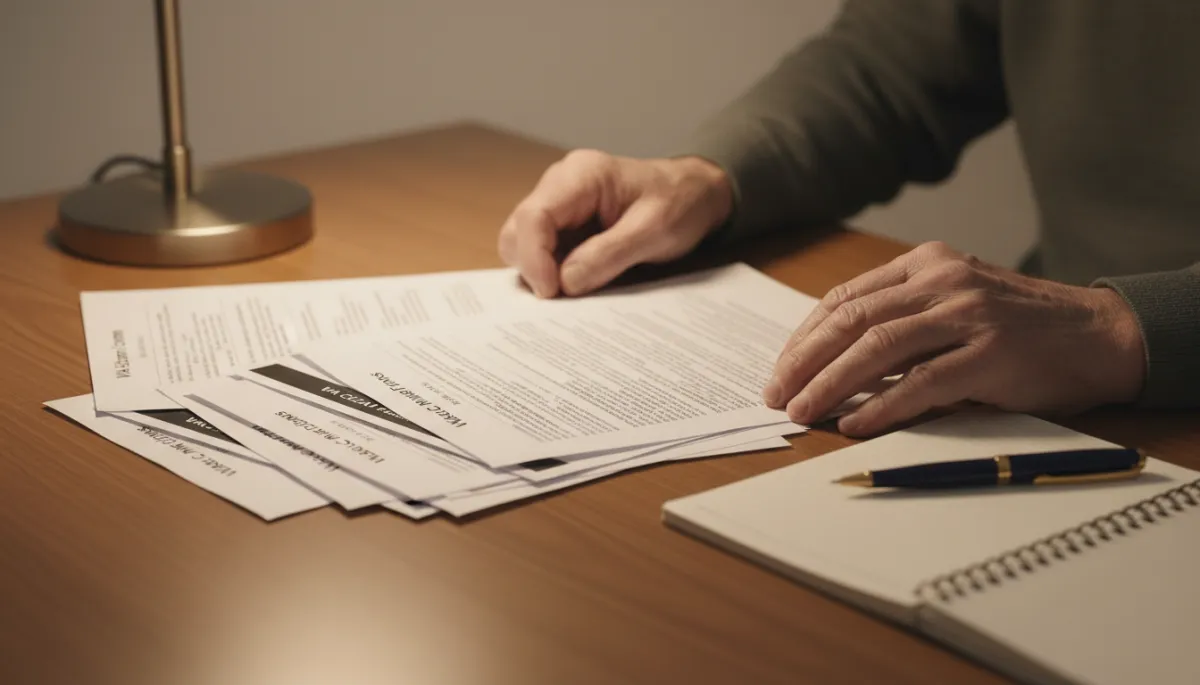
Close-up of a veteran’s hands neatly organizing VA claim forms and medical records on a wooden...
Clean, complete paperwork turns a chaotic claim into a winnable veteran case.
Mistake #6: Not Tracking How Your Conditions Impact Daily Life and Work
The VA doesn’t rate diagnoses; it rates impairment. That means your benefit application must show not just what you have, but how it hits your life. Another common filing mistake is failing to document the everyday impact of your conditions. If your back pain forces you to miss work, if anxiety keeps you from crowded places, if tinnitus makes sleep a battle—you need that written down, in detail, and consistently over time.
Start a symptom journal. Note dates, severity, triggers, and how each episode affects your job, relationships, and basic tasks. Bring that journal to medical appointments and include it with your veteran claim. When the VA sees a clear pattern, backed by real-world impact, it becomes much harder for them to downplay your condition or lowball your rating. Raw, specific details beat vague statements every time.
💡 Pro Tip: Use phrases like “I can no longer,” “I must avoid,” and “I frequently miss” when describing impact. These statements draw a direct line between your condition and functional loss—which is exactly what the VA rates.
Mistake #7: Ignoring Mental Health or Treating It as “Secondary”
Physical injuries are easier to point at, but mental health conditions can be just as disabling—and just as compensable. Too many veterans file claims only for what they can see: knees, backs, hearing, lungs. They ignore PTSD, depression, anxiety, or moral injury because they don’t want a label or they think it makes them look weak. That silence is one of the most destructive common errors in veteran claims today.
Mental health is not “secondary.” It is central to your quality of life and your eligibility for Veterans Benefits. If you’re waking up in cold sweats, snapping at your family, avoiding crowds, or drinking to cope, you owe it to yourself to get evaluated and to include those conditions in your benefit application. The VA cannot rate what you refuse to acknowledge. Speaking up is not weakness; it’s strategy. It’s Veteran Support in its most personal form—backing yourself up.
“You carried the weight in silence long enough. The claim is where you drop it.”
Mistake #8: Fighting Alone and Refusing Veteran Support
You know how to handle things on your own. That independence kept you alive and effective. But when it comes to navigating Veterans Benefits, going solo can be a tactical mistake. The rules, forms, deadlines, and legal language around veteran claims are built like a maze. There are people whose entire mission is to guide you through it—VSOs, accredited attorneys, and nonprofit Veteran Support organizations. Ignoring that help out of pride or frustration is like walking into a complex operation without a map or a team.
Getting help doesn’t make you less capable. It makes you more dangerous—in the best way—to a system that counts on veterans giving up. A seasoned representative knows which common errors to avoid, how to frame evidence, when to appeal, and what language the VA responds to. Use that expertise. You wouldn’t send a new recruit into combat without training; don’t send yourself into the VA system without backup.
📌 Key Takeaway: Asking for help with your claim is not surrender—it’s strategy. Treat Veteran Support like an asset, not a last resort.
Mistake #9: Giving Up After the First Denial or Low Rating
Here’s a harsh reality: many strong claims get denied the first time. Not because the veteran is wrong, but because the system is slow, overloaded, and sometimes just plain wrong. One of the most damaging filing mistakes is treating that first denial letter as a final verdict instead of what it really is: round one. The VA counts on you being tired, confused, or discouraged enough to stop fighting. That’s how earned Veterans Benefits die quietly in file cabinets instead of landing in your bank account and your medical records.
Don’t give them that win. Read the decision letter line by line. Identify why they denied or underrated you. Was it lack of evidence? No nexus? A misunderstanding of your symptoms? Then reload your claim with stronger documentation, medical opinions, buddy statements, and clear impact statements. Use the appeal options available to you. When you treat a denial as intel instead of a defeat, your next move gets sharper—and your odds get better.
💡 Pro Tip: Mark appeal deadlines on a calendar the day you receive a decision. Missing those dates is one of the most painful common errors—and it’s 100% preventable.
Mistake #10: Not Claiming Secondary and Related Conditions
Many veterans file for one primary condition and stop there. Back injury. Tinnitus. Knee damage. But the body and mind don’t work in isolation, and neither should your veteran claims. A back injury can lead to nerve pain, depression, or sleep problems. Tinnitus can trigger anxiety or insomnia. Knee damage can cause hip or back issues. When you fail to claim these secondary conditions, you leave serious Veterans Benefits on the table and understate the real impact of your service-connected problems.
Don’t let the VA pretend your conditions live in separate boxes. If one service-connected issue causes or worsens another, that secondary condition can and should be part of your benefit application. Talk to your providers. Ask them to document how your conditions interact. Then claim them—boldly and clearly. Your rating should reflect the full picture, not a sanitized version that makes your life look easier than it is.
Turning Filing Mistakes into a Strong, Strategic Claim
Let’s pull this together. The most common mistakes veterans make when filing for benefits are not about laziness or entitlement—they’re about not being shown how the game is really played. You weren’t trained to navigate federal bureaucracy; you were trained to complete the mission. So here’s your new mission, laid out in clear steps, to turn a weak claim into a powerful, strategic veteran claim that demands attention:
File early. Don’t wait for your conditions to get worse or your memory to fade. Start the benefit application as soon as you suspect a service connection.
Gather your records. Service treatment records, deployment notes, private medical records, civilian ER visits—pull them all into one place.
Document your reality. Keep a symptom journal. Write down how your conditions hit your work, family, sleep, and daily tasks.
Secure strong medical opinions. Ask providers for clear, written statements connecting your conditions to your service when appropriate.
Use Veteran Support. Work with a VSO or accredited representative who understands the traps and common errors in VA paperwork.
Review everything before you submit. No missing signatures, no blank sections, no vague answers. Treat your forms like a legal document—because they are.
Refuse to quit after a denial. Use decision letters as intel, not as a stop sign. Appeal with better evidence and sharper arguments.
You Fought for Your Country. Now Fight for Your Benefits.
Here’s the bottom line: Veterans Benefits are not charity. They are part of the contract this country made with you when you raised your right hand. Every time a veteran walks away from a claim because the paperwork is confusing or the first answer is “no,” that contract gets weaker. Every time a veteran pushes back—armed with knowledge, documentation, and support—that contract gets enforced.
Stop letting filing mistakes, incomplete benefit applications, and avoidable common errors steal what you’ve earned. Build your veteran claims like a mission plan: precise, documented, and relentless. Pull in Veteran Support like a squad, not an afterthought. Be brutally honest about your symptoms. Demand clear medical opinions. And when the system drags its feet, you plant yours and push harder.
📌 Final Mission: Within the next week, take one concrete step—request records, start a journal, contact a VSO, or file an initial claim. Action beats frustration every single time.
You didn’t back down when it mattered most in uniform. Don’t back down now. The benefits you secure today aren’t just for you—they’re for your family, your future, and every veteran who comes after you. Make the system do its job. File boldly. Fight smart. And don’t stop until your record—and your compensation—finally match the truth of your service.
💡 Ready for Backup? If you want experienced help strengthening your claim and avoiding costly mistakes, visit www.warriorbenefits.com and get support on your next move.