
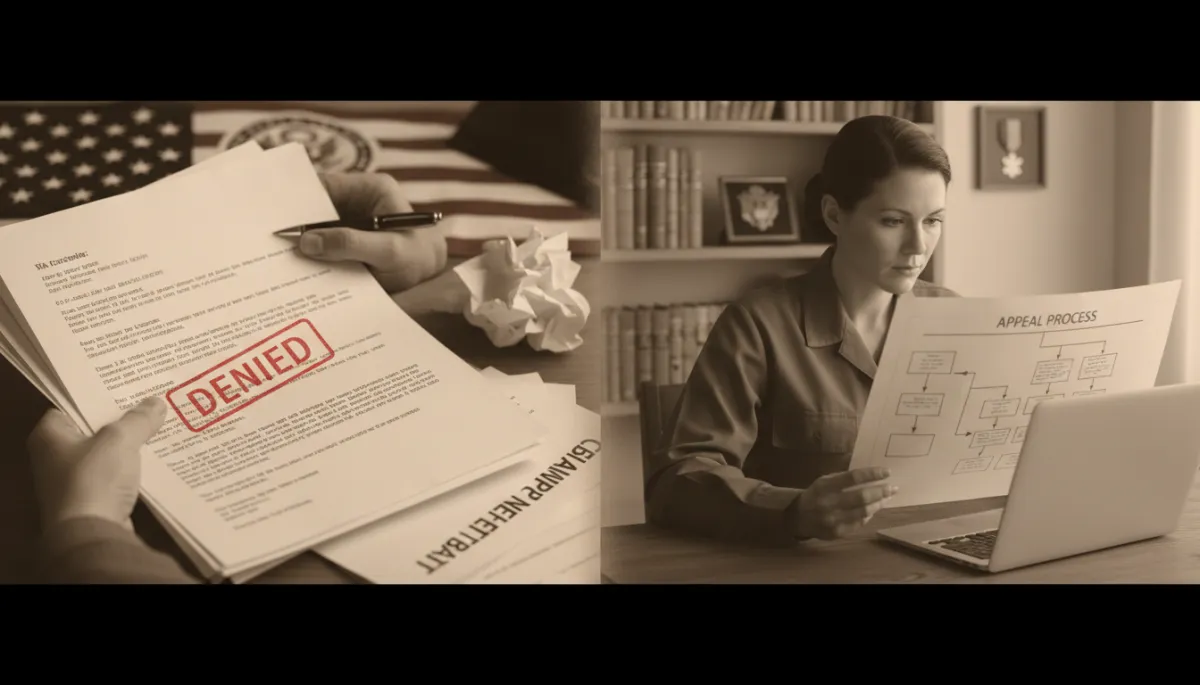
Top Reasons VA Claims Are Denied & How to Appeal
VA Claims, Claims Denial, Veteran Benefits, Appeal Process
Common Reasons VA Claims Get Denied (Real Examples)
If your VA claim was denied, you are not alone—and you are not powerless. VA Claims get denied every single day for reasons that are absolutely preventable. The system can be confusing, unforgiving, and painfully slow, but when you understand the most common mistakes and how to fight back through the appeal process, you gain real leverage over a process that often feels stacked against you.
The Harsh Truth: VA Claims Get Denied All the Time
Let’s be blunt: VA Claims are denied at an alarming rate. Many veterans walk away thinking the denial means their condition “doesn’t qualify” or that the fight is over. That is exactly how too many hard-earned Veteran Benefits die in a file cabinet. A Claims Denial is not a final verdict—it is often a symptom of missing evidence, unclear connections, or simple paperwork errors. The VA system runs on rules, documentation, and deadlines, and if you do not play that game aggressively, you pay the price in lost benefits.
This guide breaks down the common reasons VA Claims get denied, shows you real examples that mirror what veterans face every day, and outlines how the appeal process can turn a “no” into a decisive “yes.” If you are tired of vague answers and sugarcoating, keep reading. You deserve direct, bold clarity—and a fair shot at the benefits you earned.
Reason #1: No Clear Service Connection
The VA does not hand out disability benefits just because you are a veteran with a medical problem. They want proof that your condition is service-connected. That means your current disability must be linked to your military service—directly, secondarily, or through aggravation of a preexisting condition. Without that connection, your VA claim is hanging by a thread, no matter how serious your symptoms are.
Real Example: The “It Happened After I Got Out” Denial
Marcus served as an infantryman and spent a deployment jumping in and out of vehicles while wearing heavy gear. Years later, his knees were wrecked. He filed a VA claim for knee pain, confident his service caused it. The VA denied his claim because his service treatment records did not show knee complaints, and there was no medical opinion linking his current condition to service. The VA’s logic was brutal: “No complaints in service, no connection now.”
What was missing? A strong nexus statement—a medical opinion stating that it is “at least as likely as not” that his knee condition was caused by his service. Once Marcus obtained an independent medical opinion that clearly laid out how years of impact and heavy loads led to his current diagnosis, and he appealed, his claim was finally granted. The denial was not about whether his knees were bad; it was about whether he could prove the connection.
📌 Key Takeaway: If your VA claim does not include a clear, written medical opinion linking your condition to service, you are handing the VA an easy reason to deny you.
Reason #2: Not Enough Medical Evidence—Or the Wrong Kind
The VA is not going to take your word for it, no matter how honest you are. Medical evidence drives decisions. Too many VA Claims get denied because the veteran sends in a bare-bones application with no real documentation. Or they rely entirely on VA medical records and skip private treatment notes, specialist reports, or detailed diagnoses that would strengthen the case. That is like going into a firefight with no ammo and expecting to win on attitude alone.
Real Example: The “Pain Is Not a Diagnosis” Denial
Angela filed a claim for “back pain.” She had been complaining about it for years at the VA clinic, but her records mostly said “chronic back pain” without a clear diagnosis. The VA denied her claim, stating there was no current diagnosed disability. Harsh? Yes. Legal under VA rules? Also yes. The VA wants a specific diagnosis—degenerative disc disease, lumbar strain, radiculopathy—not just “it hurts.”
After the denial, Angela pushed for imaging, saw a specialist, and received a formal diagnosis of degenerative disc disease. She submitted that evidence with her appeal. Suddenly, the same VA that said “no” changed its tune. Her condition had not magically appeared overnight; the paper trail finally matched what she had been living with for years.
💡 Bold Move: Do not wait for the VA to “figure it out.” Push for clear diagnoses, specialist opinions, and written explanations that spell out what you are dealing with in detail.
Reason #3: The C&P Exam Went Badly—and You Let It Stand
The Compensation and Pension (C&P) exam can make or break your VA claim. These exams are supposed to evaluate the severity and cause of your condition, but in reality, they can be rushed, incomplete, or flat-out wrong. If the examiner downplays your symptoms, misrepresents what you said, or ignores key history, the VA will still lean heavily on that report. Many Claims Denials trace straight back to a weak C&P exam that the veteran never challenged.
Real Example: The “You Seemed Fine to Me” Exam
David, a combat veteran with PTSD, went to his C&P exam and tried to keep it together. He did not want to look “weak,” so he minimized his symptoms, laughed nervously, and said he was “managing.” The examiner wrote that David was “well-groomed, cooperative, and not in acute distress” and concluded his symptoms were “mild.” His claim for a higher PTSD rating was denied. On paper, he looked fine. In reality, he was having nightly nightmares, panic attacks, and isolation—but none of that made it into the report in a way the VA could not ignore.
With help, David requested a copy of the exam, highlighted every inaccuracy, and wrote a sworn statement describing what was left out: the flashbacks, the fear of crowds, the impact on his marriage, and the days he could not get out of bed. He also submitted buddy statements from his spouse and a coworker. On appeal, the VA finally recognized the true severity of his condition and increased his rating. The difference was not that he suddenly got worse—it was that he finally documented the truth.

Strong personal and buddy statements can crush a weak exam report and revive a denied claim.
Reason #4: Missing Deadlines and Letting the Clock Beat You
The VA moves slowly, but its deadlines are razor sharp. When you receive a decision, you generally have one year to respond if you want to preserve your appeal rights. Miss that window, and you are often stuck starting over with a new VA claim, losing your earlier effective date—and possibly thousands of dollars in back pay. This is one of the most painful, avoidable common mistakes veterans make in the entire process.
Real Example: The “I Thought I Had More Time” Disaster
Carlos received a decision denying his claim for migraines. He was overwhelmed, frustrated, and put the letter in a drawer to “deal with later.” Later turned into 14 months. By the time he decided to fight the decision, his one-year window to appeal had slammed shut. He could file a new claim, but he lost the chance to secure back pay going all the way back to his original filing date. That mistake cost him years of potential compensation.
📌 Key Takeaway: Treat every VA decision letter like a countdown clock. If you disagree, act—do not wait, do not assume, and do not let the deadline quietly kill your rights.
Reason #5: Incomplete Forms and Sloppy Paperwork
The VA loves forms. If you use the wrong one, skip a section, or forget a signature, your VA claim can stall—or be denied outright. This is one of the most infuriating reasons for a Claims Denial, because it has nothing to do with whether your condition is real. It is pure bureaucracy. But if you ignore the details, the bureaucracy wins, and you lose out on Veteran Benefits you should be collecting every month.
Real Example: The “You Never Really Filed” Technicality
Lisa thought she had filed a fully developed claim online. Months passed with no response. When she finally called, she was told her claim had been closed because she did not submit a crucial form the VA had requested. The notice was buried in her online portal, and she had missed it. To the VA, it looked like she had simply abandoned her claim. She had to start over, losing time and potential back pay—not because her condition was questionable, but because a form went unfinished.
💡 Bold Move: Keep a checklist, double-check every form, and use certified mail or online submission tracking. Treat your paperwork like evidence in a court case—because that is exactly what it is.
Reason #6: Downplaying Symptoms and Trying to “Tough It Out”
Many veterans were trained to suck it up and keep moving. That attitude saves lives in uniform—and wrecks VA Claims in civilian life. When you minimize your pain, skip appointments, or tell doctors “it’s not that bad,” your medical records will reflect exactly that. The VA will gladly use your own words against you to justify a low rating or a complete denial of benefits. Being tough in the exam room might feel honorable, but it can be financially devastating.
Real Example: The “I Don’t Want to Complain” Trap
Sean had severe tinnitus and hearing loss from years on the flight line. At his C&P exam, he shrugged off questions, saying he could “mostly hear fine” and that the ringing was “annoying but manageable.” His wife, on the other hand, watched him turn up the TV to max volume and constantly ask people to repeat themselves. The VA gave him a lower rating than he deserved, based entirely on his own downplayed description of his symptoms. Once he appealed with a detailed personal statement and a powerful spouse statement describing the real impact on daily life, his rating increased significantly.
📌 Key Takeaway: Honesty is not weakness. If your symptoms are severe, say so—clearly, directly, and in writing. Your future compensation depends on it.
Reason #7: The VA Overlooks Secondary and Aggravated Conditions
Your body is not a collection of isolated parts. One service-connected condition can cause or worsen another—and those secondary conditions can and should be rated too. But many VA Claims focus narrowly on the primary diagnosis and ignore everything it triggers or aggravates. That is money left on the table, and it is fully preventable with the right strategy and evidence.
Real Example: The “My Bad Knee Ruined My Back” Chain Reaction
Olivia had a service-connected knee injury. Over time, her altered gait put extra stress on her lower back, leading to chronic back pain. She filed for her back as a brand-new condition without explaining the connection to her knee. The VA denied it, arguing there was no direct service connection. On appeal, she reframed her claim as a secondary condition caused by her service-connected knee. With a medical opinion supporting that link, the VA granted the back claim and significantly increased her combined rating.
💡 Bold Move: Look at the full picture. If one service-connected condition is causing new problems, claim those too—and label them clearly as secondary or aggravated conditions.
Common Mistakes That Quietly Kill VA Claims
Filing vague claims like “joint pain” instead of specific diagnoses and affected joints
Ignoring mental health symptoms because they feel “less real” than physical injuries
Assuming the VA will automatically gather all private medical records without your help or authorization
Failing to update the VA when conditions worsen, leading to outdated, lowball ratings
Trusting a single denial letter instead of using the appeal process aggressively
📌 Key Takeaway: The biggest common mistake is treating a VA denial as the end of the story. It is not. It is your signal to regroup, reload with evidence, and push back harder.
How the VA Appeal Process Really Works—And How to Use It
A Claims Denial is not a brick wall; it is a door to the appeal process. Under the modern VA system, you have several powerful options to challenge a decision you disagree with. Each path has strengths and trade-offs, but doing nothing is the only guaranteed way to lose. If you want your Veteran Benefits, you must be willing to fight for them—strategically and relentlessly.
Option 1: Higher-Level Review—“You Misread My Case”
A Higher-Level Review asks a more senior VA reviewer to re-examine your case using the same evidence, but with fresh eyes. This is a bold move when you believe the VA simply misapplied the law or overlooked evidence you already submitted. You cannot add new evidence here, but you can request an informal conference and point out exactly where you believe the decision went off the rails.
Option 2: Supplemental Claim—“Here’s the Evidence You Ignored”
A Supplemental Claim lets you add “new and relevant” evidence—fresh medical records, nexus opinions, buddy statements, or updated test results. This is ideal when your original VA claim was weak on documentation. If your denial letter says things like “no evidence of nexus” or “no current diagnosis,” a Supplemental Claim is your chance to slam that door shut with rock-solid proof.
Option 3: Board Appeal—“Take My Case to a Judge”
A Board of Veterans’ Appeals review puts your case in front of a Veterans Law Judge. You can choose a direct review (no new evidence), submit new evidence, or request a hearing. This path can take longer, but it is a powerful tool when your case is complex, or lower-level reviewers keep missing the mark. A strong Board appeal can overturn years of bad decisions and unlock major back pay.
💡 Bold Move: Read your denial letter like a battle plan. Every “reason for denial” is a target. Your appeal should attack each one with focused, specific evidence or legal argument.
Real-World Turnarounds: From Denied to Approved
Case Study: The Denied Back Claim That Became a Life-Changing Award
A retired Army mechanic filed for a back condition and was denied—twice. The VA said there was “no evidence of chronic condition in service” and no nexus. On appeal, he gathered line-of-duty reports, buddy statements from fellow mechanics who remembered him constantly complaining about his back, and a private orthopedic opinion tying his current degenerative disc disease to years of lifting heavy equipment. He filed a Supplemental Claim with this new evidence. The result? A 40% rating for his back, secondary ratings for radiculopathy in both legs, and tens of thousands of dollars in back pay. The facts did not change; the evidence did.
Case Study: PTSD Denied, Then Approved with the Right Story
A Marine with combat exposure filed for PTSD and was denied because the VA claimed there was “no verified stressor.” On appeal, he submitted detailed statements describing the events, unit records confirming attacks on his base, and a psychologist’s report that connected his symptoms directly to those incidents. The Board of Veterans’ Appeals reversed the denial and granted service connection. The key difference was not that he suddenly developed PTSD—it was that he finally put the VA in a position where denying the claim would defy the evidence.
📌 Key Takeaway: Real examples prove one thing: persistence plus targeted evidence can flip a denial into a solid approval. The system may be slow, but it is not unbeatable.
How to Strengthen Your VA Claim Before It Gets Denied
Document everything early. Get clear diagnoses, keep copies of all records, and build a paper trail before you even hit “submit.”
Use precise language. Describe how your condition affects work, relationships, sleep, mobility, and daily tasks in bold, specific terms.
Get supportive opinions. Ask your doctors for written nexus statements and detailed notes that connect your condition to service.
Bring in witnesses. Spouses, friends, coworkers, and fellow service members can provide powerful buddy statements that confirm what you live with every day.
Stay on top of deadlines. Mark your calendar the day you get a decision. One year is your hard line for most appeal choices.
When to Get Help—and Why It’s a Bold, Smart Move
You do not have to fight the VA alone. Accredited representatives, Veterans Service Organizations, and experienced attorneys exist for a reason: this system is complicated, and the stakes are high. Getting help is not a sign of weakness; it is a strategic decision to protect your rights and maximize your Veteran Benefits. A skilled advocate can spot common mistakes, craft stronger arguments, and navigate the appeal process with precision while you focus on your health and your family.
💡 Bold Move: If your claim has already been denied—or if you feel in over your head—reach out for accredited help. A single strong appeal can change the trajectory of your financial future.
Final Word: A Denial Is Not the End of Your Story
The VA system can be cold, slow, and deeply frustrating—but it is not unbeatable. Common reasons VA Claims get denied usually boil down to the same core issues: missing service connection, weak medical evidence, bad C&P exams, blown deadlines, sloppy paperwork, and unclaimed secondary conditions. None of those are personal failures. They are fixable problems in a rigid system that you can learn to navigate with bold, informed action.
The real examples in this guide prove a powerful truth: veterans who refuse to accept a first denial, who dig in, gather evidence, and leverage the appeal process, often win—and win big. Your service was real. Your injuries are real. Your right to fair Veteran Benefits is real. Do not let a single Claims Denial convince you otherwise. Stand your ground, build your case, and push forward until the VA’s paperwork finally matches your reality.
If you are ready to take the next step and want focused, expert support on your side, visit www.warriorbenefits.com to explore your options and get help strengthening your claim or appeal.