
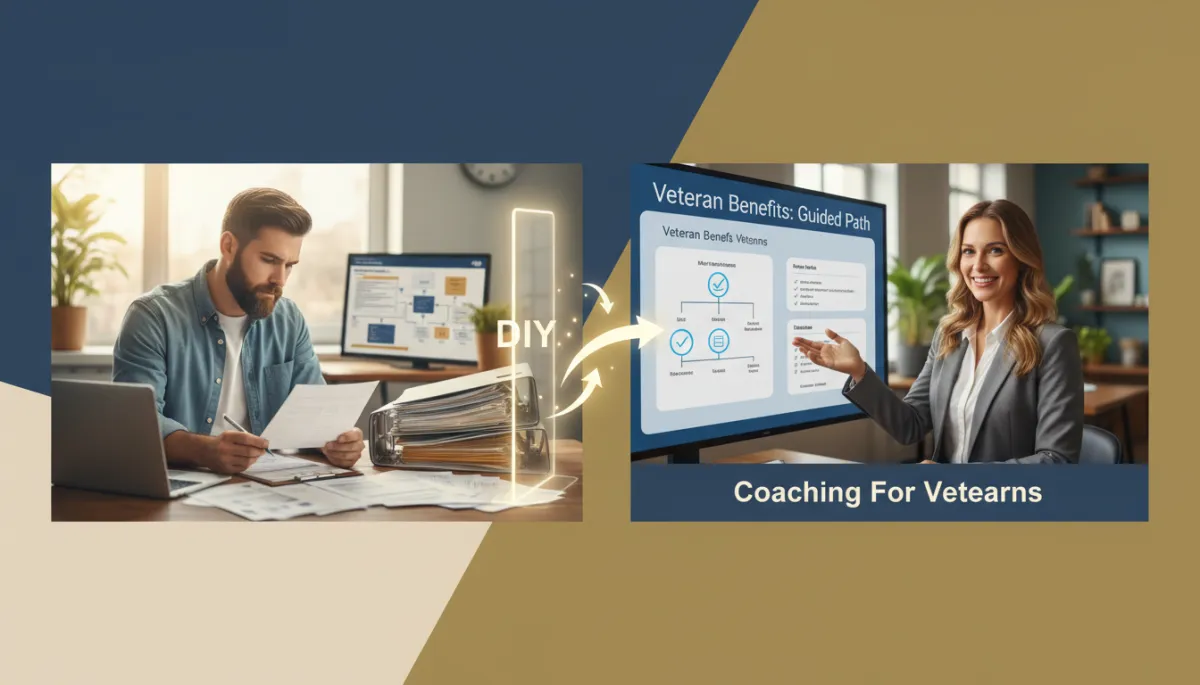
DIY VA Claims vs Coaching: Key Insights for Veterans
VA Claims, DIY Veterans, Coaching For Veterans, Veteran Benefits, Claims Assistance, Veteran Resources
DIY VA Claims vs Getting Coaching: What Veterans Should Know
If you’re a veteran staring down the VA claims process, you’re standing at a crossroads: go full DIY, or get serious coaching and claims assistance. This choice can define how much of your hard-earned veteran benefits you actually receive—and how long you wait to get them. It’s time to cut through the noise and look at both paths with clear, unapologetic honesty.
The Harsh Truth About VA Claims: The System Is Not Built for Speed
Let’s be blunt: VA Claims are not simple, and they are not fast. You’re dealing with a massive federal system, strict rules, and a mountain of paperwork that demands precision. One missing form, one vague medical note, one unchecked box—and your claim can be delayed, denied, or lowballed for months or even years.
The VA is not your enemy, but it’s also not your personal advocate. The system processes evidence; it does not chase it down for you. If your file doesn’t clearly prove your service connection, your symptoms, and your functional impact, the decision will reflect that—no matter how real your pain is or how long you served. That’s the brutal reality every veteran needs to understand before choosing a strategy.
📌 Key Takeaway: The VA pays based on evidence and clarity, not effort or good intentions. Your approach to your claim must be just as disciplined as your time in uniform.
Who Are DIY Veterans—and What Are They Really Up Against?
DIY Veterans are the ones who decide, “I’ll handle my own VA claim. I’ve got this.” That mindset is powerful—and it can absolutely work. But it only works if you go in with your eyes wide open and your paperwork locked in tight. Going DIY without a plan is like walking into a board of inquiry without reading your own file first. You might survive it, but you’re not stacking the odds in your favor.
As a DIY veteran, you’re responsible for everything: gathering medical records, understanding rating criteria, writing strong statements, tracking deadlines, and responding to VA letters. You are your own claims assistance, your own quality control, and your own advocate. If that sounds like a lot, it’s because it is. But with the right mindset and veteran resources, it’s not impossible—it’s just demanding.
The Advantages of Going Fully DIY on Your VA Claim
Total Control: You see every document, every statement, every form. Nothing moves without your approval. For many veterans, that control is non-negotiable and empowering.
No Middleman: You don’t wait on anyone else to call you back, schedule an appointment, or “get around” to your file. Your timeline is your own, for better or worse.
Deeper Understanding: When you do it yourself, you learn the language of veteran benefits—diagnostic codes, rating percentages, and what the VA really looks for. That knowledge pays off for life, especially if you need future increases or appeals.
The Hidden Risks DIY Veterans Don’t Always See Coming
Incomplete Evidence: You might think your medical records “speak for themselves.” They don’t. If they don’t clearly connect your condition to service and describe your limitations, the VA may not grant what you deserve.
Weak Personal Statements: Many DIY veterans write short, vague statements that fail to capture how their conditions affect work, relationships, sleep, and daily life. The VA can’t rate what you don’t clearly describe.
Missed Deadlines: Appeals, supplemental claims, and responses to VA letters all come with hard timelines. Miss one, and you may lose effective dates or have to start over from scratch.
💡 Pro Tip: If you’re going DIY, treat your claim like a mission. Build a checklist, track every document, and keep a dedicated folder—physical or digital—so nothing slips through the cracks.
Coaching For Veterans: Not a Crutch—A Force Multiplier
Now let’s talk about Coaching For Veterans. Coaching is not someone “doing your claim for you.” Real coaching is about sharpening your strategy, strengthening your evidence, and giving you the tools to present the strongest possible case—while you stay in control. Think of it as having a seasoned NCO walking you through a new training lane you’ve never run before. You’re still the one on the course, but you’re not guessing where the obstacles are.
Good claims coaching doesn’t promise outcomes. It doesn’t “guarantee” ratings. What it does is brutally refine your approach: the wording of your statements, the organization of your medical evidence, your preparation for C&P exams, and your overall claim narrative. It’s structured claims assistance that keeps you from walking into obvious traps the VA system sets unintentionally—confusion, vague instructions, and technical rules buried in fine print.
What Strong Claims Coaching Actually Looks Like
A coach helps you map your conditions to specific rating criteria, so you stop guessing and start targeting what the VA actually measures.
They walk you through powerful, detailed personal statements instead of vague, one-paragraph summaries that leave your daily reality invisible on paper.
They show you how to use veteran resources—from medical providers to independent opinions, buddy letters, and prior decisions—to build a claim that’s organized, consistent, and hard to ignore.
In other words, coaching turns you from a confused DIY veteran into a prepared, informed, and focused claimant who knows exactly what the VA needs to see and why. You’re not handing over your power—you’re amplifying it.

Focused coaching helps veterans turn scattered paperwork into a clear, compelling VA claim strategy.
Veteran Benefits Are Too Valuable to Leave to Chance
Let’s be direct: your veteran benefits are not a favor. They are earned compensation for what you gave up—time, health, sleep, relationships, and in many cases, long-term physical or mental well-being. Whether you go full DIY or leverage coaching, your benefits deserve a disciplined, relentless approach, not a half-finished claim thrown together on a Sunday night.
Disability compensation can mean the difference between barely scraping by and having stable income. It can unlock health care, vocational rehab, caregiver support, education benefits, and more. When you minimize the value of your claim, you’re not being “modest”—you’re risking long-term stability for yourself and your family. That’s not humility. That’s self-sabotage, and you’ve sacrificed too much to accept that.
Why Many Veterans Underclaim—and Regret It Later
“Others have it worse.” This mindset is honorable—but dangerous. The VA doesn’t run out of benefits. Your claim doesn’t steal from anyone else. You’re simply asking to be rated accurately for your conditions.
Fear of Rejection: Some veterans avoid filing or refiling because they’re tired of hearing “denied.” But a denial isn’t a verdict on your worth; it’s a signal that the evidence or presentation needs to be stronger.
Confusion and Overwhelm: The VA website, forms, and letters can feel like a maze. This is exactly where coaching and solid claims assistance can transform confusion into a step-by-step plan.
📌 Key Takeaway: Asking for accurate compensation is not greed. It’s responsibility—to yourself, your health, and your future.
Claims Assistance: What It Is, and What It Is Not
The phrase claims assistance gets thrown around a lot, and it can mean very different things. Some organizations offer free help through accredited representatives. Others provide paid coaching, education, or consulting. The key is to understand the role each one plays—and to stay in the driver’s seat, no matter who’s on your team.
Common Types of Veteran Claims Assistance
VSOs (Veterans Service Organizations): Groups like DAV, VFW, American Legion, and state or county offices often provide free help with forms and filing. Quality can vary by location and workload, but these are core veteran resources you should at least explore.
Accredited Representatives and Attorneys: These professionals can represent you, especially in appeals. They must follow strict rules and cannot charge certain fees for initial claims, but they can be powerful allies later in the process.
Coaching and Education Services: These focus on teaching you how to build, present, and manage your own claim more effectively. They don’t “guarantee” outcomes—they sharpen your approach and help you avoid costly mistakes.
No matter what support you choose, the VA will always see you as the claimant. Your name is on the file. Your statements carry the weight. Your medical evidence tells the story. Claims assistance is a tool, not a substitute for your ownership of the process.
Veteran Resources You Should Be Using—DIY or With Coaching
Whether you choose to be a fully independent DIY veteran or you invest in coaching for veterans, there are powerful veteran resources you simply cannot afford to ignore. These tools don’t just make your life easier—they make your claim stronger, clearer, and more credible.
VA.gov and eBenefits: Use them to file, track, and review correspondence. Check your letters regularly. Waiting on the mail alone is a rookie mistake that can cost you precious time.
MyHealtheVet and Medical Portals: Download your treatment notes, lab results, imaging, and mental health summaries. Don’t assume the VA rater will “just see it” somewhere. Make sure key evidence is front and center in your file.
Buddy Statements: Fellow service members, spouses, friends, and coworkers can write statements describing what they saw—changes in your behavior, physical limitations, sleep issues, anger, or isolation. These statements can bridge gaps when medical records are thin.
Independent Medical Opinions (IMOs): In complex cases, a clear, well-supported medical opinion that connects your condition to service can be a game-changer. This often requires guidance, but for some claims, it’s worth every ounce of effort.
💡 Pro Tip: Build a personal “claim packet” with your key medical records, statements, and timelines. Whether you walk into a VSO office or a coaching session, showing up organized instantly raises the level of help you can get.
DIY vs Coaching: How to Decide What’s Right for You
This isn’t about pride. It’s about results. To choose between a pure DIY approach and getting serious coaching, you need to look at your situation with the same blunt honesty you used in uniform. Ask yourself some hard questions—and don’t sugarcoat the answers.
When a DIY VA Claim Might Be a Strong Option
Your conditions are straightforward, clearly documented, and already well-connected to service (for example, a documented knee injury with continuous treatment).
You’re highly organized, comfortable reading official documents, and willing to study rating criteria on your own time.
You have the bandwidth—mental and emotional—to manage forms, deadlines, and follow-ups without burning out or shutting down.
When Coaching For Veterans Can Be a Game-Changer
You’ve been denied before, and you’re not sure why—or the denial letter might as well be written in another language.
You’re dealing with complex conditions like PTSD, MST, TBI, or multiple overlapping physical and mental health issues that are hard to untangle on paper.
You’re exhausted, overwhelmed, or angry every time you try to deal with the VA—and you know that going it alone again will probably mean another half-finished attempt.
In those situations, coaching doesn’t make you weak. It makes you strategic. It means you’re done winging it and ready to treat your VA claim with the same seriousness you once treated missions, inspections, or promotions. That’s not overkill—that’s maturity.
How to Protect Yourself While Getting Help With Your Claim
Not all help is good help. If you’re going to seek claims assistance or coaching, you need to protect yourself like you would protect a junior troop under your leadership. There are legitimate professionals and organizations—and there are people who overpromise, underdeliver, or cross legal and ethical lines. You cannot afford to be naive here.
Avoid “Guaranteed” Outcomes: No one can guarantee you a specific rating or back pay amount. Anyone who says they can is either lying or ignoring reality. Walk away.
Know Who’s Accredited—and for What: Accreditation matters for representation before the VA, especially in appeals. Coaching and education can be valuable even without accreditation, but representation has strict rules. Understand the difference before you sign anything.
Stay in Control of Your Account: Never give away your login credentials for VA.gov or other secure portals. You can share documents without handing over full access to your identity and benefits.
📌 Key Takeaway: The right help will empower you, educate you, and respect your control over your own claim. If you feel pressured, rushed, or kept in the dark, that’s a red flag.
A Bold, Practical Game Plan for Your Next VA Claim
Whether you ultimately choose a DIY path, coaching for veterans, or a hybrid approach, you need a concrete plan—not vague intentions. Here’s a straightforward, no-excuses roadmap you can start using today to take back control of your VA claims journey.
List Every Condition You Want Rated or Increased. Don’t rely on memory. Write them down, including mental health, chronic pain, sleep issues, migraines, hearing, and anything that impacts work or daily life.
Gather Your Records. Download your VA medical records, private treatment notes, and any service treatment records you can access. If you don’t have them yet, start the request process today—not next month.
Draft Personal Statements. For each major condition, write a brutally honest description of how it affects your work, relationships, sleep, mobility, mood, and daily functioning. Don’t sanitize it. Don’t minimize it. Tell the truth in detail.
Decide: DIY, Coaching, or Both. Look at your energy, time, and complexity. If you’re stuck, that’s a sign you may benefit from structured coaching or claims assistance. If you feel confident and organized, you may be ready to run a disciplined DIY claim—with veteran resources backing you up.
Execute—and Follow Through. File the claim. Track it. Read every letter. Show up to every exam. Respond to every request for information. This is not the time to go silent or disengage. Your future compensation is on the line.
Final Word: Your Service Was Bold—Your Claim Strategy Should Be Too
You didn’t get through boot camp, deployments, or years of service by playing small. Don’t shrink now, when the stakes are your health, your income, and your long-term stability. Whether you step up as a fully prepared DIY veteran or you lock in powerful coaching and claims assistance, the point is the same: take your VA claim seriously. Treat it like the mission it is.
The VA system is complex, but you are not powerless. You have options. You have veteran resources. You have the right to accurate, fair veteran benefits that reflect what you live with every single day. So choose your path—DIY, coaching, or a smart combination—and then commit. No more guessing, no more half-measures, and no more letting paperwork stand between you and what you’ve earned.
You carried the weight of service. Now it’s time to carry your claim with the same intensity—until the benefits you’ve earned are not just promised, but paid.
Ready for focused support on your next claim? Visit www.warriorbenefits.com to get started.