
DIY VR&E vs Expert Help: Veterans' Guide
Veterans Benefits, Vocational Rehabilitation, DIY VR&E
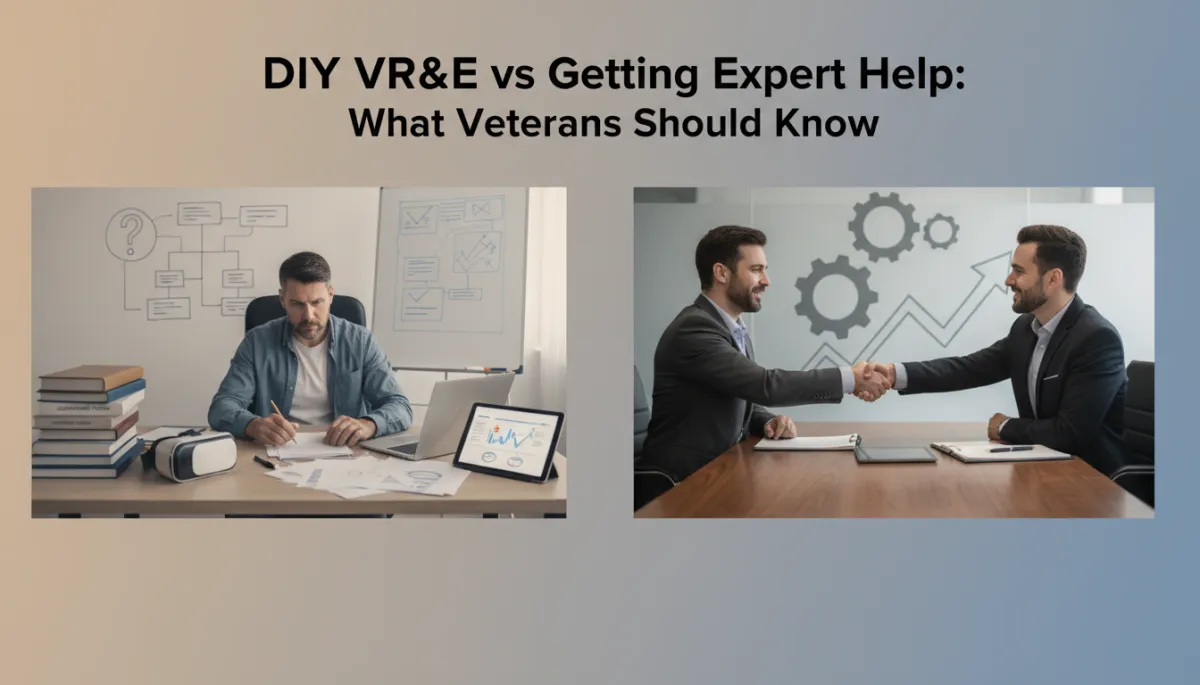
DIY VR&E vs Getting Expert Help: What Veterans Should Know
Navigating VA Vocational Rehabilitation and Employment (VR&E) can feel overwhelming, especially if you are balancing service-connected conditions, family responsibilities, and the pressure to plan your next career move. Many veterans ask themselves whether they should handle VR&E on their own using self-help strategies or seek expert help from accredited professionals. This guide explains what you need to know about DIY VR&E versus getting expert support so you can make an informed decision that protects your benefits and supports your long-term goals.
Understanding VR&E and Why It Matters
The VA’s Vocational Rehabilitation and Employment program—often called VR&E or Chapter 31—is designed to help veterans with service-connected disabilities prepare for, find, and maintain suitable employment. For those who cannot work, VR&E may support independent living services to improve quality of life. Because these services can significantly influence your future earning potential, education, and daily functioning, decisions about how you approach VR&E are especially important.
VR&E can include funding for college or technical training, help with resume building and job placement, accommodations for disabilities, and even support for self-employment in some circumstances. In addition, your participation in VR&E can interact with other veterans benefits, such as disability compensation, GI Bill education benefits, and health care eligibility. Understanding these connections is critical whether you choose a DIY VR&E approach or rely on expert help to guide you through the process.
What Does DIY VR&E Really Mean?
When veterans talk about “DIY VR&E,” they usually mean managing the entire process themselves—from the initial application to working with a counselor, developing a rehabilitation plan, and addressing any disputes or changes along the way. A do-it-yourself approach relies heavily on your ability to research the program, understand the rules, and advocate for yourself effectively in meetings and written communication with the VA.
DIY VR&E does not mean you are completely alone. Many veterans use publicly available veteran resources, such as VA fact sheets, online forums, nonprofit guides, and peer support groups, to understand how vocational rehabilitation works. With careful preparation, some veterans successfully navigate the process without formal representation. However, it is important to recognize the limits of a self-help strategy and when professional guidance may prevent costly missteps or missed benefits.
📌 Key Takeaway: DIY VR&E is possible, but it requires time, attention to detail, and comfort with reading regulations and advocating for yourself.
Core Elements of the VR&E Process You Must Understand
Whether you pursue a DIY approach or seek expert help, you will move through several key stages in the VR&E program. Understanding these steps helps you decide how much support you may need at each point:
Eligibility determination: The VA reviews your service-connected disability rating and other factors to decide if you qualify for vocational rehabilitation services.
Entitlement and evaluation: You meet with a VR&E counselor who assesses your interests, skills, limitations, and employment history to determine whether you are entitled to specific services.
Rehabilitation plan development: You and your counselor create an individualized plan that may include education, training, accommodations, or other services aimed at achieving suitable employment or independent living goals.
Implementation and monitoring: You carry out the plan, attend school or training, apply for jobs, or engage in other approved activities, while the counselor monitors progress and adjusts the plan as needed.
Closure and follow-up: Once your goals are met or the plan is otherwise concluded, the case is closed, but there may be follow-up services or reentry in certain circumstances.
Each stage involves decisions that can affect your long-term access to veterans benefits and your career path. DIY VR&E means you assume responsibility for understanding how those decisions fit within VA rules and how to respond if something does not go as expected.
Advantages of a DIY VR&E Approach
Many veterans are naturally independent and prefer to manage their own affairs. There are legitimate advantages to handling VR&E yourself, especially if you are organized and comfortable working with paperwork and official processes. Below are some of the potential benefits of a DIY approach to vocational rehabilitation.
Greater Sense of Control and Ownership
When you manage your own VR&E claim, you maintain direct control over communication with your counselor, the pace of your application, and the direction of your rehabilitation plan. For some veterans, this sense of ownership is empowering and aligns with the leadership and initiative they exercised during service. You can schedule your own meetings, track your own deadlines, and follow up as you see fit without coordinating through a third party.
Potentially Faster Decision-Making
In some cases, a DIY VR&E strategy can streamline communication. You may respond to VA requests quickly, upload documents directly, and clarify questions with your counselor without waiting for a representative to relay messages. When you are proactive and responsive, this can sometimes reduce delays and keep your case moving forward, especially in more straightforward situations where there are no major disputes.
Cost Savings and Self-Reliance
While many forms of expert help for veterans benefits—such as Veterans Service Organizations (VSOs)—are free, some veterans consider private consultants for career planning, education advising, or independent evaluations. If you choose not to use these services, you may save money. Relying on self-help strategies can also reinforce your confidence in managing other aspects of post-service life, including finances, health care, and family planning.
💡 Pro Tip: If you choose a DIY approach, treat your VR&E claim like a mission—create a checklist, track deadlines, and document every interaction with your counselor.
Risks and Limitations of Handling VR&E on Your Own
Despite the advantages, a DIY VR&E approach carries real risks, particularly when your situation is complex or when your service-connected disabilities significantly affect your ability to work or study. Many veterans underestimate how intricate VA regulations can be and how easily a misunderstood rule can lead to a denied service or a less favorable plan than you might qualify for with proper advocacy.
Navigating Complex Regulations and Policies
VR&E is governed by federal regulations, VA manuals, and internal guidance that can be difficult to interpret without experience. Questions such as whether a particular degree program is appropriate, what counts as “suitable employment,” or when independent living services are justified often require familiarity with both the letter and the spirit of the rules. Without expert help, you may accept limitations that are not actually required under VA policy or miss opportunities for additional support you did not realize existed.
Difficulty Challenging Decisions or Disagreements
Disagreements sometimes arise between veterans and VR&E counselors about the appropriate goal, training path, or level of support. If you are handling everything yourself, you must know how to respond in writing, request a supervisor review, or file an appeal when necessary. Many veterans are not aware of their rights or the best way to present evidence and arguments. As a result, they may accept a less favorable plan or give up on vocational rehabilitation altogether when an experienced advocate might have secured a better outcome.
Emotional and Cognitive Demands
For veterans living with PTSD, traumatic brain injury, chronic pain, or other service-connected conditions, the paperwork, deadlines, and follow-through required for DIY VR&E can be especially challenging. Stress, memory problems, and difficulty concentrating may make it harder to stay organized or communicate effectively with the VA. In these circumstances, relying solely on self-help strategies may unintentionally jeopardize your access to valuable services and long-term career support.

Photographic realistic scene of a veteran meeting with a counselor at a desk, both reviewing...
Professional guidance can clarify complex VR&E rules and protect long-term career goals.
How Expert Help Can Support Your VR&E Journey
Expert help comes in many forms, from free Veterans Service Organizations to accredited claims agents and attorneys, as well as career counselors and mental health professionals. These experts can act as force multipliers, helping you understand your options, organize evidence, and communicate effectively with your VR&E counselor. Importantly, seeking assistance does not mean you surrender control; instead, you gain informed support while remaining the decision-maker regarding your future.
Veterans Service Organizations and Accredited Representatives
Many VSOs, such as the American Legion, Disabled American Veterans (DAV), Veterans of Foreign Wars (VFW), and state or county veterans agencies, offer free assistance with veterans benefits, including vocational rehabilitation. Accredited representatives are trained in VA processes and can help you complete forms, gather medical and employment evidence, and respond to VR&E decisions. They understand how VR&E interacts with disability compensation and education benefits, helping you avoid unintended consequences when choosing between programs.
Legal and Appeals Support When Needed
In more complex situations—such as when entitlement is denied, or a rehabilitation plan is terminated—an accredited attorney or claims agent with experience in veterans benefits can be invaluable. These professionals understand the appeals process, evidentiary standards, and how to frame arguments in a way that aligns with VA regulations. Their involvement can be particularly important if your ability to work is in question or if VR&E decisions may affect your total disability rating or Individual Unemployability (TDIU) status.
Career, Education, and Clinical Professionals
In addition to benefits experts, you may benefit from working with college advisors, career counselors, or mental health providers. A career counselor, for example, can help you identify realistic vocational goals that align with your abilities and interests, making it easier to advocate for an appropriate VR&E plan. Mental health and medical professionals can provide documentation explaining how your conditions limit certain types of work, which can strengthen your case for specific accommodations or training paths within vocational rehabilitation.
📌 Key Takeaway: Expert help does not replace your voice; it amplifies it by translating your story into the language of VA rules and evidence.
Comparing DIY VR&E and Expert Help: Which Path Fits You?
Choosing between DIY VR&E and getting expert help is not an all-or-nothing decision. Many veterans begin with self-help strategies, then seek assistance at key moments, such as plan development or after a denial. Others prefer to involve a representative from the start. The right approach depends on your comfort level, the complexity of your situation, and the stakes involved for your long-term career and benefits.
When a DIY Approach May Be Reasonable
Your service-connected disabilities are relatively straightforward, and you already have a clear, realistic career goal.
You are comfortable reading official documents, tracking requirements, and communicating in writing with government agencies.
You have the time and energy to research veteran resources, attend appointments, and follow up on your own.
There are no major disputes yet about your eligibility, plan, or level of support.
When Expert Help Is Strongly Recommended
Your disabilities significantly affect your ability to work, study, or manage paperwork and deadlines.
You have been denied entitlement, offered a plan that does not seem appropriate, or told your case will be closed prematurely.
Your VR&E participation may affect other veterans benefits, such as TDIU, Permanent and Total ratings, or eligibility for certain education programs, and you are unsure how they interact.
You feel overwhelmed, anxious, or confused by the process and would benefit from a knowledgeable advocate in your corner.
Practical Self-Help Strategies for Veterans Using VR&E
Regardless of whether you pursue DIY VR&E or work closely with an expert, strong self-help strategies can improve your chances of success. These habits help you stay organized, communicate clearly, and protect your interests throughout the vocational rehabilitation process.
Keep a Dedicated VR&E File and Communication Log
Create a physical or digital folder for all VR&E documents, including your application, counselor notes, plan documents, school records, and any letters or emails from the VA. Maintain a simple log of every phone call or meeting, noting the date, the person you spoke with, and the main points discussed. This record can be invaluable if questions arise later or if you eventually seek expert help and need to reconstruct what has happened in your case.
Prepare Thoroughly for Meetings With Your Counselor
Before each VR&E appointment, review your file and write down your questions, concerns, and goals. Bring relevant documents, such as medical records, school transcripts, or job descriptions. If certain types of work are not realistic because of your disabilities, be prepared to explain why and provide examples of how your conditions affect daily tasks. Clear, specific communication helps your counselor understand your needs and document them appropriately in your plan.
Use Official and Community Veteran Resources Wisely
The VA website, VR&E manuals, and official fact sheets provide foundational information about eligibility, services, and rights. In addition, community-based veteran resources—such as peer support groups, online forums, and nonprofit organizations—can offer practical tips based on lived experience. Use these sources to educate yourself, but verify advice against official guidance or with an accredited representative, as rules and interpretations can change over time.
Protect Your Health and Well-Being During the Process
Vocational rehabilitation is not just about training and employment; it is also about ensuring your plan is compatible with your physical and mental health. Keep your medical providers informed about your VR&E goals and activities. If your symptoms worsen due to school or work demands, document those changes and share them with both your counselor and your health care team. Adjustments to your plan, such as reduced course loads, adaptive equipment, or different job targets, may be appropriate and should be considered before problems escalate.
Building a Support Network Around Your Vocational Goals
Successful use of VR&E rarely occurs in isolation. Even if you lean toward a DIY approach, surrounding yourself with supportive people and organizations can make a significant difference. Family members, fellow veterans, mentors, and professionals can all play roles in helping you stay focused and resilient during your transition to civilian employment or independent living.
Family and friends: Share your goals and timelines so they understand what you are working toward and can encourage you during setbacks.
Peer veterans: Connect with others who have used vocational rehabilitation; their experiences can highlight both pitfalls and effective strategies.
Professional mentors: If you are entering a new field, seek mentors who can provide insight into realistic job demands and career progression.
Benefits experts: Keep contact information for a VSO or accredited representative handy so you can quickly get help if problems arise with your VR&E case.
Making an Informed Choice: Steps You Can Take Today
Deciding between DIY VR&E and seeking expert help is ultimately about what will best protect your interests and support your long-term success. To move forward confidently, consider taking the following steps:
Assess your comfort level: Honestly evaluate how comfortable you are with paperwork, deadlines, and advocating for yourself. If you feel unsure, that is a strong signal to at least consult with an expert.
Review basic VR&E information: Read current VA guidance on eligibility, services, and appeals. Understanding the basics will help you ask better questions, whether to yourself or to a representative.
Schedule a consultation: Reach out to a local VSO, state veterans agency, or accredited representative for an initial review of your situation. Many veterans find that a single conversation clarifies whether they can proceed on their own or should seek ongoing support.
Map your career and life goals: Write down where you hope to be in five or ten years in terms of work, education, and daily functioning. Use this vision to evaluate whether your VR&E plan aligns with your broader objectives.
Decide on your support model: You might choose full DIY, expert help from the start, or a hybrid approach where you manage day-to-day tasks but call in professionals when disputes or major decisions arise.
Conclusion: Your Service Earned These Benefits—Use Them Wisely
VR&E is one of the most powerful veterans benefits available for shaping your post-service life. It can fund education, open doors to new careers, and provide crucial support when disabilities limit traditional employment. Whether you pursue a DIY VR&E path or work closely with expert help, the key is to approach vocational rehabilitation with the same seriousness and preparation you brought to your military duties.
A self-help strategy may work well if your situation is straightforward and you are confident navigating bureaucracy. However, when the stakes are high, your conditions are complex, or disagreements arise, relying on experienced professionals can protect your rights and expand your options. You do not have to choose between independence and support; you can design an approach that honors your strengths while leveraging the knowledge of those who work with VR&E every day.
Ultimately, your service earned you access to vocational rehabilitation and a wide range of veteran resources. Taking the time to understand DIY VR&E, the role of expert help, and the many tools available to you is an investment in your future. With clear information, thoughtful planning, and the right support, you can turn VR&E into a powerful bridge between your military experience and a stable, meaningful life after service.
📣 Ready for one-on-one support? Visit PathfinderBenefits.com to explore personalized guidance for your VR&E and other veterans benefits.