

Ensure Your VA Claim is Strong Before Filing
Veteran Benefits, Filing VA Claims, Claim Evaluation Tips
How to Tell If Your VA Claim Is Strong Before You File
If you are a veteran staring at a stack of medical records, memories of service, and a blank VA form, you are right to ask one blunt question: “Is my VA claim strong enough to win?” You do not have time for weak paperwork, vague statements, or guesswork. You deserve clarity, strategy, and results before you hit “submit.”
Why VA Claim Strength Matters Before You Ever File
The VA system is not built on sympathy; it is built on evidence, rules, and consistency. That means a powerful story with weak documentation will get crushed, while a quiet veteran with laser-sharp evidence and a well-built file can win big. VA Claim Strength is not about how much you suffered; it is about how well you can prove what the law requires. If you want the veteran benefits you earned, you must treat your claim like a mission, not a lottery ticket.
Filing VA Claims without a clear evaluation is like walking into a board review unprepared. You might get lucky, but odds are you will walk out frustrated and underpaid. The good news? You can measure and improve your claim strength before you ever send it in. With the right claim evaluation tips, you can spot gaps, fix weaknesses, and walk into the VA process with confidence instead of doubt.
The Three Pillars of a Strong VA Claim
Strip away the confusion, and every strong VA claim stands on three brutal, non‑negotiable pillars:
A current, diagnosed condition
A clear in‑service event, injury, or exposure
A strong nexus – a medical link connecting #1 and #2
If you are missing any one of these, your claim is limping into battle. Your mission, before you file, is to hammer each pillar until it is rock solid. That is how you turn a hopeful application into a high‑probability win for the veteran benefits you are owed.
📌 Key Takeaway: If you cannot clearly identify your diagnosis, your in‑service event, and the medical link between them, your VA Claim Strength is weak. Fix that before you file.
Pillar One: Do You Have a Clear, Current Diagnosis?
The VA does not compensate vague pain, rumors, or “I think I have this.” It compensates diagnosed disabilities. If your condition is not clearly named and documented, your claim is already bleeding out. This is the first and fiercest test of VA Claim Strength.
Strong Diagnosis Indicators
A recent medical record (VA or private) clearly naming the condition: PTSD, degenerative disc disease, tinnitus, sleep apnea, etc.
Ongoing treatment notes showing the condition is chronic, not temporary.
Medications, therapy, or specialist visits tied directly to that diagnosis.
Weak Diagnosis Red Flags
You have not seen a doctor in years, and your only “diagnosis” is what someone once mentioned in passing.
Your records say “complains of pain” but never name a specific condition.
You are self‑diagnosing from the internet instead of from a licensed provider.
💡 Pro Tip: Before Filing VA Claims, schedule a current evaluation with your VA or private provider. Get your condition named, described, and documented in black and white. Do not guess – document.
Pillar Two: Can You Prove the In‑Service Event, Injury, or Exposure?
The VA wants to see one thing clearly: What happened while you served that could have caused this disability? This is where too many veterans rely on memory instead of evidence. Memory is powerful, but paper wins claims.
Strong Service Connection Evidence
Service Treatment Records showing injuries, complaints, or treatment while on active duty – sprains, concussions, hearing shifts, mental health notes, etc.
Line of Duty reports, incident reports, deployment orders, or performance reports that mention the event, environment, or exposure.
Buddy statements from people who saw the event, knew your duties, or witnessed changes in your health or behavior during service.
Weak or Missing Service Evidence
You are relying solely on “I remember this happened” with zero documents or witnesses to support it.
Your story has dates, units, or locations that do not line up with your official records.
You never requested your full service records, so you are guessing what the VA will see.
💡 Pro Tip: Request your full service treatment and personnel records before filing. Do not assume. Confirm. Strong VA Claims are built on verified facts, not fuzzy timelines.
Pillar Three: The Nexus – The Brutal Link That Makes or Breaks Your Claim
You can have a rock‑solid diagnosis and crystal‑clear service records and still lose if you cannot answer one question: “Does a medical professional believe your current condition is at least as likely as not caused by your service?” That phrase – “at least as likely as not” – is the legal battlefield where many claims die. This is the nexus, and it is the backbone of VA Claim Strength.
Signs of a Strong Nexus
A medical opinion letter from a VA or private doctor that clearly states your condition is “at least as likely as not” related to your service, with reasons and references to your records.
A clear timeline: symptoms starting in service or shortly after, documented consistently over time.
Medical literature or guidelines that support the connection between your duty environment and your diagnosis (for example, noise exposure and hearing loss).
Nexus Weaknesses That Undercut Strong VA Claims
A doctor who writes, “may be related to service” without any explanation – this is soft, vague, and easy for VA to dismiss.
Large gaps in treatment records that make it look like your condition suddenly appeared decades later with no connection to service.
Conflicting opinions from different providers, with no one clearly tying the condition back to your time in uniform.
📌 Key Takeaway: If you do not have a clear, written medical opinion supporting service connection, do not pretend your claim is strong. Get the nexus nailed down or expect a fight.
A Simple Self‑Audit: Rate Your VA Claim Strength Before You File
You do not need to be a lawyer to run a brutal, honest check on your claim. Use this quick self‑audit to see where you stand before Filing VA Claims:
Diagnosis (0–3 points)
0 – No formal diagnosis.
1 – Old or unclear diagnosis, no recent treatment.
2 – Clear diagnosis, some recent records.
3 – Clear, current diagnosis with ongoing treatment and multiple records.In‑Service Evidence (0–3 points)
0 – Only your memory, no documents or witnesses.
1 – Some hints in records, but nothing direct.
2 – Clear references in service records or credible buddy statements.
3 – Strong, consistent documentation plus corroborating statements or reports.Nexus (0–4 points)
0 – No medical opinion at all.
1 – Vague mention that it “might” be related.
2 – Opinion letter but thin reasoning.
3 – Solid opinion tying facts, records, and medical reasoning together.
4 – Multiple consistent opinions plus strong timeline and supporting research.
Add your points. If your total is:
0–3: Your claim is weak. Filing now is asking for a denial. Strengthen your evidence first.
4–7: Your claim is mid‑range. You have something to work with, but you are leaving success to chance. Tighten your documentation, especially the nexus.
8–10: Your claim is strong. You still need to present it clearly, but you are walking in with serious firepower.
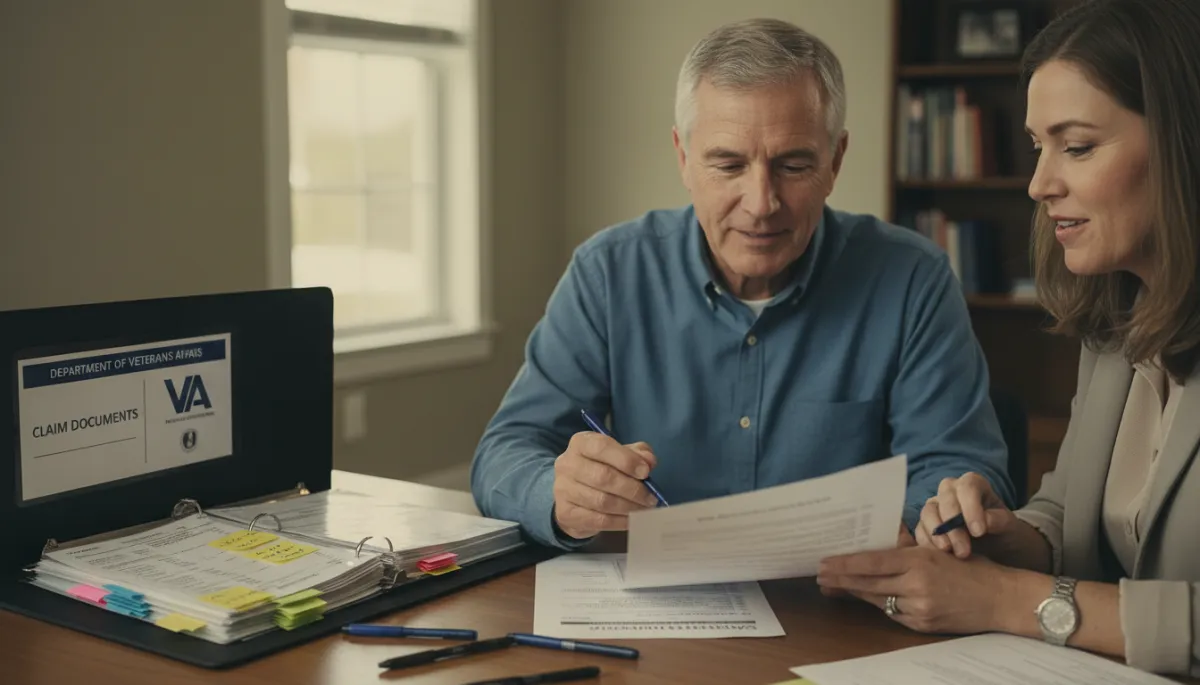
A structured pre‑filing checklist turns a scattered claim into a focused, winning package.
Claim Evaluation Tips: Turn a Decent Claim into a Dominant One
If your self‑audit exposed weaknesses, good. That means you are honest – and serious. Now you sharpen. These claim evaluation tips will help you push your VA Claim Strength from average to aggressive.
1. Align Your Story with Your Records – Ruthlessly
Your personal statement is not a novel; it is a mission report. Every major detail in your statement should match or complement something in your records. Dates, units, locations, symptoms – they all must line up. If something does not match, explain it clearly instead of hoping the VA ignores it. They will not.
2. Use Buddy Statements as Force Multipliers, Not Crutches
Buddy statements are powerful, but only when they are precise. A strong buddy statement:
Names specific events, dates, locations, and duties they personally observed.
Describes changes in your behavior, performance, or health over time.
Stays factual, not emotional – the VA needs details, not drama.
Do not lean on buddy statements to replace missing medical evidence. Use them to fill gaps, confirm timelines, and reinforce your story, not to do the entire job alone.
3. Attack Inconsistencies Before the VA Does
If you had civilian injuries, long treatment gaps, or other health conditions that could confuse the picture, address them head‑on. Ask your doctor to explain why your current condition is still tied to service, even with those complications. Acknowledged and explained inconsistencies are far less damaging than surprises the VA discovers on its own.
4. Know the Rating Criteria – and Aim for the Right Level
Winning service connection is only half the battle; the other half is the rating percentage. The VA uses specific criteria for each condition – frequency of panic attacks, range of motion, sleep disruption, hearing thresholds, and more. Read the rating schedule for your condition and make sure your evidence speaks directly to those factors. This is how you transform a lowball rating into the level of veteran benefits you actually deserve.
💡 Pro Tip: When you talk to your doctor, describe your worst days, not your best. The VA rates based on how bad your disability can be, not how well you mask it when you are trying to be tough.
When to Bring in Veteran Advocacy and Professional Help
You can absolutely file a claim on your own. Many veterans do. But if your case is complex – multiple conditions, denied claims, missing records, or serious mental health issues – going solo can be costly. That is where Veteran Advocacy groups, accredited representatives, and experienced attorneys come in. Their job is to spot weaknesses you might miss and turn them into strengths before the VA ever sees your file.
They can help organize your evidence into a clear, logical package instead of a chaotic pile of documents.
They know what the VA looks for in Strong VA Claims and how to present your case in that language.
They can help you secure solid nexus opinions and tackle appeals if the VA gets it wrong.
📌 Key Takeaway: Asking for help is not weakness; it is strategy. The VA has rules, deadlines, and traps. A strong advocate knows where they are and how to avoid them.
Common Myths That Quietly Weaken Your VA Claim
Too many veterans walk into the VA system armed with myths instead of facts. These myths silently drain your VA Claim Strength long before a rater ever sees your file. Crush them now:
“If I just tell my story, they will understand.”
No. Your story matters, but it must be backed by records, medical opinions, and credible evidence. Emotion without documentation does not win claims.“The VA will find all my records for me.”
Maybe. Maybe not. Never rely on “maybe” when your future income is on the line. Request, review, and provide key records yourself whenever possible.“If I downplay my symptoms, I look tougher.”
The VA is not rating your toughness; it is rating your disability. Downplaying your pain or limitations is a direct attack on your own claim.
Building a Strong VA Claim Is Not Greed – It Is Justice
Some veterans hesitate to push hard for benefits. They say, “Others have it worse,” or “I do not want to seem like I am chasing money.” That mindset might sound humble, but in the VA world, it is dangerous. The system is not a charity; it is a legal promise. You paid for these veteran benefits with your time, your body, and your peace of mind. Claiming them fully and fiercely is not greed. It is justice.
When you build Strong VA Claims, you are not just helping yourself. You are also sending a message: veterans will not quietly accept lowball ratings, sloppy reviews, or broken promises. You are part of a larger wave of Veteran Advocacy that forces the system to respect the people it serves.
Your Pre‑Filing Checklist: A Bold, No‑Excuses Game Plan
Before you hit submit, run through this blunt checklist. If you cannot say “yes” to most of these, your VA Claim Strength is not where it needs to be:
Do I have a current, documented diagnosis for every condition I am claiming?
Can I point to specific records or events in service that relate to each condition?
Do I have at least one clear nexus opinion tying my condition to my service, using “at least as likely as not” language?
Have I reviewed my own records to make sure my story lines up with the facts on paper?
Have I prepared buddy statements or other supporting evidence to fill in any gaps?
Do I understand the rating criteria for my conditions and have evidence that speaks directly to those standards?
Have I considered talking with a Veteran Advocacy organization, VSO, or accredited representative to review my claim?
Final Word: File Like Your Future Depends on It – Because It Does
Your VA claim is not just paperwork. It is your income, your healthcare, your family’s stability, and your peace of mind. You did not serve halfway, and you should not file halfway. Use the pillars, the self‑audit, and these claim evaluation tips to tear apart your claim before the VA ever sees it. Fix the weak points now, so you are not fighting avoidable denials later.
You earned your veteran benefits the hard way. Now claim them the smart way. Build your evidence. Clarify your story. Demand strong medical support. And when you finally hit “submit,” do it with the confidence of someone who knows their VA Claim Strength is not just good – it is undeniable.
📌 Ready for expert backup? If you want help reviewing your evidence and strengthening your claim before you file, visit www.warriorbenefits.com to connect with veteran-focused support.