

Get Fit After Military: A Civilian's Guide
Fitness, Military To Civilian, Healthy Lifestyle
How to Get Back in Shape After Leaving the Military
Leaving the service is a major life change, and it’s completely normal if your fitness slipped while you were busy building a new life. The good news: you already know discipline, grit, and how to push through discomfort. This guide will help you use those strengths to make your fitness transition from military to civilian life smoother, healthier, and more sustainable.
Understanding the Fitness Transition After the Military
For many veterans, the fitness transition is one of the most surprising parts of going from military to civilian life. In the service, physical training is built into your schedule. You have PT tests, unit runs, and a culture that expects you to stay in shape. Once you separate, that structure disappears almost overnight. Work, school, family, and the stress of adjusting can easily push workouts to the bottom of your list.
If you’ve gained weight, lost endurance, or feel out of breath walking up stairs, you’re not alone. Nothing is “wrong” with you. Your environment changed, and your body responded. The goal now isn’t to beat yourself up but to create a new approach to post-military fitness that works for your current life, not the one you had on active duty or in the Guard or Reserve.
💡 Pro Tip: Think of this as a new mission, not a failure. You’re not “starting over” — you’re adapting your training to a new phase of life.
Reset Your Mindset: From Military To Civilian Fitness
One of the biggest challenges in going from military to civilian life is realizing that your fitness goals and methods may need to change. You might not be training for ruck marches, formation runs, or PT tests anymore. Instead, you’re training for energy at work, playing with your kids, managing stress, and staying healthy for the long haul.
In the military, “go hard or go home” is a common attitude. But in civilian life, that mindset can backfire. Trying to jump straight into intense workouts you used to crush can lead to injuries, frustration, and burnout. A smarter approach is to accept where you are right now and build gradually. You’re still that same driven person, but your body needs time to adapt after a break or years of different demands.
📌 Key Takeaway: Your mission is no longer to hit a military standard. Your mission is to build a sustainable, enjoyable healthy lifestyle that supports your new civilian goals.
Step One: Assess Where You Are Now (Without Judgment)
Before you jump into a new exercise routine, it helps to know your starting point. This isn’t about comparing yourself to your last PT test or deployment. It’s about understanding your current body so you can get in shape safely and efficiently.
Check your basics: How much do you weigh now versus when you left the military? How do your clothes fit? How do you feel climbing stairs or carrying groceries?
Notice aches and pains: Old injuries, tight hips, sore knees, or a stiff back are common after years of service. These don’t disqualify you from training, but they should shape how you train.
Consider a medical check: If it’s been a while since your last physical, or if you have conditions like high blood pressure, diabetes, or chronic pain, talk with a healthcare provider before ramping up your workouts.
This quick assessment gives you a realistic picture. It might sting a bit, but it’s also empowering. You’re drawing a line in the sand and saying, “This is where I am, and I’m moving forward from here.”
Step Two: Set Civilian Fitness Goals That Actually Fit Your Life
Now that you know your starting point, it’s time to set goals. The key is to choose goals that matter to you now, not just goals that would impress your old squad. Think about how you want your post-military fitness to support your everyday life:
Do you want more energy for a demanding job or night classes?
Do you want to keep up with your kids or grandkids at the park?
Do you want to reduce stress, sleep better, or manage anxiety or depression?
Do you want to lose a certain amount of weight or build muscle again?
Turn these into clear, realistic goals. For example:
“Walk or jog 3 miles without stopping within 8 weeks.”
“Lose 15 pounds over the next 4–6 months through exercise and a healthier diet.”
“Strength train 3 days per week for the next 3 months to rebuild muscle.”
💡 Pro Tip: Start with process goals (like “work out 4 days a week”) as well as outcome goals (like “lose 10 pounds”). You control the process directly, which keeps motivation high.
Step Three: Build a Simple, Effective Exercise Routine
You don’t need a complicated program to get in shape again. A solid exercise routine for someone transitioning from military to civilian life can be built around three pillars: cardio, strength, and mobility. Here’s a friendly, realistic weekly structure you can adapt:
1. Cardio: Rebuild Your Engine
Start where you are, not where you used to be. If it’s been a while, walking is a powerful way to restart your cardio. Aim for 20–30 minutes, 3–5 days per week. As you improve, you can add short jogging intervals, cycling, rowing, or swimming. The goal is to gently challenge your heart and lungs without crushing yourself on day one.
Week 1–2: Walk 20–30 minutes at a brisk but comfortable pace, 3–4 days per week.
Week 3–4: Add 30–60 seconds of light jogging every 5 minutes if your joints tolerate it.
After a month: Progress to 30 minutes of steady jogging or a mix of jog/walk intervals, 3 times per week.
2. Strength Training: Rebuild Muscle and Joint Support
Strength training helps you maintain muscle, protect your joints, and boost your metabolism. You don’t need a full gym; you can start with bodyweight movements and light dumbbells or resistance bands. Aim for 2–3 strength sessions per week, hitting all major muscle groups.
A simple full-body strength session might include:
Squats or chair squats (3 sets of 8–12 reps)
Push-ups (on the floor, knees, or against a wall) (3 sets of 6–10 reps)
Bent-over rows with dumbbells or bands (3 sets of 8–12 reps)
Glute bridges or hip thrusts (3 sets of 10–15 reps)
Planks or dead bugs for core strength (3 sets of 20–30 seconds)
💡 Pro Tip: Focus on good form and controlled movements, especially if you’re dealing with old injuries. Slow, quality reps beat fast, sloppy ones every time.
3. Mobility and Flexibility: Undo the Wear and Tear
Years of rucks, body armor, long drives, and desk work can leave you stiff. Mobility work helps reduce pain, improve posture, and keep you moving well. Just 5–10 minutes a day can make a big difference in your healthy lifestyle.
Gentle hip stretches and hip circles after sitting for long periods.
Chest and shoulder stretches to counteract hunching over a computer or phone.
Ankle and calf stretches if running or walking bothers your shins or knees.
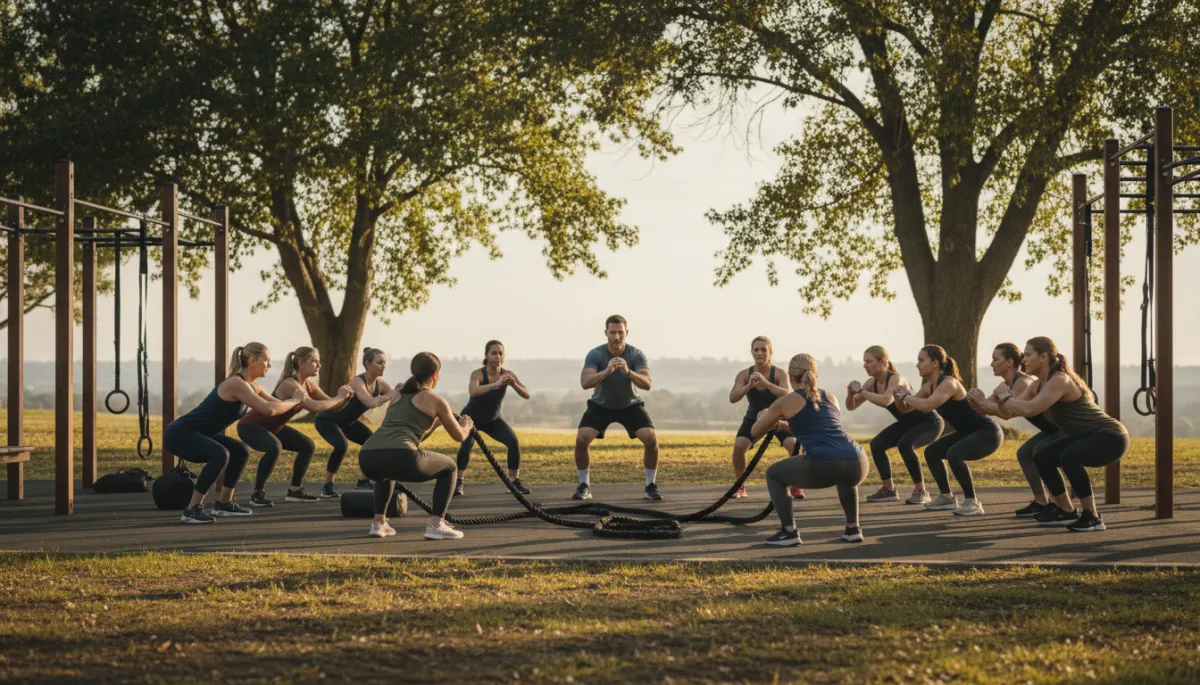
Training with other veterans brings back camaraderie and keeps workouts consistent.
Step Four: Make Your Fitness Routine Fit Real Life
In uniform, your schedule was often decided for you. In civilian life, you’re juggling work, school, family, and maybe the VA or job hunting. To keep your post-military fitness on track, your plan has to be realistic and flexible, not perfect on paper but impossible in practice.
Here are some ways to make your exercise routine stick:
Schedule workouts like appointments: Put them in your calendar and treat them as non-negotiable time for your health, just like a meeting or class.
Use shorter sessions: If an hour feels impossible, do 20–30 minutes. Two short sessions in a day still count. Consistency beats marathon workouts that never happen.
Plan around your energy: If you’re wiped after work, try morning or lunch workouts. If mornings are chaos, aim for evenings or weekends. There’s no “right” time — just the time you’ll actually use.
💡 Pro Tip: Think “minimum standard,” just like in the service. What’s the smallest amount of movement you can commit to on your busiest days? Maybe it’s a 10-minute walk. That still keeps the habit alive.
Step Five: Build a Healthy Lifestyle Beyond the Gym
Getting back in shape isn’t just about workouts. A truly healthy lifestyle includes how you eat, sleep, manage stress, and connect with others. These factors can make or break your progress, especially during your fitness transition from military to civilian life.
Nutrition: Fuel, Not Punishment
You don’t have to eat like you’re back in the chow hall, but you also don’t need a strict, miserable diet. Focus on simple, sustainable habits that help you get in shape and stay that way:
Base most meals around lean protein (chicken, fish, eggs, beans), colorful vegetables, and whole grains (brown rice, oats, whole wheat bread).
Keep easy, healthy snacks on hand: Greek yogurt, nuts, fruit, hummus with veggies, or hard-boiled eggs can keep you from hitting the drive-thru every day.
Watch your drinks: Sugary sodas, energy drinks, and heavy alcohol can quietly add a lot of extra calories and affect sleep and recovery.
Sleep: Your Secret Weapon for Recovery
Many veterans struggle with sleep — from odd schedules to stress, nightmares, or simply being used to high-alert environments. Yet sleep is where your body repairs muscle, balances hormones, and resets your mind. If you’re serious about post-military fitness, sleep has to be part of the plan.
Aim for 7–9 hours of sleep when possible, and try to keep a regular bedtime and wake-up time, even on weekends.
Create a simple wind-down routine: dim lights, turn off screens 30–60 minutes before bed, and avoid heavy meals or intense conversations right before sleep.
Stress and Mental Health: Training the Mind Too
Transitioning from military to civilian life can be stressful. You may miss the structure, the sense of purpose, or the people you served with. Stress, anxiety, and depression can all affect your motivation and energy to work out, and they can also impact your sleep and eating habits.
Movement itself is a powerful tool for mental health, but it’s okay to seek extra support. Talking with a counselor, joining a veteran support group, or using VA and community resources can help you manage the emotional side of this transition while you build your new healthy lifestyle.
📌 Key Takeaway: Fitness isn’t just what happens in the gym. It’s how you eat, sleep, manage stress, and connect with people who support your goals.
Step Six: Use Camaraderie and Accountability to Stay on Track
One thing many veterans miss is the camaraderie of training with others. The jokes on the run, the shared suffering during PT, the sense that you’re not doing it alone. You can recreate some of that in civilian life to support your fitness transition.
Join a local gym that feels welcoming, not intimidating, and consider group classes that match your level (like beginner strength, spin, or yoga).
Look for veteran-specific fitness groups, ruck clubs, or running groups in your area or online. Training with other vets can feel familiar and motivating.
Ask a friend, partner, or coworker to be an accountability buddy. Share your goals and check in weekly about your workouts and progress.
Step Seven: Adjust for Injuries, Limitations, and Aging
Many service members leave with some level of wear and tear — knees, backs, shoulders, and ankles often carry the scars of training, deployments, and years on your feet. Add aging into the mix, and it’s clear that your post-military fitness plan needs to respect your body’s limits while still challenging you.
Some friendly guidelines:
Swap high-impact moves (like hard running or jumping) for lower-impact cardio (cycling, rowing, elliptical, swimming, brisk walking with a weighted pack if tolerated).
Adjust range of motion on strength moves to avoid pain. For example, do box squats to a higher box if deep squats bother your knees, or use dumbbells instead of a barbell if your shoulders are sensitive.
If a movement causes sharp or lasting pain, don’t “suck it up.” Modify or replace it. The goal is long-term progress, not reliving the worst parts of PT.
💡 Pro Tip: Consider working with a physical therapist or trainer who understands veterans. A few sessions can help you design a smart exercise routine around old injuries.
Step Eight: Track Progress and Celebrate Wins
In the military, you had clear standards and tests to measure progress. In civilian life, you can create your own simple metrics to stay motivated and see how far you’ve come on your journey to get in shape again.
Track basic stats: distance walked or run, weights lifted, how many push-ups or squats you can do, or how long you can hold a plank. Re-test every 4–6 weeks.
Notice non-scale victories: better sleep, more energy at work, fewer aches, improved mood, or feeling more confident in your clothes.
Celebrate milestones: completing a month of consistent workouts, hitting a new distance, or lifting a weight you didn’t think you’d see again. Small rewards — a new pair of running shoes, a massage, or a day trip — can keep you going.
Putting It All Together: Your New Mission Plan
Let’s pull everything into a simple, friendly framework you can start using this week. Think of it as your basic operations order for post-military fitness and a sustainable healthy lifestyle:
Assess: Take stock of your current fitness, energy, and any injuries. No judgment — just honest information.
Set goals: Choose 1–3 realistic goals that matter to your civilian life, like more energy, weight loss, or strength.
Plan your week: Aim for 3–5 days of movement, mixing cardio, strength, and mobility. Schedule exact days and times.
Support your body: Eat mostly whole foods, drink plenty of water, and do your best to improve sleep and manage stress.
Find your people: Connect with a gym, group, or friend who keeps you accountable and makes training more fun.
Adjust as needed: Modify for injuries, busy weeks, or changing goals. Progress, not perfection, is the standard now.
Final Thoughts: You Haven’t Lost It — You’re Rebuilding It
Transitioning from military to civilian life is one of the biggest changes you’ll ever face. It’s normal if your fitness took a back seat while you figured out careers, relationships, and new routines. But your story doesn’t end with “I used to be in great shape.” You still have the discipline, resilience, and experience that helped you get through basic training, deployments, and everything that came with service.
Your new mission is to use those strengths to build a version of fitness that fits your life now. A version that supports your health, your family, your work, and your mental well-being. A version that’s flexible enough to handle real-world ups and downs, but solid enough to keep you moving forward.
You don’t have to do everything at once. Start small. Take a walk today. Do a few push-ups. Drink more water. Go to bed 30 minutes earlier. Each small step is a vote for the kind of person you want to be in this next chapter — someone who takes care of their body, honors their service by staying strong, and embraces a truly healthy lifestyle.
Your time in uniform shaped you, but it doesn’t define your limits. With a thoughtful fitness transition, a realistic exercise routine, and a supportive environment, you can absolutely get in shape again — and maybe feel better than you did back then. Your next mission starts now, one workout, one meal, and one choice at a time.