
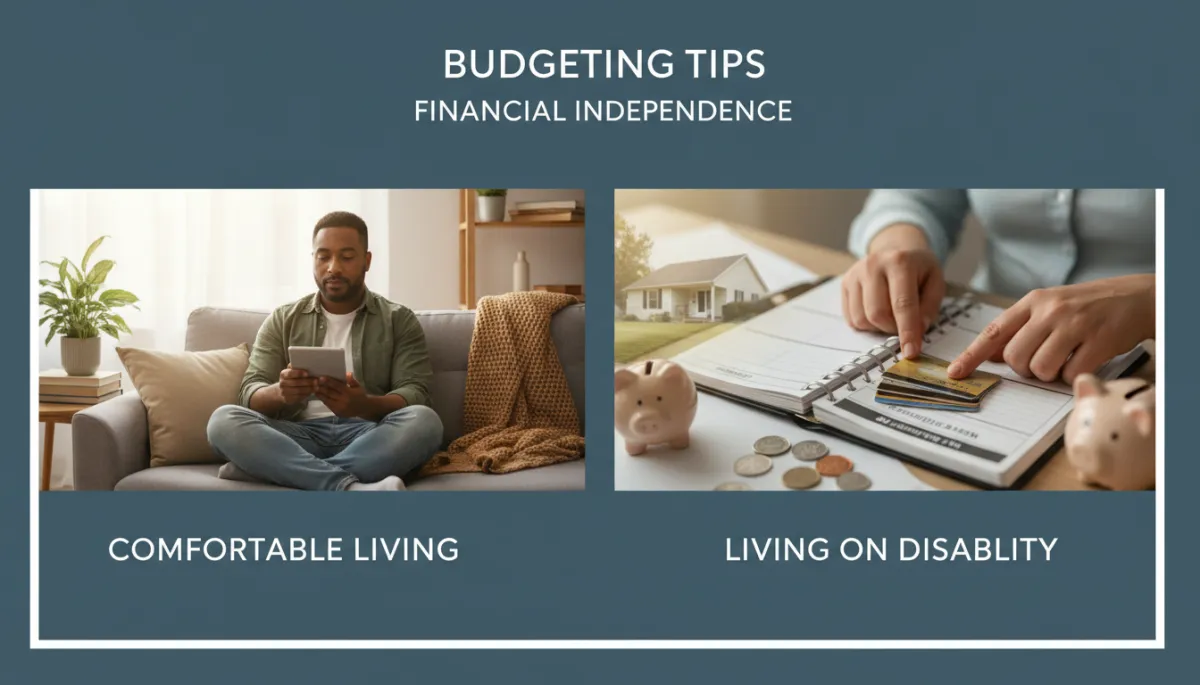
Living Comfortably on VA Disability Benefits
Personal Finance, VA Disability, Budgeting Tips
Can You Live Comfortably on VA Disability Alone?
Wondering whether VA Disability benefits can realistically cover your life on their own is not just a money question; it is a question about dignity, security, and what “comfortable living” actually means for you. This guide walks through what living on disability looks like, how far VA Disability can stretch, and what steps can move you closer to genuine financial independence even if VA benefits are your primary income.
What “Living Comfortably” on VA Disability Really Means
Before asking if you can live comfortably on VA Disability alone, it helps to define what “comfortable” looks like in real life. For some, comfortable living means a modest apartment, reliable transportation, and enough left over for hobbies and the occasional trip. For others, it includes supporting a family, paying a mortgage, or living in a higher-cost city. The answer depends less on a single national number and more on your personal mix of disability benefits, location, health needs, and expectations.
VA Disability compensation is designed to replace some of the earning power lost because of service-connected conditions. It is tax-free, which helps, but it is not automatically a full replacement for a civilian salary. Yet many veterans do manage to build a stable, even satisfying life while living on disability as their main income. The difference usually comes down to planning, benefits awareness, and day-to-day choices rather than luck alone.
Understanding VA Disability: How the Benefit Actually Works
VA Disability compensation is based on a disability rating from 0% to 100%, in 10% increments. The higher your combined rating, the higher your monthly payment. Because this income is tax-free, the take-home value can be closer to a larger pre-tax paycheck than it first appears on paper. Still, a 60% rating in a low-cost rural area feels very different from that same rating in a major coastal city with high rent and medical costs.
Your rating may also qualify you for additional disability benefits , such as higher compensation for dependents, Special Monthly Compensation for certain severe conditions, or programs like Individual Unemployability that pay at the 100% rate even if your combined rating is lower. Understanding every piece of your benefit structure is one of the first steps toward making VA Disability the backbone of a workable financial plan.
📌 Key Takeaway: The question is not only “What is my monthly VA Disability amount?” but “What full package of VA benefits am I eligible for, and how can I use them together to support a stable life?”
Core Expenses: What VA Disability Has to Cover First
Living on disability alone means your VA check becomes the foundation for every major bill. When you strip the budget down to essentials, most people share the same core categories:
Housing (rent or mortgage, utilities, basic maintenance)
Food and household supplies
Transportation (car payment, gas, insurance, or public transit)
Health care costs not fully covered by VA or other plans
Communication (phone, internet, possibly a low-cost streaming service)
If your monthly VA Disability payment can reliably cover these basics, you are already part of the way toward comfortable living. The challenge is leaving enough room for savings, occasional fun, and the unexpected. That is where intentional planning and thoughtful budgeting tips become central to your day-to-day decisions.
Cost of Living: Why Where You Live Matters as Much as What You Earn
Two veterans with the same rating and the same monthly VA Disability amount can have completely different experiences depending on cost of living. A modest one-bedroom apartment in a small Midwestern town might cost less than half of a similar place in a major coastal city. Groceries, transportation, and even local taxes all shift the math on whether you can live comfortably on VA Disability alone.
Some veterans choose to relocate to lower-cost areas, move closer to family, or consider house-sharing arrangements to stretch their benefits. That decision is personal and may be shaped by medical care, support networks, and family obligations. Still, recognizing the power of geography gives you one more lever to pull in pursuit of a more stable, less stressful life on disability benefits.
💡 Pro Tip: When evaluating a move, compare not just rent but the full picture—utilities, transportation, access to VA facilities, and availability of discounts or local veteran programs.
Beyond the Check: Other Disability Benefits and Supports to Consider
Living on disability alone does not have to mean living on VA Disability alone. Many veterans qualify for a mix of federal, state, and local supports that can significantly improve day-to-day life. These might not always put more cash in your hand, but they can reduce your out-of-pocket costs and ease financial pressure in meaningful ways.
Health care through the VA, including prescriptions and mental health services, which can cut medical expenses dramatically.
Property tax reductions or exemptions in some states for disabled veterans, lowering housing costs for homeowners.
Reduced or free vehicle registration, hunting and fishing licenses, or state park access, adding value without extra spending.
Possible eligibility for Social Security Disability Insurance (SSDI) or Supplemental Security Income (SSI), which can supplement VA Disability for some individuals.
Each additional support, even if small on its own, can help transform a bare-bones existence into something closer to genuine comfortable living. The key is taking time to research, apply, and follow up on these opportunities rather than assuming VA Disability is the only piece available to you.
Budgeting Tips for Living on Disability as a Primary Income
When your income is mostly or entirely from VA Disability, the stakes of every financial decision feel higher. A clear, realistic budget turns that monthly deposit from something you fear might run out into something you can guide with intention. These budgeting tips are not about perfection; they are about building a rhythm that matches the reality of your benefits and your life.
Start with your true monthly number. Because VA Disability is tax-free, your deposit is exactly what you have to work with. Write that number at the top of a page or spreadsheet and build downward from there, listing fixed expenses first, then flexible ones like groceries and gas.
Prioritize housing and health. Rent, utilities, and essential medical costs usually come first. If these alone are swallowing too much of your VA Disability check, that is a sign to explore options like downsizing, moving, or seeking additional benefits rather than simply cutting smaller expenses.
Create a simple “buckets” system. Instead of tracking every single transaction, divide your spending into a few broad buckets—housing, food, transportation, health, and personal. Assign a monthly amount to each and check in weekly to see how you are doing. The goal is clarity, not obsession.
Build a modest buffer, even if it is slow. Setting aside even a small amount each month—$20, $50, or whatever is realistic—creates a cushion for car repairs, co-pays, or a broken appliance. Over time, that buffer is one of the biggest differences between constantly feeling on edge and feeling reasonably secure while living on disability.
Use discounts and community resources intentionally. Veteran discounts, food banks, community events, and library programs are not signs of failure; they are tools. Each time you save a little, you free up more of your VA Disability for long-term stability or small joys that matter to you.

Simple envelope systems can turn a fixed VA Disability check into a focused monthly plan.
Can VA Disability Support Financial Independence?
The phrase financial independence often brings to mind early retirement, large investment portfolios, and passive income streams. In reality, financial independence for many people—especially those living on disability—means something more grounded: the ability to cover your needs, handle basic emergencies, and make choices without constant fear that a single setback will unravel everything.
Can VA Disability alone get you there? Sometimes, yes—but usually with careful planning and realistic expectations. A higher rating, a lower cost of living, and strong access to VA medical care make it more achievable. In other situations, a mix of part-time work, spouse income, or other benefits may be what bridges the gap between just getting by and feeling genuinely steady. Financial independence does not have to mean never working again; it can simply mean that work, if possible, is a choice, not a desperate necessity.
📌 Key Takeaway: On VA Disability, financial independence is less about a magic number and more about reducing obligations, building small reserves, and aligning your lifestyle with what your benefits can realistically support.
Practical Ways to Stretch VA Disability Without Sacrificing Dignity
Comfortable living on disability is not about stripping your life of everything enjoyable. It is about choosing where your money has the most impact and where small adjustments can free up room for what genuinely matters to you. A few practical approaches can make your VA Disability check feel larger than the number suggests.
Revisit recurring bills once a year. Internet, phone, and insurance providers often raise rates quietly. Calling to negotiate, switching plans, or changing companies can save meaningful amounts over time without changing your daily routine much at all.
Plan meals around staples, not cravings. Cooking at home, buying in bulk when possible, and centering meals around affordable staples like rice, beans, eggs, and seasonal produce can trim grocery costs without sacrificing nutrition. Occasional takeout or restaurant meals then become a deliberate treat, not a default habit that drains your budget.
Make transportation a conscious choice. Owning a car provides independence but also comes with insurance, maintenance, and fuel costs. For some, a reliable used car and careful driving habits strike the right balance. For others, especially in cities with good transit, a pass and occasional rideshares might free up a significant portion of their VA Disability for other priorities.
Use community and connection as part of your comfort. Free events, veterans’ groups, library programs, and volunteer opportunities can add richness to daily life without adding to your expenses. Comfortable living is emotional as much as financial; feeling connected often matters more than buying more things.
Planning for the Future While Living on Disability
When every dollar of VA Disability feels spoken for, the idea of setting aside money for the future can feel unrealistic. Yet even small, steady steps can change the long-term picture. Planning ahead is less about building a giant nest egg and more about reducing the risk that future you will be left without options when circumstances shift.
Create a basic emergency fund goal. A target of one month of expenses might feel huge at first, so break it down into tiny milestones—$100, then $250, then $500. Each step adds a thin layer of protection between you and life’s surprises while living on disability.
Think about long-term care needs. If your conditions are likely to change over time, consider what kind of care you might need later and what benefits or programs could support that. Talking to a VA social worker or a veterans’ service organization can help map out options before you are in crisis.
Clarify your paperwork. Wills, beneficiary designations, and basic legal documents may not change your monthly budget, but they can protect your family and your wishes. That sense of order is part of a broader definition of financial independence, even when your primary income is VA Disability.
Emotional Reality: The Stress of Relying on Disability Benefits
Money is never just numbers. Relying on disability benefits, whether from the VA or other sources, can stir up complicated feelings—frustration about limitations, worry about policy changes, or even guilt about not working in the way you once did. These emotions are part of the experience of living on disability and deserve acknowledgment just as much as the dollars and cents do.
Comfortable living, in this context, includes emotional comfort. That might mean connecting with other veterans who understand the system, seeking counseling through VA mental health services, or simply giving yourself permission to see your benefits as something earned, not a favor. When you view VA Disability as compensation for real sacrifices, it becomes easier to use those funds confidently to build the best life you can within your circumstances.
💡 Pro Tip: Treat your financial planning as an act of self-respect, not self-criticism. The goal is not to judge past decisions, but to give future you a steadier footing.
Pulling It Together: Is Comfortable Living on VA Disability Alone Possible?
So, can you live comfortably on VA Disability alone? For some individuals, the answer is yes—especially with a higher rating, access to strong VA health care, and a lifestyle aligned with a modest but stable income. For others, VA Disability provides a crucial foundation that still needs to be supplemented by part-time work, a partner’s earnings, or additional programs to reach a level of comfort that feels sustainable and humane.
What you can control is how clearly you understand your benefits, how intentionally you plan your spending, and how creatively you use the supports around you. With thoughtful budgeting tips, awareness of every disability benefit available, and a willingness to adjust where you live or how you structure your expenses, VA Disability can be more than a bare minimum. It can be the backbone of a life that, while perhaps simpler than you once imagined, still includes stability, connection, and room for moments of joy.
Financial independence on disability benefits may look different from the glossy images often associated with that phrase. Instead of early retirement on a beach, it might look like a modest home that is fully paid, a reliable car, a small emergency fund, and the freedom to spend time with people you care about. If VA Disability alone can support that picture—or come close with a few adjustments—then the answer to whether you can live comfortably may be closer to “yes” than it first appears.
Your path will be uniquely your own, shaped by your rating, your health, your community, and your priorities. But you do not have to navigate it blindly. Understanding the structure of VA Disability, embracing realistic budgeting, and redefining what comfortable living means for you personally are all steps toward a life that feels grounded rather than precarious, even when disability benefits are at the center of your financial world.
📌 Ready for one-on-one support? If you want help turning your VA Disability benefits into a clear, sustainable plan for your life, consider working with a financial coach who understands the unique realities veterans face. Click here to learn more about personalized financial coaching.