
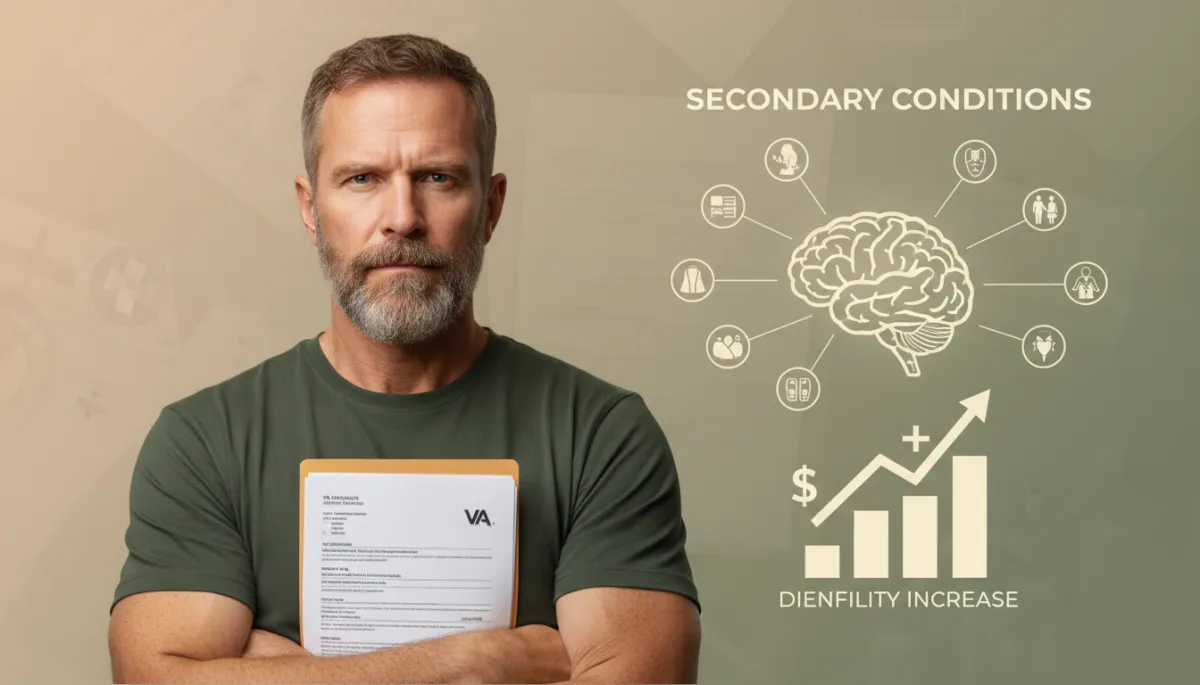
Maximize VA Benefits with Secondary Conditions
VA Disability, Secondary Conditions, Disability Benefits, Veteran Health, Benefits Increase, VA Claims Process
How Secondary Conditions Can Explode Your VA Disability Benefits
If you are a veteran living with service-connected injuries or illnesses, you cannot afford to ignore secondary conditions. Secondary conditions are often the silent force holding your VA Disability rating down, and once you claim them correctly, they can drive a powerful Benefits Increase that changes your day-to-day life. This is not a minor technicality in the VA Claims Process—it is one of the most aggressive tools you have to get the Disability Benefits you deserve for your real-world Veteran Health challenges.
Secondary Conditions: The Overlooked Powerhouse in VA Disability
Too many veterans fight for years to raise their VA Disability rating and never realize that secondary conditions are often the missing link. A secondary condition is a disability that is caused or made worse by an already service-connected condition. It does not have to be directly tied to your time in uniform; it just has to be linked to something that is already service connected. That connection can unlock a serious Benefits Increase if you are bold enough to claim it and back it up with evidence.
Think about how your body and mind actually work. Service-connected knee injuries can throw off your gait and wreck your back. Chronic pain can trigger depression. Sleep apnea can be tied to weight gain caused by medications. Migraine headaches can come from a traumatic brain injury. The VA Disability system recognizes these chains of cause and effect—but only if you and your medical providers clearly spell them out in the VA Claims Process. If you do not claim them, they do not exist in the VA’s world, and your Disability Benefits stay artificially low while your Veteran Health keeps taking the hit.
Why Secondary Conditions Can Trigger a Massive Benefits Increase
Here is the hard truth: the VA Disability rating system is not designed to automatically see the full picture of your health. It sees what you claim, what is in your records, and what is proven. That means secondary conditions are often the difference between a modest rating and a life-changing Benefits Increase. When you add secondary conditions, you are not just stacking numbers—you are documenting the real impact military service has had on your entire body and mind, not just one isolated injury or diagnosis.
Secondary conditions can:
Push you over key rating thresholds like 50%, 70%, or even 100% combined VA Disability
Support eligibility for Total Disability based on Individual Unemployability (TDIU)
Strengthen your argument that your service-connected conditions severely limit your ability to work or function day-to-day
The math the VA uses for combined ratings is brutal and confusing, but one thing is clear: more properly documented service-connected and secondary conditions give you more leverage for a Benefits Increase. You are not gaming the system—you are forcing it to see the full reality of your Veteran Health instead of a watered-down version that minimizes your struggles.
💡 Power Move: If your daily life looks nothing like what your current VA Disability rating suggests, you almost certainly have unclaimed secondary conditions waiting to be documented.
Common Secondary Conditions That Can Boost Your Disability Benefits
Secondary conditions show up in every corner of Veteran Health. They are not rare; they are everywhere. The key is to recognize them and tie them to your existing VA Disability awards. Here are some powerful examples many veterans miss:
1. Orthopedic Chains: From One Joint to Your Entire Body
Maybe you already have a service-connected knee, ankle, or hip injury. That single joint problem can absolutely wreck your biomechanics. Over time, you may develop:
Chronic low back pain from limping or uneven weight-bearing
Arthritis in other joints from overcompensation
Nerve pain or radiculopathy from spinal issues caused by altered posture
Those downstream problems are textbook secondary conditions. If your doctor links your back pain or new joint problems to your original service-connected injury, you can file for a Benefits Increase based on those additional disabilities. Ignoring them means you are absorbing the pain while the VA only pays for a fraction of the damage.
2. Mental Health Conditions Triggered by Physical Disabilities
Living with chronic pain, limited mobility, or disfigurement hits harder than most rating decisions reflect. Depression, anxiety, and even substance abuse can develop as a direct result of trying to live with severe service-connected conditions. If you have:
Depression from chronic pain or loss of career opportunities
Anxiety from severe tinnitus, sleep loss, or traumatic injuries
Worsening PTSD symptoms due to physical limitations or isolation
those mental health conditions can be rated as secondary to your primary service-connected conditions. Mental health ratings can be powerful, often 30%, 50%, 70%, or even 100%. That is exactly the kind of secondary condition that can transform your Disability Benefits and more accurately reflect your true Veteran Health reality.
3. Sleep Apnea and Weight Gain Linked to Other Conditions
Sleep apnea is a hot issue in the VA Disability world, and secondary connections are often the key to winning these claims. For example, if you are on medications for pain, mental health, or other service-connected issues that cause weight gain, and that weight gain contributes to obstructive sleep apnea, you may have a legitimate secondary claim. Similarly, chronic nasal issues, deviated septum, or other respiratory conditions can contribute to sleep apnea that may be secondary to a service-connected problem.
Sleep apnea ratings are often 30%, 50%, or more—especially when CPAP or similar devices are prescribed. That is not a small bump; it is the kind of Benefits Increase that can move you into a new bracket of monthly compensation and health care support, all tied directly to your existing service-connected conditions through the VA Claims Process.
4. Cardiovascular, Digestive, and Other Systemic Conditions
Many medications used to treat service-connected conditions can cause serious side effects. Pain meds, anti-inflammatories, and psych meds can contribute to:
High blood pressure or heart disease
Stomach ulcers, GERD, or other digestive disorders
Liver or kidney issues from long-term medication use
These are not random health problems. They can be directly tied to the treatment of your service-connected disabilities. When documented correctly, they become powerful secondary conditions that can raise your overall VA Disability rating and better protect your long-term Veteran Health.

Detailed medical records and medication histories can turn overlooked issues into rated secondary conditions.
How to Prove Secondary Conditions in the VA Claims Process
Knowing you have secondary conditions is not enough. The VA Claims Process demands proof, and you need to come prepared. To win a secondary VA Disability claim, you typically need three things:
A current diagnosis of the secondary condition from a qualified medical professional.
Evidence of your primary, already service-connected disability (which you should already have).
A medical nexus stating that the secondary condition is “at least as likely as not” caused or aggravated by the service-connected condition.
That third piece—the nexus—is where many claims live or die. You need a strong medical opinion that clearly explains the connection. Vague statements will not cut it. You want language that directly links your secondary condition to your service-connected disability using clear, confident terms. This is where an independent medical opinion, a supportive VA provider, or a specialist can be a game-changer in your pursuit of a Benefits Increase.
📌 Key Takeaway: The VA will not guess at the connection between your conditions. If a doctor does not spell it out, the VA will act like the link does not exist—no matter how obvious it feels to you.
Step-by-Step: Filing a Secondary Condition for a Benefits Increase
If you are ready to push for the Disability Benefits you actually deserve, you need a focused strategy. Here is a bold, step-by-step approach to claiming secondary conditions through the VA Claims Process:
Step 1: Audit Your Own Health—Ruthlessly
Start by listing every service-connected condition you already have. Then, under each one, write down every additional problem you experience that might be related—pain in other areas, mental health symptoms, sleep issues, weight changes, medication side effects, and limitations in daily activities. Be brutally honest. If it affects your life, it belongs on that list. This is not the time to “tough it out.” Toughing it out is exactly how veterans end up with low VA Disability ratings that do not match their true Veteran Health reality.
Step 2: Talk to Your Doctors and Demand Clarity
Bring that list to your VA or private providers. Ask direct questions: “Could my back pain be caused by my service-connected knee injury?” “Is my depression related to my chronic pain?” “Are these stomach problems from my long-term medications?” Push for clear answers and ask if they are willing to document those connections in your medical records. You are not asking for special treatment—you are asking for the truth to be put in writing so the VA Claims Process has no excuse to ignore it.
Step 3: Gather Evidence Like Your Benefits Depend on It—Because They Do
Collect everything: clinic notes, diagnostic tests, medication lists, sleep studies, mental health evaluations, and any medical opinions that reference how one condition affects another. If you can, get a written nexus letter from a medical professional that clearly states your secondary condition is caused or aggravated by your service-connected disability. The stronger the medical evidence, the harder it is for the VA to deny your claim or lowball your Disability Benefits.
Step 4: File a Claim Specifically for Secondary Service Connection
When you file, make it crystal clear you are claiming the condition as secondary to an existing service-connected disability. Identify the primary condition and the secondary condition by name. Attach your evidence and any nexus opinions. Do not assume the VA will connect the dots—you must connect them in writing, in black and white, so the rater has to address them directly in the VA Claims Process decision.
Step 5: Crush Your C&P Exam with Specific, Honest Detail
If the VA schedules a Compensation & Pension (C&P) exam, treat it like a mission. Show up early, bring notes, and clearly explain how your secondary condition affects your life. Do not downplay symptoms. Do not say “I’m fine” when you are not. Describe your worst days, not your best ones. Explain exactly how the secondary condition stems from your primary service-connected disability. The examiner’s report can make or break your chances at a Benefits Increase, so you must be direct, detailed, and unflinching about your Veteran Health struggles.
⚠️ Warning: If you minimize your symptoms at your C&P exam, the VA will gladly minimize your VA Disability rating. You are not complaining—you are reporting facts the system needs to hear.
How Secondary Conditions Protect Your Long-Term Veteran Health
This is about more than a monthly check. Properly claimed secondary conditions can protect your long-term Veteran Health in powerful ways. Higher VA Disability ratings can open the door to:
Priority access to VA health care and specialized clinics
Additional programs, including caregiver support, vocational rehab, and mental health resources
State-level benefits like tax breaks, license discounts, and education benefits tied to certain rating levels
When you fight for a Benefits Increase through secondary conditions, you are not just chasing a bigger number—you are building a safety net for your future. As you age, those secondary conditions often get worse, not better. Locking in a higher, accurate VA Disability rating now can mean stronger support when you need it most later in life. That is not greed; that is smart, aggressive self-advocacy.
Crushing the Myths That Hold Veterans Back
Too many veterans stay stuck because of myths and bad advice about VA Disability and secondary conditions. It is time to crush a few of them:
Myth: “If I file for more, they might lower what I already have.” Reality: While the VA can review existing ratings, strong evidence for secondary conditions usually strengthens your overall file. Sitting still out of fear leaves you underpaid and under-recognized.
Myth: “Everyone has aches and pains; I do not want to seem like I am complaining.” Reality: You are not complaining—you are documenting the damage from your service. The VA Disability system exists because service takes a toll. You earned these Disability Benefits.
Myth: “If it did not start in the military, it cannot be service connected.” Reality: That is exactly what secondary conditions are for. If your current condition is caused or worsened by a service-connected disability, it can still be connected and rated.
When to Get Backup: VSOs, Attorneys, and Independent Medical Opinions
You do not have to navigate secondary conditions alone. Veterans Service Organizations (VSOs), accredited attorneys, and claims agents can help you structure your VA Claims Process, gather evidence, and challenge bad decisions. Independent medical opinions can provide the strong nexus letters the VA often cannot or will not write for you. If your case is complex, or you have already been denied, getting professional backup is not a sign of weakness—it is a bold, strategic move to secure the Disability Benefits your service and your current Veteran Health truly justify.
💡 Pro Tip: When you talk to a VSO or attorney, lead with your secondary conditions. Make it clear you are not just reopening a claim—you are building a targeted case for a Benefits Increase based on the full impact of your service-connected disabilities.
Your Next Move: Stop Leaving Secondary Conditions—and Money—on the Table
If your current VA Disability rating does not match how hard daily life actually is, that is your red flag. Secondary conditions might be the missing link between your reality and your rating. Every untreated, undocumented, or unclaimed condition connected to your service-connected disabilities is money left on the table, care you are not receiving, and support your family is not getting. That is unacceptable after everything you have already given.
Here is your challenge:
Audit your health and list every possible secondary condition tied to your service-connected disabilities.
Talk to your doctors and demand clear, written opinions about those connections.
File targeted secondary claims with strong evidence and clear language in the VA Claims Process.
If you hit a wall, bring in a VSO, attorney, or independent medical expert and push back hard.
You earned these Disability Benefits with your service, your sacrifice, and the long-term impact on your body and mind. Secondary conditions are not an optional extra—they are a core part of your true VA Disability picture. If you want a real Benefits Increase that matches the reality of your Veteran Health, you must claim them boldly, document them thoroughly, and refuse to back down when the system pushes back.
Your service was not halfway. Your injuries are not halfway. Your Disability Benefits should not be halfway either. Use secondary conditions as the powerful tool they are and force the VA to see the full story. Your future, your stability, and your health are worth the fight.
💡 Pro Tip: Ready for guided, one-on-one support with your secondary condition strategy? Visit www.warriorbenefits.com to take your next step today.