

Meal Planning for Veterans with Depression
Veterans Health, Meal Planning, Depression Support
Meal Planning for Veterans With Low Energy or Depression
If you are a veteran living with low energy, depression, or other mental health challenges, even simple tasks like deciding what to eat can feel overwhelming. This guide is here to offer friendly, practical support so meal planning feels a little lighter, not like another mission you have to complete alone.
Why Meal Planning Matters for Veterans’ Health
When you are dealing with depression, PTSD, chronic pain, or fatigue, your body and mind are already working hard. Meal planning is not about perfection or strict rules. It is about making your daily life a little easier and supporting your overall veterans health in a gentle, realistic way. A simple plan can help you:
Avoid skipping meals because you are too tired to cook or decide what to eat
Keep your blood sugar more steady, which can support mood and energy levels
Reduce stress and decision fatigue by having go-to low energy meals ready to go
Save money by using what you have instead of relying on last-minute takeout
💡 Gentle Reminder: If all you manage this week is planning two or three dinners, that still counts as meal planning. Small steps are real progress.
How Depression and Low Energy Affect Eating Habits
Depression can make everyday tasks feel heavy. You might lose your appetite, forget to eat, or feel too drained to cook. On the other hand, some people find themselves grazing all day or turning to comfort foods that are quick but not very nourishing. None of this means you are failing. It simply means your brain and body are under strain and need extra support, not criticism.
That is where thoughtful nutrition tips and realistic depression support come in. Food will not cure depression, but balanced meals can help stabilize mood, support better sleep, and give you a more solid foundation as you work with your care team, therapist, or VA provider on your mental health plan.
📌 Key Takeaway: Your meals do not have to be perfect to be helpful. Aim for “good enough” most days, and give yourself credit for every effort.
A Gentle, 3-Step Approach to Meal Planning When You Feel Drained
Step 1: Start With Just One Meal of the Day
Instead of planning every breakfast, lunch, and dinner for the week, choose the meal that gives you the most trouble. For many veterans with low energy, that is either breakfast (hard to get going in the morning) or dinner (you are wiped out by evening). Focus on that single meal and brainstorm three to five easy recipes or combinations you can rotate through.
If mornings are rough, plan grab-and-go breakfasts you can assemble the night before.
If evenings are hard, plan dinners that require almost no chopping or standing.
Step 2: Build a Short List of “Low Energy Meals”
Low energy meals are dishes that use minimal ingredients, little to no chopping, and very few steps. Think of them as your “fallback plans” for tough days. Keep them written on a sticky note on the fridge or in your phone so you do not have to think when you are exhausted. Examples include:
Rotisserie chicken, microwaveable brown rice, and a bagged salad mix
Scrambled eggs with pre-shredded cheese and whole grain toast
Canned soup with frozen vegetables stirred in and heated together
Step 3: Plan Around Your Energy, Not Just the Calendar
Traditional meal planning often assumes you will have the same energy every day. That is rarely true, especially if you are living with depression, chronic pain, or side effects from medications. Instead, try this approach:
Mark your likely “higher energy” days (maybe right after payday, after a good night’s sleep, or on days with fewer appointments).
On those days, plan slightly more involved meals or do some light prep, like cooking a batch of chicken or chopping vegetables.
On lower energy days, rely on your list of low energy meals and pre-prepped ingredients.
💡 Pro Tip: Think of prep work as a favor you are doing for your “future self” on a hard day, not as a chore you “should” be doing.
Easy Recipes Designed for Low Energy Days
You do not need chef skills to eat well. These simple, balanced ideas keep cooking time and cleanup to a minimum while still supporting your veterans health. Feel free to adjust seasonings, swap ingredients, or use what you already have at home. The goal is flexibility, not perfection.
1. No-Cook Breakfast Box
Why it helps: Mornings can be tough when depression weighs you down. This no-cook option makes it easy to grab something nourishing without much thought.
1 single-serve Greek yogurt or cottage cheese cup
1 piece of fruit (banana, apple, or a handful of berries)
A small handful of nuts or trail mix
Put everything in a container the night before and store it in the fridge. In the morning, open the fridge, grab the box, and breakfast is handled. This combination offers protein, healthy fats, and fiber to help keep your energy steadier through the morning.
2. Sheet Pan Chicken and Veggies (Minimal Cleanup)
Why it helps: Everything cooks on a single pan, which means less time standing and less time doing dishes. You can make enough for several meals at once, which is a huge win for low energy days.
1–2 pounds of chicken thighs or tenders (fresh or thawed)
1 bag of frozen mixed vegetables or pre-cut fresh veggies
2–3 tablespoons olive oil, plus salt, pepper, and any seasoning blend you like
Line a baking sheet with foil or parchment for easy cleanup. Place the chicken and vegetables on the pan, drizzle with oil, and sprinkle with seasonings. Bake at 400°F (about 200°C) for 20–30 minutes, until the chicken is cooked through. Store leftovers in containers for quick lunches or dinners over the next few days.
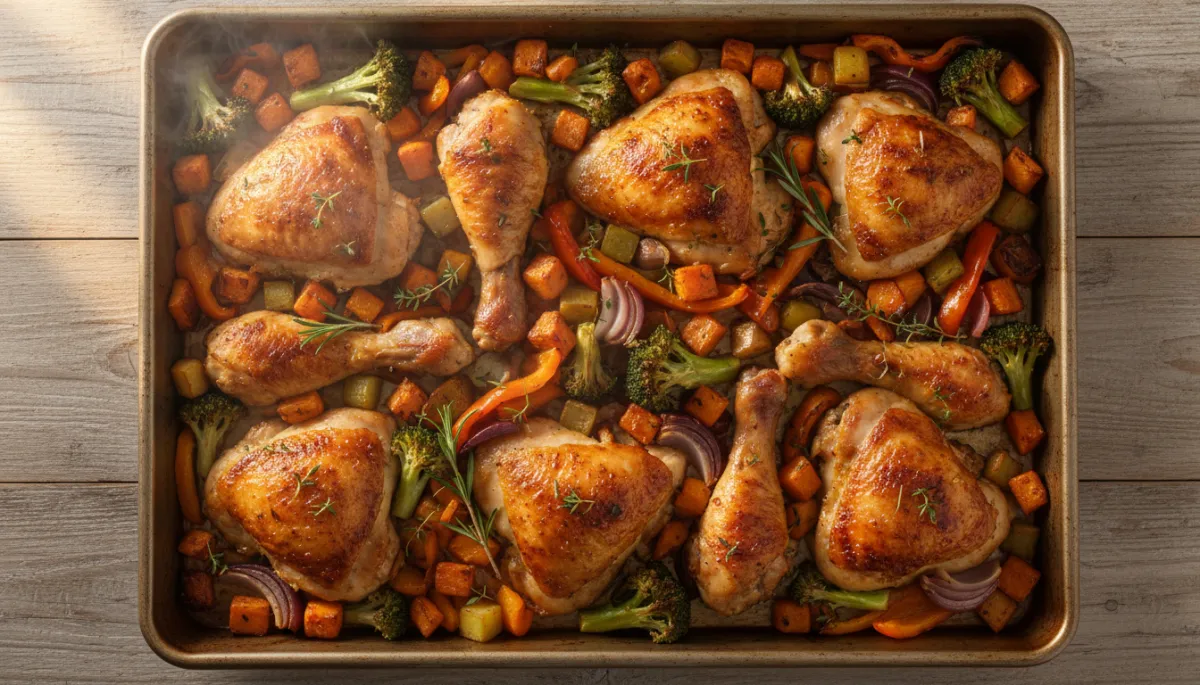
Sheet pan meals offer balanced nutrition with almost no extra cleanup required.
3. “Dump and Heat” Soup Bowl
Why it helps: Warm, comforting meals can feel especially soothing when your mood is low. This soup uses pantry staples and a microwave or stovetop.
1 can of low-sodium soup (chicken, vegetable, or bean-based)
½ cup frozen vegetables or a handful of pre-washed spinach
Optional: leftover cooked chicken, beans, or cooked rice for extra protein and carbs
Pour the soup into a bowl or small pot, add the veggies and any extras, then heat until hot. Pair with whole grain crackers or toast for a complete, low-effort meal. This is a great example of how easy recipes can still be nourishing.
4. Snack Plate Dinner (No Cooking Required)
On days when cooking feels impossible, give yourself permission to create a “snack plate” dinner. The idea is to combine items from different food groups so you still get protein, fiber, and healthy fats without turning on the stove.
Protein: deli turkey, cheese slices, hummus, hard-boiled eggs, or peanut butter
Carbs: whole grain crackers, pita bread, or leftover cooked potatoes
Produce: baby carrots, cherry tomatoes, apple slices, or cucumber rounds
Arrange everything on a plate or tray. It might feel simple, but it still counts as a balanced meal. This kind of flexible thinking is part of sustainable meal planning, especially when you are dealing with depression or low energy.
Nutrition Tips to Support Mood and Energy
Food is only one piece of depression support, but certain patterns can make a difference in how you feel day to day. Here are some friendly, realistic nutrition tips to keep in mind as you plan meals.
Aim for Regular Meals and Snacks
Skipping meals can lead to blood sugar crashes, which may make you feel more tired, irritable, or anxious. Try to eat something every three to four hours, even if it is small. A piece of fruit with peanut butter, a yogurt, or a handful of nuts can all help bridge the gap between meals and keep your energy more stable.
Include Protein at Most Meals
Protein helps you feel fuller longer and supports steady energy. It also provides building blocks for brain chemicals that affect mood. Simple protein sources include eggs, canned tuna or salmon, Greek yogurt, beans, lentils, rotisserie chicken, tofu, and nuts. When you are planning low energy meals, think about adding a small portion of protein to each one.
Make Carbs Work for You, Not Against You
Carbohydrates are not the enemy. In fact, they can help with serotonin production, which is linked to mood. The key is choosing slower-digesting carbs most of the time: whole grain bread, oats, brown rice, quinoa, beans, and potatoes with the skin on. Pairing these with protein and healthy fats can help prevent energy crashes later on.
Hydration and Caffeine: Find Your Balance
Dehydration can add to fatigue and headaches, which you definitely do not need when you are already struggling. Keep a water bottle nearby and sip throughout the day. If you enjoy coffee or energy drinks, try to limit them later in the afternoon so they do not interfere with sleep. Better sleep supports better mood, which feeds back into healthier eating patterns.
💡 Pro Tip: If plain water is boring, add lemon slices, a splash of juice, or use herbal tea to make staying hydrated more enjoyable.
Making Meal Planning Easier With Tools and Support
You do not have to do all of this alone or from scratch. There are many resources, especially through the VA and community programs, that can support your veterans health and make meal planning more manageable.
Use Simple Tools, Not Complicated Apps
If technology feels overwhelming, skip the fancy meal planning apps. A basic notebook, a whiteboard on the fridge, or even sticky notes can work just fine. Write down:
3–5 go-to breakfasts
3–5 simple lunches
3–5 low energy dinners
Rotate these ideas each week. Over time, you can add new easy recipes as you discover them, but there is no need to reinvent the wheel every week.
Ask About VA and Community Resources
Many VA facilities offer access to dietitians, group classes, or telehealth visits focused on veterans health and nutrition. Some communities also have food pantries, meal delivery programs, or grocery assistance specifically for veterans. If shopping or cooking is difficult because of low energy, mobility issues, or depression, it is absolutely okay to ask for help. Reaching out is a sign of strength, not weakness.
Involve Family, Friends, or Battle Buddies
If you have family members, roommates, or fellow veterans you trust, consider asking them to join you in meal planning. You could:
Swap simple recipes and ideas in a group text or chat
Cook together once a week and share leftovers
Take turns picking an easy, budget-friendly meal for everyone to try
Social connection itself is a powerful form of depression support. Sharing food and ideas can make the process feel less isolating and more manageable.
Gentle Meal Planning Tips for Tough Mental Health Days
Some days will be harder than others, and that is okay. On those especially rough days, you may need to lower the bar and focus on the basics. Here are a few ideas to keep in your back pocket for when depression is hitting hard.
Use paper plates if dishes feel overwhelming. Reducing cleanup can make eating feel more doable.
Keep a “backup stash” of shelf-stable foods. Items like canned beans, tuna, instant oatmeal, microwaveable rice, and nut butter can become quick, no-fuss meals.
Set a small, specific goal. For example, “I will eat something with protein before noon,” or “I will drink one glass of water with each meal.”
Use reminders. Phone alarms or sticky notes that say “Time to eat” or “Grab a snack” can help when your appetite is low or you lose track of time.
📌 Key Takeaway: On the hardest days, the goal is not a perfect plate. The goal is “something is better than nothing,” and that absolutely counts.
Bringing It All Together: A Sample 3-Day Low Energy Meal Plan
To show how these ideas can fit together, here is a simple three-day example. You can mix and match, swap items you do not like, or use it as a starting point for your own meal planning.
Day 1 (Higher Energy Day)
Breakfast: No-cook breakfast box (yogurt, fruit, nuts)
Lunch: Turkey and cheese sandwich on whole grain bread, baby carrots, and an apple
Dinner: Sheet pan chicken and veggies (make extra for leftovers)
Day 2 (Moderate Energy Day)
Breakfast: Instant oatmeal with peanut butter and sliced banana
Lunch: Leftover sheet pan chicken and veggies over microwaveable brown rice
Dinner: “Dump and heat” soup bowl with canned soup, frozen veggies, and whole grain crackers
Day 3 (Low Energy Day)
Breakfast: Greek yogurt and a handful of granola or cereal
Lunch: Snack plate: hummus, baby carrots, whole grain crackers, cheese slices
Dinner: Canned tuna mixed with a little mayo or olive oil, served with toast and a piece of fruit
This sample plan uses low energy meals, pantry staples, and leftovers to keep things simple while still providing a mix of protein, carbs, and healthy fats. You can expand it to a full week by repeating meals, changing up the fruit or vegetables, or adding one new easy recipe at a time.
A Final Word of Encouragement
As a veteran, you have already handled challenges that many people will never fully understand. If depression, PTSD, or low energy are part of your life right now, it makes sense that even everyday tasks like cooking can feel like too much. You deserve compassion, support, and tools that respect what you are going through.
Thoughtful meal planning is not about strict diets or judging your choices. It is about creating small systems that make it easier to feed yourself, even on the hard days. Over time, those small steps can support better veterans health, more stable energy, and a stronger foundation for all the other parts of your recovery and daily life.
If you are struggling, please consider reaching out to your VA provider, a mental health professional, or a trusted friend or family member. Nutrition and low energy meals can be one part of your depression support toolkit, alongside therapy, medication (if prescribed), peer support, and other resources available to you as a veteran.
💬 You Are Not Alone: Many veterans find that making food a little simpler opens up energy for healing in other areas. Start small, be kind to yourself, and remember that every meal you manage is a real win.