
Nutrition's Impact on Veterans' Mental Health
Nutrition, Mental Health, Veterans Wellness
How Nutrition Affects Mental Health in Veterans
Life after military service can feel like a whole new mission. Between adjusting to civilian routines, managing memories from deployment, and handling work, family, and health, it’s a lot. One powerful tool that often gets overlooked in veterans wellness is something you do every single day: eating. The connection between nutrition and mental health is real, and the way you fuel your body can have a big impact on your mood, energy, and overall psychological wellbeing.
Why What You Eat Matters for How You Feel
Many veterans are familiar with the idea that physical fitness supports performance. The same is true for mental performance and emotional balance. Your brain is an organ that uses a lot of energy and nutrients. Every thought, memory, and emotion is supported by tiny chemical messengers called neurotransmitters, and these depend on the food you eat to be made and to work properly. That’s where nutrition and healthy eating come in as quiet but powerful allies for mental health.
When your diet is mostly made up of processed foods, added sugars, and heavy saturated fats, it can increase inflammation in the body, throw off blood sugar, and make it harder for your brain to regulate mood. On the other hand, a nutrient-rich pattern of eating can support more stable energy, sharper focus, and a calmer emotional baseline. For veterans navigating stress, anxiety, depression, PTSD, or sleep problems, this diet impact can make daily life feel a little more manageable.
💡 Friendly Reminder: Nutrition is not a cure-all, and it doesn’t replace therapy, medication, or other care. But it can be a powerful part of your overall veterans wellness toolkit.
The Gut–Brain Connection: Your “Second Brain” on Duty
You might have noticed that when you are stressed or anxious, your stomach reacts—maybe with butterflies, nausea, or a tight feeling. That’s not a coincidence. Your gut and your brain are constantly “talking” through what’s called the gut–brain axis. Millions of nerves and a huge community of bacteria in your intestines send signals that can influence mood, stress levels, and even how you think about food itself. This is a major way that nutrition affects mental health in veterans and in everyone else, too.
A diet high in fiber from fruits, vegetables, beans, and whole grains feeds the “good” bacteria in your gut. These bacteria help produce substances that can reduce inflammation and support the production of feel-good neurotransmitters like serotonin. In fact, a large portion of your body’s serotonin is made in the gut. When your gut environment is healthier, your psychological wellbeing often follows. For veterans working to manage mood swings, irritability, or low motivation, paying attention to gut health through food is a surprisingly practical step.
💡 Simple Gut Support Tip: Aim to include at least one fruit and one vegetable at most meals. Over time, this gently improves gut balance without a drastic diet overhaul.
Key Nutrients That Support Veterans’ Mental Health
You do not need to memorize every vitamin and mineral to eat well. But understanding a few key players can help you make choices that better support your mental health and overall veterans wellness. Here are some nutrients with a strong connection to psychological wellbeing and brain function, along with easy food sources:
Omega-3 fatty acids: These healthy fats are found in salmon, sardines, trout, walnuts, chia seeds, and flaxseeds. They help build brain cell membranes and may reduce symptoms of depression and anxiety in some people. For veterans, regularly eating omega-3 rich foods can be one way to support mood resilience.
B vitamins (especially B6, B9, and B12): These vitamins play a role in creating neurotransmitters and maintaining energy levels. Good sources include leafy greens, beans, lentils, eggs, poultry, and fortified whole grains. Low levels of certain B vitamins have been linked with fatigue and low mood, both of which can affect mental health in veterans adjusting to civilian life.
Vitamin D: Sometimes called the “sunshine vitamin,” vitamin D influences brain function and immune health. Many veterans spend long periods indoors after service, which can lower vitamin D levels. Fatty fish, fortified milk, and eggs offer some vitamin D, but many people also need safe sun exposure or supplements as advised by a healthcare provider.
Magnesium: This mineral helps regulate the nervous system and may support better sleep and relaxation. It’s found in nuts, seeds, whole grains, leafy greens, and beans. For veterans dealing with restless nights or muscle tension, magnesium-rich foods can be a gentle addition to a relaxation routine.
Protein and amino acids: Protein from foods like chicken, fish, beans, tofu, Greek yogurt, and eggs provides amino acids, which are the building blocks of neurotransmitters. Balanced protein intake throughout the day can support steady energy and clearer thinking.
When these nutrients are regularly present in your diet, they help create a foundation for better mental health. You may still experience tough days—everyone does—but your body and brain are better equipped to cope with stress, process emotions, and recover after challenges.
Diet Impact on Mood, Stress, and Sleep in Veterans
The daily pattern of what you eat—your overall diet—often matters more than any single meal. For veterans, the diet impact on mood, stress, and sleep can show up in ways that are easy to overlook. Here are a few common patterns and how they connect to psychological wellbeing:
Blood sugar highs and crashes: Meals heavy in refined carbs and added sugar (like pastries, candy, soda, and many fast foods) can lead to quick bursts of energy followed by crashes. Those crashes often feel like irritability, brain fog, or sudden fatigue. Over time, this roller coaster can add to anxiety and low mood.
Caffeine and alcohol habits: Coffee, energy drinks, and alcohol are common go-tos for coping with stress, staying awake, or unwinding. In moderation, they may fit into a balanced lifestyle. But too much caffeine can increase jitteriness and trouble sleeping, while heavy or frequent alcohol use can deepen depression and interfere with restorative sleep—both of which affect mental health in veterans.
Skipping meals: Long stretches without eating can leave you feeling lightheaded, short-tempered, or “off.” Veterans juggling work, school, and family can easily fall into this pattern. Regular, balanced meals help keep energy and mood steadier throughout the day.
On the positive side, balanced meals that include protein, healthy fats, fiber, and complex carbohydrates support a more even release of energy. This can translate into fewer mood swings, better concentration, and less evening “crash.” When combined with other veterans wellness practices—like movement, therapy, and social support—healthy eating becomes a quiet but steady force working in your favor.
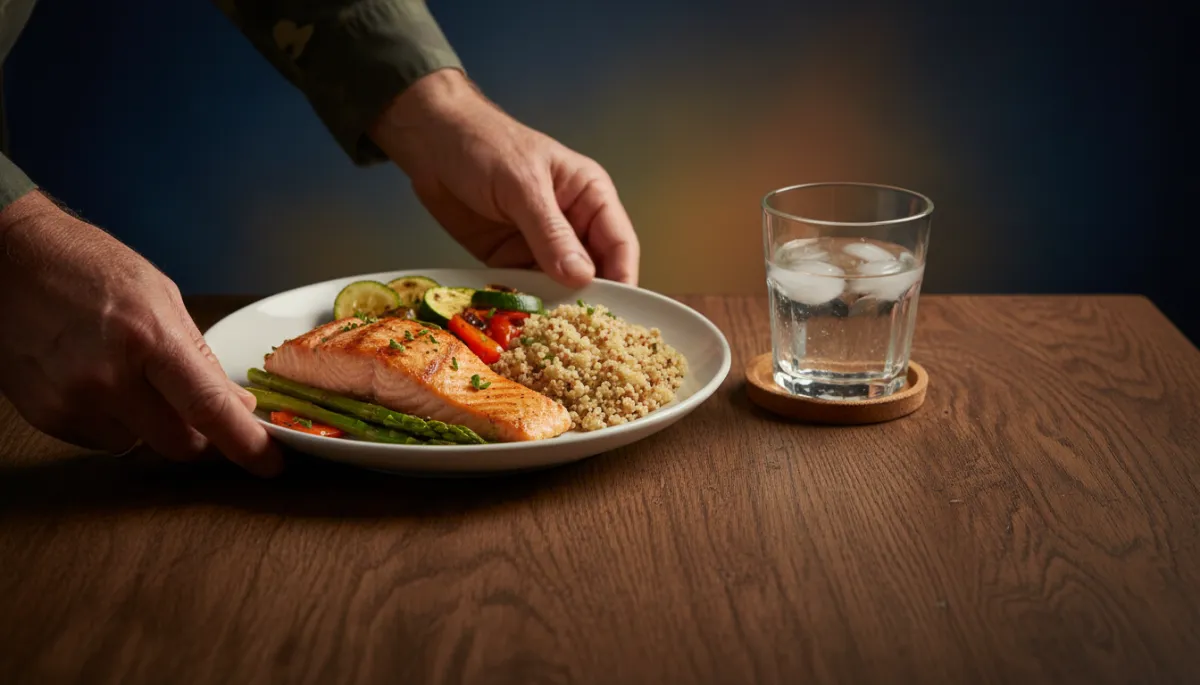
Simple, balanced meals like this can gently support steadier mood and energy.
Nutrition and PTSD, Anxiety, and Depression in Veterans
Many veterans live with PTSD, chronic anxiety, or depression. While food alone cannot treat these conditions, it can either support or strain your mental health as you work with your care team. Understanding some of these links can help you use nutrition as one more supportive tool rather than another source of stress or guilt.
PTSD and Hyperarousal
PTSD often comes with hyperarousal—feeling “on edge,” jumpy, or easily startled—as well as sleep disturbances. High caffeine intake, frequent energy drinks, or heavy sugar can make these symptoms feel more intense. Swapping some of those drinks for water or herbal tea and choosing snacks with protein and fiber can help your nervous system feel a bit less wired. Over time, these small changes can support better sleep and calmer days, both key for psychological wellbeing.
Anxiety and the Stomach–Mind Loop
Anxiety often shows up in the body—tight chest, racing heart, upset stomach. Highly processed foods and large, heavy meals can make digestive discomfort worse, which in turn can increase anxious thoughts. Gentle, regular meals that include whole foods, along with staying hydrated, can reduce physical discomfort and interrupt this stomach–mind loop. For some veterans, simply eating smaller, balanced meals more often brings noticeable relief in both body and mind.
Depression and Motivation to Eat Well
Depression can drain motivation, making even basic tasks like cooking or grocery shopping feel overwhelming. This is where it’s important to keep your approach to healthy eating realistic and kind. Instead of chasing a perfect diet, focus on small wins: adding a piece of fruit to breakfast, choosing a sandwich on whole-grain bread, or keeping a bag of nuts or trail mix nearby for a quick snack. Each small step in your nutrition can quietly support brain health, even on tough days when energy is low.
💡 Gentle Strategy: If cooking feels like too much, start with ready-to-eat options like pre-washed salad greens, canned beans, rotisserie chicken, or frozen vegetables. These can form the base of a nourishing meal with minimal effort.
Practical Healthy Eating Tips for Veterans’ Daily Life
Knowing that nutrition influences mental health is helpful, but putting it into practice is where real change happens. The good news is that you do not need a complicated meal plan or expensive supplements to support your psychological wellbeing. Here are friendly, realistic ways to bring healthier eating into your everyday life as a veteran:
Build a “good enough” plate. Aim for three simple pieces at most meals: a source of protein (like chicken, beans, eggs, or yogurt), a source of fiber (like vegetables, fruit, or whole grains), and a source of healthy fat (like olive oil, nuts, or avocado). It does not have to look perfect—just “good enough” to give your body and brain what they need.
Plan for your toughest time of day. Maybe afternoons are when you crash, or late nights are when cravings hit. Prepare one or two healthier options for that time—a snack box with nuts and fruit, or a pre-made wrap—so you have something ready when willpower is low.
Hydrate like it matters (because it does). Dehydration can mimic fatigue and low mood. Keeping a water bottle nearby and sipping throughout the day is one of the easiest ways to support both physical and mental health in veterans. If plain water is boring, try adding lemon, cucumber, or a splash of 100% juice.
Use convenience wisely. Frozen vegetables, pre-cut fruit, canned tuna, and microwavable brown rice are all examples of convenient foods that still support healthy eating. They can save time and energy while still delivering nutrients that support veterans wellness and psychological wellbeing.
Honor cultural and personal food traditions. Comfort foods and family recipes can be a big source of emotional support. Instead of cutting them out, look for gentle tweaks—like adding a side salad, using a bit less added sugar, or including more vegetables—so your favorite meals still fit within your mental health–supportive eating pattern.
Overcoming Common Barriers Veterans Face Around Nutrition
It’s completely normal to run into obstacles when trying to change your eating habits, especially when you’re also managing mental health challenges. Recognizing these barriers—and knowing you’re not alone—can make it easier to move through them with patience and self-compassion.
Limited Time and Energy
Between appointments, work, family responsibilities, and mental health care, cooking from scratch every night might not be realistic. That’s okay. Batch cooking one or two simple meals on a better day, using leftovers, or relying on semi-prepared options can still support good nutrition. Think of it as building a flexible system rather than following a rigid plan.
Budget Concerns
Healthy eating does not have to mean expensive organic produce or specialty products. Many budget-friendly foods—like oats, beans, lentils, frozen vegetables, eggs, and canned fish—are rich in nutrients that support mental health in veterans. Shopping sales, buying store brands, and planning a few simple meals for the week can stretch your budget while still supporting your psychological wellbeing.
Emotional Eating and Cravings
Turning to food for comfort, distraction, or stress relief is human, and many veterans understandably lean on familiar foods after difficult experiences. Instead of judging yourself for emotional eating, try to notice patterns with curiosity. Ask: “What am I really needing right now?” Sometimes it might be connection, rest, or a sense of safety. Over time, pairing comforting foods with other coping tools—like a short walk, a phone call, or a calming routine—can reduce the emotional load you place on food alone.
💡 Self-Compassion Check: Changing how you eat is a process, not a pass/fail test. Every step toward more supportive nutrition is a win for your veterans wellness journey, even if it feels small.
Working with Professionals: You Don’t Have to Do This Alone
Nutrition and mental health can feel complicated, especially when you are already carrying a lot. Reaching out for support is a sign of strength, not weakness. Many veterans have access to registered dietitians, mental health professionals, and wellness programs through the VA or community organizations. These professionals can help you create a realistic plan that respects your history, preferences, and current life circumstances.
A dietitian familiar with veterans’ needs can work with you to:
Address specific concerns like weight changes, digestive issues, or low appetite
Build meal ideas that fit your budget, schedule, and energy levels
Coordinate with your mental health providers to support your overall treatment plan
Meanwhile, therapists and counselors can help you explore emotional connections to food, body image, and self-care. Together, nutrition and mental health support can create a more complete approach to veterans wellness, honoring both your physical needs and your psychological wellbeing.
Bringing It All Together: Your Next Small Step
The relationship between nutrition and mental health in veterans is both powerful and deeply personal. Food choices can influence mood, stress, sleep, and energy. They can support your brain chemistry, your gut health, and your overall sense of stability. At the same time, those choices are shaped by your history, culture, finances, and mental health symptoms themselves. There is no one “right” way to eat—but there are many ways to eat a little more in line with how you want to feel.
If you take one idea from this guide, let it be this: small, consistent changes in how you eat can add up to meaningful support for your psychological wellbeing. You don’t need a perfect diet to benefit your mental health. You just need a direction and a bit of patience with yourself as you move toward it.
Maybe your next step is adding a serving of vegetables to dinner, swapping one sugary drink for water, or scheduling a visit with a dietitian or mental health provider. Whatever it is, it counts. Each choice is a way of saying that your mind, your body, and your life after service are worth caring for. That commitment to your own veterans wellness is a powerful act—and you deserve every bit of support that nutrition, healthy eating, and compassionate mental health care can offer.