
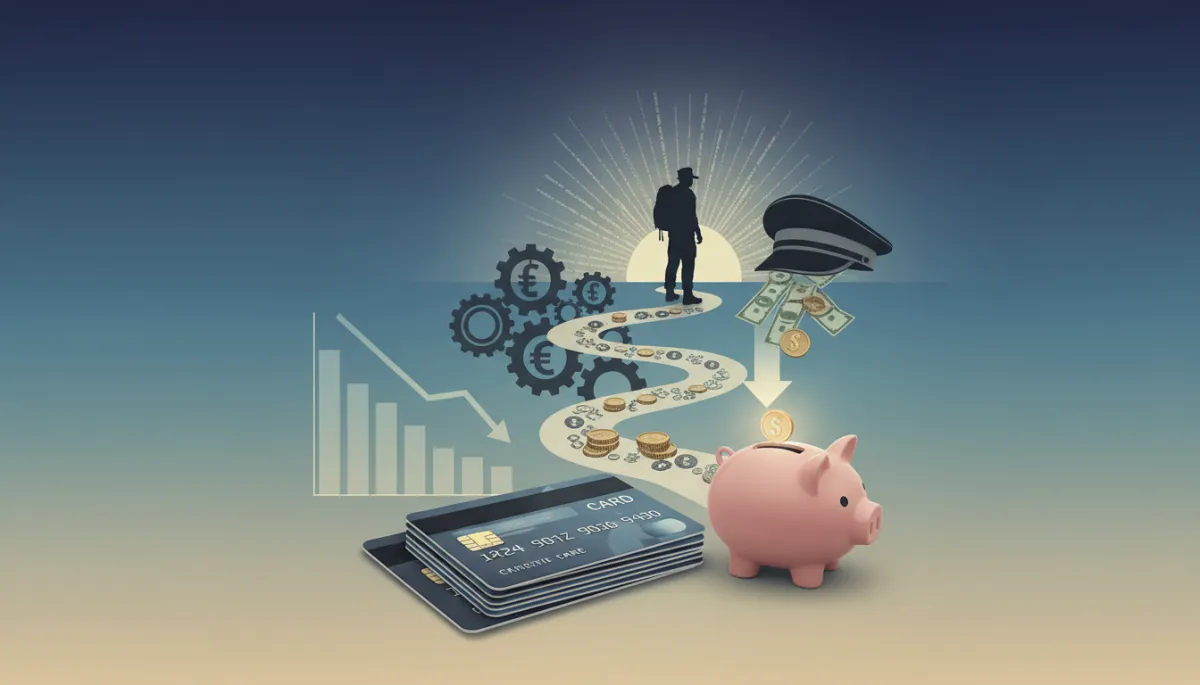
Pay Off Credit Card Debt on VA Disability
Personal Finance, Veterans, Managing Debt
Best Way to Pay Off Credit Card Debt on VA Disability Income
Living on VA Disability Income can feel like walking a financial tightrope, especially when credit card balances are hanging over your head. Yet with a clear plan, practical tools, and a realistic timeline, paying off credit card debt is possible—even on a fixed income. This guide walks through debt repayment strategies, budgeting for veterans, and day-to-day financial tips designed specifically for those relying on VA disability benefits.
Understanding the Challenge: Credit Card Debt on a Fixed VA Disability Income
Credit card debt is uniquely stressful when your primary income is VA disability. Your benefits are relatively stable, but they may not stretch far once you factor in rent or mortgage, utilities, transportation, food, and medical costs. Add high-interest credit card balances and minimum payments into the mix, and it can feel as if you are working hard just to stay in the same place.
The first key point to remember is this: VA Disability Income is protected. In most situations, credit card companies cannot garnish your VA disability benefits directly. That protection gives you room to breathe and plan. But it does not erase the debt or the stress that comes with it. The goal is to move from feeling cornered by bills to having a structured, realistic path toward becoming debt-free over time.
Step One: Get a Clear Picture of Your Credit Card Debt
Managing debt starts with facing the numbers, even when they are uncomfortable. Gather every credit card statement you have—paper or online—and write down for each card:
Current balance
Interest rate (APR)
Minimum monthly payment
Add the balances together to find your total credit card debt. This single number can be intimidating, but it is also the starting line. Without it, you cannot build an effective debt repayment strategy. Knowing exactly what you owe lets you decide which tools and approaches fit best with your VA Disability Income and your everyday life.
📌 Key Takeaway: You cannot fix what you cannot see. Listing each card, its balance, and its interest rate transforms vague worry into clear information you can work with.
Step Two: Build a Veteran-Focused Budget Around Your VA Disability Income
Budgeting for veterans on disability is less about perfection and more about honesty and priorities. Your VA Disability Income might be your main or only steady source of money, so your budget has to respect that fixed amount. Start by listing your essential monthly expenses:
Housing (rent or mortgage, property taxes, insurance)
Utilities (electricity, water, heating, phone, internet if needed for medical or benefits access)
Food and basic household supplies
Transportation (gas, public transit, car insurance, maintenance)
Medical costs not covered by the VA or other insurance
Subtract these from your monthly VA Disability Income and any other reliable sources (such as Social Security Disability, part-time work, or a spouse’s income). What is left is your flexible money—the amount you can direct toward credit card payments, savings, and non-essential spending. Even if this number is small, knowing it is crucial for realistic debt repayment strategies.
💡 Pro Tip: Try using a simple notebook or a basic spreadsheet. You do not need fancy apps. The power comes from tracking your real numbers, not from the tool itself.
Step Three: Choose a Debt Repayment Strategy That Fits Your Reality
The best way to pay off credit card debt on VA Disability Income is the method you can stick with over time. Two of the most common and effective debt repayment strategies are the debt snowball and the debt avalanche. Both require you to pay at least the minimum on every card, then focus extra money on a single target card at a time.
The Debt Snowball: Wins for Motivation
With the debt snowball method, you list your credit cards from the smallest balance to the largest, ignoring interest rates. You pay the minimum on all cards, then put any extra money toward the card with the smallest balance. When that card is paid off, you roll its payment into the next smallest, and so on. Over time, your payment “snowball” grows larger, even if your income does not.
Best for: When you need quick wins to stay motivated and keep going.
Why it works: Paying off a card completely feels like a victory and can help you stay committed, especially when dealing with health challenges or stress associated with disability.
The Debt Avalanche: Wins for Saving Interest
With the debt avalanche method, you list your credit cards by interest rate, from highest to lowest. You still pay the minimum on every card, but you put every extra dollar toward the card with the highest interest rate first. Once that card is gone, you move on to the next highest rate. This approach may save you more money in the long run because you are attacking the most expensive debt first.
Best for: When you are focused on reducing total interest paid and can stay patient while working on larger balances.
Why it works: Over time, you spend less on interest and more of your payment goes toward actual debt reduction.
📌 Key Takeaway: There is no single “right” strategy. Choose the one that matches your personality and emotional needs. On VA Disability Income, consistency beats perfection.
Step Four: Reduce Interest and Simplify Payments Where Possible
When managing debt on a tight budget, lowering your interest rate can make a meaningful difference. Even a few percentage points can shorten the time it takes to pay off credit card debt and free up money for other needs. Here are options to consider carefully, keeping your situation and credit profile in mind.
Calling Credit Card Companies to Request a Lower Rate
Many people are surprised to learn that you can simply call your card issuer and ask for a lower interest rate. Explain that you are a veteran living on VA Disability Income and that you want to repay your debt but are struggling with the current rate. Be polite, prepared, and clear about what you are asking for. They may not say yes, but some creditors do offer hardship programs or temporary rate reductions.
Considering Balance Transfers or Consolidation Loans
If your credit score is still in decent shape, a balance transfer card with a low or 0% introductory rate can create breathing room. However, there are fees and strict timelines to consider. Similarly, a personal loan to consolidate multiple cards into one payment might lower your overall interest rate, but approval can be harder if your only income is VA disability. Before you sign anything, run the numbers to be sure the new payment fits comfortably within your budget and does not extend your repayment so long that you end up paying more overall.
⚠️ Warning: Be cautious of debt relief companies that promise quick fixes or “guaranteed” results. Some charge high fees or encourage you to stop paying creditors, which can harm your credit and increase stress. Look for nonprofit credit counseling agencies instead.
Step Five: Use Veteran-Friendly Resources and Support Systems
Veterans are not meant to navigate financial challenges alone. There are organizations and programs designed specifically to help with managing debt and improving money habits. Many provide free or low-cost counseling tailored to the reality of living on VA Disability Income.
Nonprofit credit counseling agencies: These organizations can help you create a personalized budget, review your credit card debt, and discuss options like a debt management plan. Look for agencies accredited by nationally recognized organizations and ask if they have experience working with veterans or disability income.
Veteran service organizations (VSOs): Groups such as the American Legion, VFW, DAV, and others often offer guidance or can point you toward financial resources and programs specific to your situation.
Local community programs: Some communities have veteran-focused financial literacy workshops or one-on-one coaching, sometimes run through libraries, community centers, or nonprofits.

Professional counseling can turn scattered bills into a clear, step-by-step repayment plan.
Practical Financial Tips for Day-to-Day Spending Control
Debt repayment strategies only work if your daily spending lines up with your plan. On a fixed VA Disability Income, even small leaks in your budget can slow your progress. Consider these practical financial tips to protect your efforts and avoid sliding back into deeper credit card debt.
Separate “Needs” from “Nice-to-Haves”
When money is tight, clarity matters. Needs keep you safe, housed, fed, and able to access medical care. Nice-to-haves are the extras: streaming services, frequent takeout, new gadgets, or impulse online orders. You do not have to cut every comfort, but even trimming a few small expenses can free up money for your credit card payments and help you feel more in control of managing debt.
Create a Simple Cash or Envelope System for Problem Areas
If certain categories—like groceries, gas, or small daily purchases—tend to spiral, try using cash or a separate debit card for them. Decide in advance how much of your VA Disability Income you will allocate each month. Once the envelope or account is empty, that category is done for the month. This kind of boundary can be especially helpful if you have used credit cards in the past to “top off” your budget when money ran short.
Automate What You Can, Review What You Must
Setting up automatic payments for minimum amounts on your credit cards can help you avoid late fees and protect your credit score. If you can, also schedule an automatic transfer for your targeted extra payment on the card you are focusing on. Pair automation with a brief monthly review—15 to 30 minutes to check your accounts, update your budget, and confirm that your plan still fits your current reality, especially if your health or expenses have changed.
💡 Pro Tip: Treat your monthly review like an appointment with yourself. Put it on the calendar, make a cup of coffee or tea, and go through your numbers without rushing.
When the Numbers Do Not Work: Hardship Options to Explore Carefully
Sometimes, even after trimming expenses and choosing a repayment strategy, your budget still cannot cover both essentials and your current credit card payments. In that case, it is important to know that you have options, and that asking for help is not a failure—it is part of responsible financial management on a limited VA Disability Income.
Hardship Programs and Debt Management Plans
Some credit card issuers offer hardship programs that may temporarily reduce your interest rate, lower your minimum payment, or waive certain fees. Nonprofit credit counseling agencies can also help you set up a debt management plan, where you make one payment to the agency and they distribute it to your creditors under negotiated terms. This can simplify your life and may reduce interest rates, but you will need to close or suspend your cards while on the plan, and there may be modest monthly fees.
Considering Bankruptcy as a Last Resort
Bankruptcy is a serious decision with long-term consequences, but for some veterans with very high credit card debt and limited prospects for increased income, it may be a path to a fresh start. Because VA Disability Income is generally protected, creditors cannot usually take it from you, but they can still pursue collection efforts that add stress. If you are considering this route, speak with a qualified attorney who understands both bankruptcy law and how it interacts with VA benefits. The goal is to protect your income and health while dealing honestly with unmanageable debt.
⚠️ Warning: Never let anyone rush you into signing legal documents or agreements about your debt. Take time to ask questions, get a second opinion, and make sure you understand how any option affects your VA Disability Income and your long-term stability.
Protecting Your Mental and Emotional Health While Managing Debt
Credit card debt can weigh heavily on your mind, especially if you are already dealing with service-related injuries, chronic pain, or mental health conditions. Financial stress can make sleep harder, worsen anxiety, and strain relationships. Recognizing this connection is not a sign of weakness; it is an honest look at how money and well-being are linked, particularly for veterans living on VA Disability Income.
As you work through budgeting for veterans and debt repayment strategies, consider small practices to protect your mental health:
Talk with someone you trust—another veteran, a family member, a counselor—about the stress you are feeling, not just the numbers on the page.
Set realistic timelines. Paying off credit card debt on VA Disability Income may take years, and that is okay. Progress is progress, even when it is slow.
Celebrate small wins—paying off a single card, going a month without adding new debt, or sticking to your budget for a full week.
Putting It All Together: A Practical Example
Consider a veteran receiving VA Disability Income of $1,800 per month. After covering essential expenses—$800 for rent, $200 for utilities, $300 for food, $150 for transportation, and $100 for medical costs—there is $250 left. This veteran has three credit cards:
Card A: $600 balance at 24% APR, $25 minimum payment
Card B: $1,200 balance at 19% APR, $35 minimum payment
Card C: $2,000 balance at 16% APR, $50 minimum payment
The minimums total $110. With $250 available, this veteran has $140 extra to put toward debt. Using the debt snowball, they might:
Pay $165 to Card A ($25 minimum + $140 extra) until it is gone, while paying minimums on Cards B and C.
Once Card A is paid off, roll that $165 into Card B, paying $200 per month on Card B while still paying the minimum on Card C.
After Card B is gone, direct the full $250 toward Card C until it is fully paid.
This plan does not change their VA Disability Income, but it gives structure and momentum. Each card paid off reduces stress, and the freed-up payment strengthens the attack on the remaining balances. If this veteran prefers to save more on interest, they could rearrange the order and use the debt avalanche instead, focusing first on the highest APR.
Final Thoughts: Steady Progress on Your Terms
The best way to pay off credit card debt on VA Disability Income is not a single trick or shortcut. It is a combination of honest budgeting, thoughtful debt repayment strategies, and steady day-to-day choices that reflect your priorities. It is also about respecting your own limits—physical, emotional, and financial—while still moving forward.
Start by understanding your total credit card debt and building a realistic budget around your VA benefits. Choose a repayment method that you can maintain, whether it is the snowball for motivation or the avalanche for interest savings. Look for veteran-focused support and reliable financial tips from nonprofits and community resources. Protect your mental health and remember that progress does not have to be fast to be meaningful.
Above all, recognize that managing debt on a fixed income is a long-distance effort, not a sprint. Each month that you stick to your plan—no matter how modest the payment—moves you closer to a future where your VA Disability Income supports your life, not your lenders.
📌 Ready for One-on-One Support? If you’d like personalized guidance creating a debt payoff plan around your VA Disability Income, you can explore financial coaching at https://sh-anna-lytics.com/financial-coaching.