
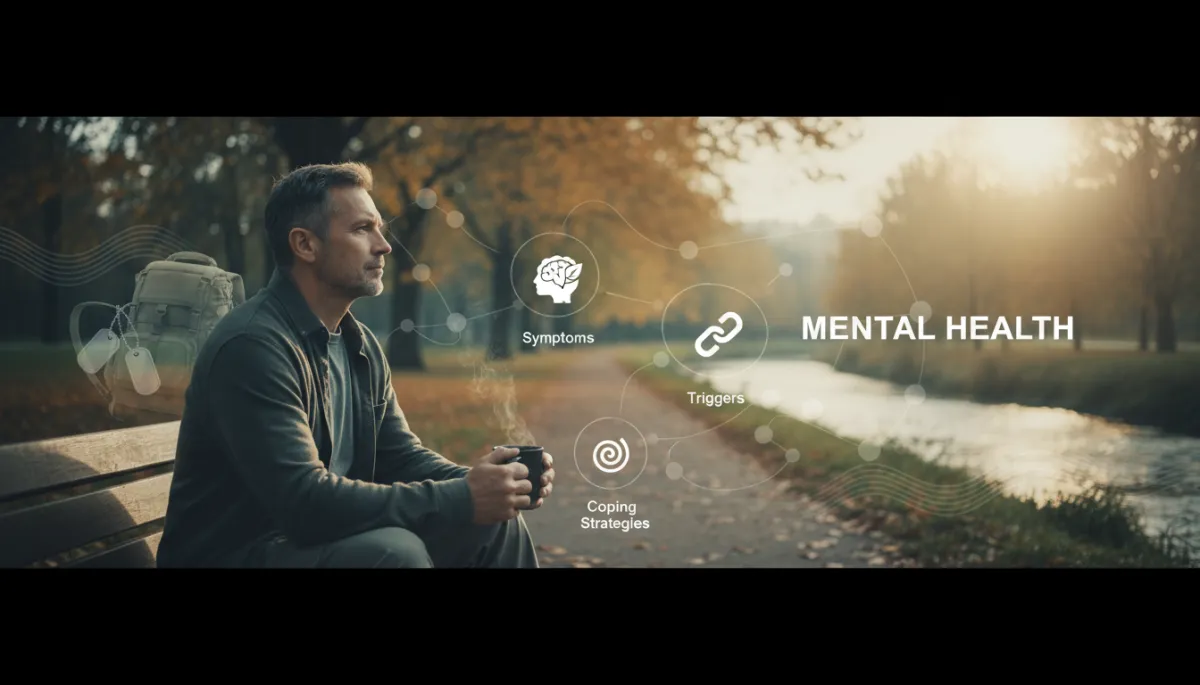
PTSD in Veterans: Symptoms and Coping Strategies
PTSD, Veterans, Mental Health, Coping Strategies
PTSD in Veterans: Symptoms, Triggers, and Daily Coping Strategies
Living with PTSD as a Veteran can feel exhausting and isolating, but you are far from alone—and there are practical ways to make each day more manageable and meaningful.
Understanding PTSD in Veterans
Post-traumatic stress disorder (PTSD) is a mental health condition that can develop after experiencing or witnessing a deeply distressing or life-threatening event. For many Veterans, these events may include combat, military sexual trauma, serious accidents, loss of fellow service members, or other intense situations that happened during or after service. PTSD is not a sign of weakness, lack of toughness, or failure to “handle it.” It is a human response to overwhelming experiences, and it is both understandable and treatable.
As a Veteran, you might notice that your PTSD looks different from what you see in movies or on TV. Some people have vivid flashbacks and nightmares. Others mainly feel on edge, irritable, or emotionally numb. Some struggle most with guilt or shame. Every person’s experience is unique, but there are common patterns that can help you recognize what’s going on and find the right coping strategies for your daily life.
📌 Key Takeaway: PTSD is a common, human response to trauma—especially among Veterans—and it can be managed with support, skills, and patience.
Common PTSD Symptoms in Veterans
PTSD symptoms are usually grouped into four main categories: re-experiencing, avoidance, negative changes in thoughts and mood, and increased arousal or reactivity. You may notice some or all of these. Knowing the categories can help you put words to what you’re going through and make it easier to talk with loved ones or a mental health professional.
1. Re-experiencing the Trauma
Flashbacks: Feeling as if you are back in the traumatic situation, even briefly. Sounds, smells, or certain places might suddenly send you there in your mind and body.
Nightmares: Disturbing dreams about what happened, or dreams that carry the same fear or panic even if the images are different.
Intrusive memories: Thoughts or images of the trauma popping into your mind when you don’t want them to, sometimes triggered by everyday events.
These experiences can be intense and frightening, but they are your brain’s way of trying to process what happened. Learning to ground yourself in the present moment is one of the most helpful coping strategies for this cluster of PTSD symptoms.
2. Avoidance and Numbing
Avoiding people, places, conversations, or activities that remind you of your service or the traumatic event.
Keeping busy all the time to avoid thinking or feeling, or shutting down emotionally to “get through the day.”
Feeling detached from loved ones, like you’re watching life from a distance instead of being part of it.
Avoidance can provide short-term relief, but over time it often shrinks your world and increases loneliness. Gentle, planned steps toward facing reminders—at your own pace and with support—can help you feel more in control again.
3. Negative Thoughts and Mood Changes
Persistent guilt, shame, or self-blame about what happened or what you did—or didn’t do—during service.
Feeling hopeless about the future, like things will never get better or you don’t deserve good things.
Losing interest in hobbies, friendships, or activities you used to enjoy.
These mental health symptoms can be especially draining because they color how you see yourself and the world. Challenging harsh beliefs and reconnecting with sources of meaning—family, faith, community, or personal values—can gradually shift this inner narrative.
4. Hyperarousal and Feeling “On Edge”
Being easily startled by sudden noises or movements, like fireworks, backfiring cars, or doors slamming.
Trouble sleeping, including difficulty falling asleep or staying asleep, or waking up feeling tense and exhausted.
Irritability, angry outbursts, or feeling like your “fuse” is much shorter than it used to be.
Hyperarousal is your nervous system staying stuck in “high alert” mode, even when you’re technically safe. Calming your body—through breathing, movement, and routines—plays a huge role in managing this side of PTSD in daily life.
💡 Pro Tip: If you recognize yourself in any of these PTSD symptoms, you’re already taking a strong first step by naming what you’re experiencing. Awareness opens the door to healing.
PTSD Triggers: What Sets Symptoms Off?
Triggers are people, places, situations, thoughts, or sensations that remind your brain of the trauma and set off PTSD symptoms. Sometimes they’re obvious, like hearing gunfire in a movie. Other times they’re subtle, like a certain smell, a crowded room, or a tone of voice that suddenly makes your body tense up. Understanding your own triggers can help you prepare, plan, and respond more calmly when they show up.
Common External Triggers for Veterans
Loud or sudden noises: Fireworks, sirens, helicopters, construction, or crowded sporting events can mimic sounds from deployment or combat zones.
Crowded or confined spaces: Busy stores, packed public transportation, or tight rooms where you can’t easily see the exits may spike anxiety and hypervigilance.
News coverage and media: War footage, military documentaries, or violent scenes in movies or games can bring back intense memories and emotions.
Certain dates or anniversaries: The date of a traumatic event, deployment anniversaries, or holidays like Memorial Day can stir up grief and distress.
Internal Triggers: What Happens Inside
Strong emotions, such as anger, helplessness, or fear, that feel similar to how you felt during the trauma.
Physical sensations, like a racing heart, sweating, or tightness in your chest, which your brain may connect with past danger.
Thoughts like “I’m not safe,” “I’m a burden,” or “It’s my fault,” which can trigger waves of anxiety, sadness, or shame.
Pausing to notice triggers and body signals gives you a chance to respond, not just react.
You might not always know why you’re suddenly on edge or overwhelmed. That’s okay. Triggers are often learned over time. Keeping a simple log—just a few notes on your phone or in a notebook—about when your PTSD symptoms spike can help you spot patterns and build more effective coping strategies for your mental health.
📌 Key Takeaway: Triggers don’t mean you’re “back there” again. They are signals from your nervous system that you can learn to understand and manage.
Daily Coping Strategies for Veterans Living with PTSD
While professional treatment—such as trauma-focused therapy, medication, or group support—is often very helpful, there is also a lot you can do day by day to manage PTSD symptoms. Think of coping strategies as tools in a personal “mental health toolkit.” You don’t have to use all of them at once. Start with one or two that feel doable, and build slowly from there.
1. Grounding Techniques for Flashbacks and Intrusive Thoughts
Grounding helps bring you back to the present when your mind is pulled into the past. These strategies are especially helpful when you notice flashbacks, strong memories, or rising panic. You can practice them anywhere—at home, at work, or out in public—and no one even has to know you’re doing them.
The 5–4–3–2–1 method: Quietly name 5 things you can see, 4 things you can touch, 3 things you can hear, 2 things you can smell, and 1 thing you can taste. This gently anchors your attention in the here and now instead of the there and then.
Temperature reset: Hold a cool glass of water, splash cold water on your face, or hold an ice cube in a napkin. Focusing on the sensation can interrupt a flashback and remind your body that you are in a different place and time.
“I am here” statements: Silently or out loud, say to yourself, “I am here. I am in my living room. It is 2026. I am safe right now.” Naming your environment and the date can help your brain orient to the present.
💡 Pro Tip: Practice grounding techniques when you’re calm, not just when you’re triggered. That way, they’ll feel more familiar and easier to use when you really need them.
2. Calming Your Body: Breathing and Movement
PTSD often keeps your body in a near-constant state of alert. Learning to gently calm your nervous system can reduce anxiety, help with sleep, and make you feel less on edge. You don’t need fancy equipment—just a few minutes and some curiosity about what helps you feel a little bit better.
Box breathing: Inhale through your nose for 4 seconds, hold for 4 seconds, exhale through your mouth for 4 seconds, and hold again for 4 seconds. Repeat several times. Many Veterans find this steady rhythm familiar and soothing.
Gentle movement: A short walk, light stretching, or simple exercises at home can release built-up tension. You don’t have to “work out hard” for it to count; the goal is to help your body move out the stress it’s been holding.
Progressive muscle relaxation: Starting with your feet and moving up to your face, gently tense each muscle group for a few seconds, then release. Notice the difference between tension and relaxation as your body slowly unwinds.
3. Building Supportive Routines
Structure can be comforting when you’re living with PTSD. While military life is highly structured, civilian life can feel chaotic or aimless in comparison. Creating gentle routines gives your brain and body a sense of predictability and control, which can reduce triggers and symptoms over time.
Morning check-in: Take a few minutes each morning to notice how you’re feeling physically and emotionally. Set one small, realistic goal for the day—like “I’ll step outside for five minutes” or “I’ll call a friend.”
Sleep-friendly habits: Try to keep a regular sleep schedule, reduce caffeine later in the day, and create a wind-down routine—dim lights, quiet music, reading, or a warm shower—to signal to your body that it’s safe to rest.
Planning around known triggers: If you know certain events (like holidays or crowded places) are tough, plan ahead. Decide who you’ll be with, where you can take a break, and what coping strategies you’ll use if symptoms spike.
4. Strengthening Connections and Communication
PTSD can make you want to withdraw, but isolation often makes symptoms worse. Connection doesn’t have to be big or dramatic; even small interactions can remind you that you’re not alone and that you still belong. Reaching out is not a burden to others—it’s a sign of courage and trust.
Share a little with someone you trust—another Veteran, a partner, a friend, or a family member. You don’t have to tell your full story. You might start with, “Lately I’ve been more on edge,” or “Some days are hard, and I’m working on it.”
Consider Veteran support groups, in person or online. Talking with people who “get it” can reduce shame and offer practical coping strategies that have worked for others with PTSD.
Let loved ones know what helps. For example: “If I step outside during fireworks, I’m okay—I just need a minute,” or “When I seem distant, a simple ‘I’m here if you want to talk’ goes a long way.”
💡 Pro Tip: You don’t have to explain every detail of your service for your feelings to be valid. It’s okay to share only what feels safe and right for you.
5. Challenging Harsh Self-Talk
Many Veterans with PTSD struggle with harsh inner voices: “I should be over this,” “Other people had it worse,” or “I’m weak for needing help.” These thoughts are common, but they are not facts. Learning to gently question and reframe them is a powerful mental health coping strategy that can change how you feel day to day.
When you notice a harsh thought, ask, “Would I say this to a fellow Veteran I care about?” If not, what would you say instead? Try offering that kinder version to yourself.
Replace “I should be over this” with “Healing takes time; I’m working on it.” Swap “I’m broken” for “I’ve been through a lot, and I’m still here.”
This isn’t about pretending everything is fine. It’s about balancing the story in your head so it includes your strength, resilience, and effort—not just your pain.
6. When and How to Seek Professional Help
Daily coping strategies are important, but you do not have to manage PTSD alone. Reaching out for professional mental health support is one of the strongest steps you can take. If symptoms are interfering with work, school, relationships, or your ability to enjoy anything at all, it may be time to talk with a therapist, doctor, or counselor who understands PTSD in Veterans.
VA and community resources: The U.S. Department of Veterans Affairs offers PTSD treatment programs, counseling, and crisis support. Many community clinics and nonprofits also specialize in Veteran mental health services.
Trauma-focused therapies: Approaches like Cognitive Processing Therapy (CPT), Prolonged Exposure (PE), EMDR, and others have strong evidence for helping people reduce PTSD symptoms and regain a sense of control.
Crisis support: If you ever feel like you might hurt yourself or someone else, or you feel completely overwhelmed, reach out immediately—to a crisis line, a trusted person, or emergency services. Your safety matters more than anything else.
📌 Key Takeaway: Asking for help is not giving up—it’s choosing to keep going with more support and more tools at your side.
Bringing It All Together: Living with PTSD, Not Under It
PTSD in Veterans can touch every part of daily life—sleep, work, relationships, and how you see yourself. It can be frustrating when people around you don’t fully understand what you’re going through. Yet your experience is real, and your reactions make sense given what you’ve lived through. The fact that you’re reading about PTSD, symptoms, triggers, and coping strategies already shows a powerful desire to understand yourself and to feel better.
Healing from trauma is rarely a straight line. Some days you might feel strong and steady; other days, a small trigger might send you spiraling. That doesn’t mean you’re back at square one. It simply means your nervous system is still learning that the danger is over and that it’s allowed to relax again. Every time you use a coping strategy—grounding, breathing, talking to someone, sticking with your routine—you are teaching your brain and body a new way to respond.
You do not have to “earn” support by having the “worst” story. Your pain matters even if you can’t always put it into words. You are allowed to ask for help, to take breaks, to say no, and to build a life that feels safer and more peaceful for you. Your service is part of your story, but it is not the only chapter. There is room for new experiences, new connections, and new meaning—even alongside PTSD.
As you move forward, consider choosing just one small step from this article to try in the coming days. Maybe you’ll practice box breathing before bed, write down a few triggers you’ve noticed, or send a text to another Veteran you trust. Over time, these small, steady actions can add up to real change in how you feel and how you move through the world.
💡 Final Encouragement: You have already faced challenges that many people will never fully understand. The same strength that carried you through service can support you now as you care for your mental health, learn your triggers, and build daily coping strategies that help you live a life that feels more like your own.