
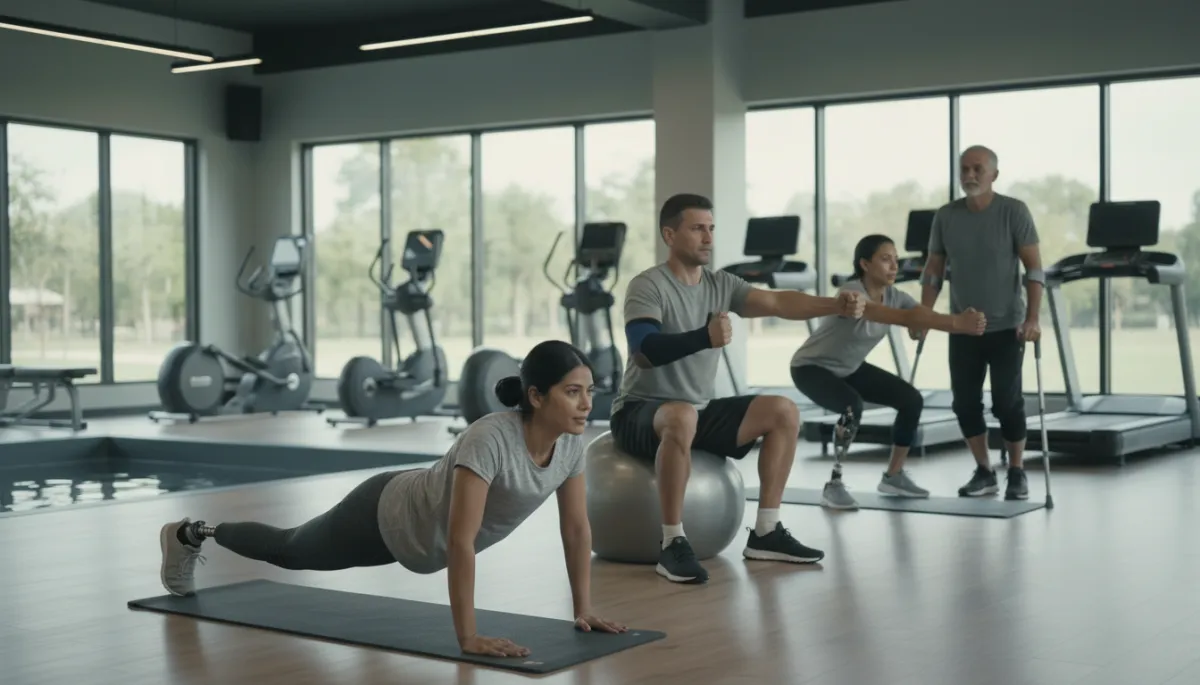
Stay Fit with Injuries: Veteran-Friendly Workouts
Fitness, Veteran Workouts, Adaptive Exercise
How to Stay Fit With Injuries (Veteran-Friendly Workouts)
Staying active with aches, scars, or serious fitness injuries is absolutely possible—especially when your body has already been through a lot. Whether you’re a veteran dealing with service-related injuries or simply someone carrying old wear and tear, this guide will walk you through veteran-friendly, low-impact fitness and adaptive exercise options that respect your limits while still moving you toward your goals.
Why Staying Fit With Injuries Matters (Especially for Veterans)
If you’ve spent time in the military, you already know what it feels like to push through discomfort. But when it comes to long-term injury recovery and overall health, the goal shifts from “push harder” to “train smarter.” Fitness injuries—whether they came from deployment, training, or everyday life—don’t have to be the end of your active lifestyle. They just mean your approach needs an upgrade.
Regular movement helps manage pain, protect joints, improve sleep, and support your mental health. For many veterans, workouts aren’t just about muscle; they’re about mood, purpose, and having a healthy outlet for stress. Thoughtful veteran workouts and rehabilitation routines can give you all of that without making your injuries worse—when you choose the right kind of exercise and respect your body’s signals.
💡 Friendly Reminder: Being tough is part of your story. Being gentle with your body now is part of your future.
Understanding Fitness Injuries: Know What You’re Working With
Before you jump into any adaptive exercise plan, it helps to understand the kind of fitness injuries you’re dealing with. Different injuries call for different veteran workouts and rehabilitation routines. Here are a few common categories you might recognize in yourself or your battle buddies:
Joint injuries: Knee pain, shoulder impingement, hip issues, or ankle instability. These often show up as sharp pain with certain movements, stiffness, or a feeling that the joint might “give out.”
Back and neck pain: Herniated discs, chronic low back pain, or tightness from years of carrying heavy loads and gear. These can flare up with bending, twisting, or sitting too long.
Soft tissue injuries: Tendonitis, muscle strains, plantar fasciitis, or lingering sprains. These usually involve soreness, swelling, or a “pulling” sensation with certain activities.
Post-surgical limitations: Joint replacements, repaired ligaments, or other surgeries that changed your range of motion or strength in a specific area.
Invisible injuries: Chronic pain, traumatic brain injury (TBI), or PTSD, which can affect balance, energy, focus, and motivation to exercise.
None of these automatically disqualify you from working out. They simply shape the way your injury recovery and low-impact fitness plan should look. The more honest you are about your limits, the more effective your training can be.
⚠️ Important: If your pain is sharp, sudden, or getting worse with every session, pause and talk with a medical or rehabilitation professional before continuing.
Principles of Safe Training With Injuries
You don’t need a complex program to stay active with injuries, but you do need a smart framework. Think of these principles as your rules of engagement for adaptive exercise and veteran workouts that support healing instead of fighting it.
Train around the injury, not through it. If a movement causes sharp or worsening pain in the injured area, modify it or swap it out. For example, if running hurts your knees, switch to cycling, rowing, or pool walking for your cardio.
Favor low-impact fitness options. Low-impact doesn’t mean “easy.” It simply means less pounding on your joints. Rowing, swimming, elliptical, cycling, and controlled strength training are all powerful tools for staying fit without beating up your body.
Use pain as information, not a challenge. A little muscle fatigue or mild soreness is normal. Sharp, stabbing, or lingering joint pain is your body saying, “Back off.” Listening to that message is not weakness; it’s strategy.
Prioritize quality over intensity. Slower, controlled movements with good form will do far more for your injury recovery than sloppy, high-intensity work. You’re building long-term resilience, not chasing a single heroic workout.
Respect recovery days. Rest, stretching, and rehabilitation routines are part of your training, not a break from it. Your body adapts and heals when you rest, not when you grind nonstop.
Adaptive Exercise Ideas by Injury Type
Adaptive exercise simply means adjusting the movement to fit your body instead of forcing your body to fit the movement. Below are practical, veteran-friendly workout ideas organized by common injury areas. Always clear new routines with your doctor or physical therapist, especially if you have complex medical conditions.
If You Have Knee or Hip Pain
Cardio options: Stationary bike, recumbent bike, rowing machine, swimming, or deep-water jogging with a float belt. These provide low-impact fitness while letting you adjust resistance and pace.
Strength training: Seated leg extensions with light resistance, glute bridges, hip thrusts, step-ups onto low platforms, and resistance band walks. Focus on building hip and glute strength to support your knees and hips.
Mobility: Gentle hamstring and quad stretches, hip flexor stretches, and controlled bodyweight squats to a box or chair if tolerated.
If You Have Shoulder or Upper Body Limitations
Cardio options: Walking, stationary bike, or treadmill at an incline if your lower body can handle it. You can still get a solid workout even if you need to keep your arms quiet or supported.
Strength training: Lower-body exercises like squats to a chair, lunges (if tolerated), leg presses, and calf raises. For the upper body, focus on pain-free ranges of motion using light resistance bands and controlled movements, such as external rotations and scapular retractions prescribed by your rehab team.
Mobility: Wall slides, pendulum swings, and gentle range-of-motion drills recommended by your physical therapist. Avoid forcing overhead movements if they cause pain.
If You Have Back Pain
Cardio options: Walking on flat surfaces, elliptical at a moderate setting, swimming, or cycling with an upright posture. Avoid high-impact running or heavy loaded carries unless cleared by your provider.
Strength training: Core-focused rehabilitation routines like bird dogs, dead bugs, glute bridges, and side planks. Light dumbbell or cable work can be added once your core is stable and pain is controlled.
Mobility: Gentle cat–cow stretches, hip flexor and hamstring stretches, and thoracic spine rotations. The goal is to keep your back supported by strong hips and a stable core.
If You’re Working With Amputations or Assistive Devices
Many veterans train effectively with prosthetics, wheelchairs, or other assistive devices. Adaptive exercise in this context is highly individual, but some principles still apply: focus on what you can move safely, build strength around your support structures, and lean into tools like resistance bands, cable machines, and seated machines that let you control your range of motion.
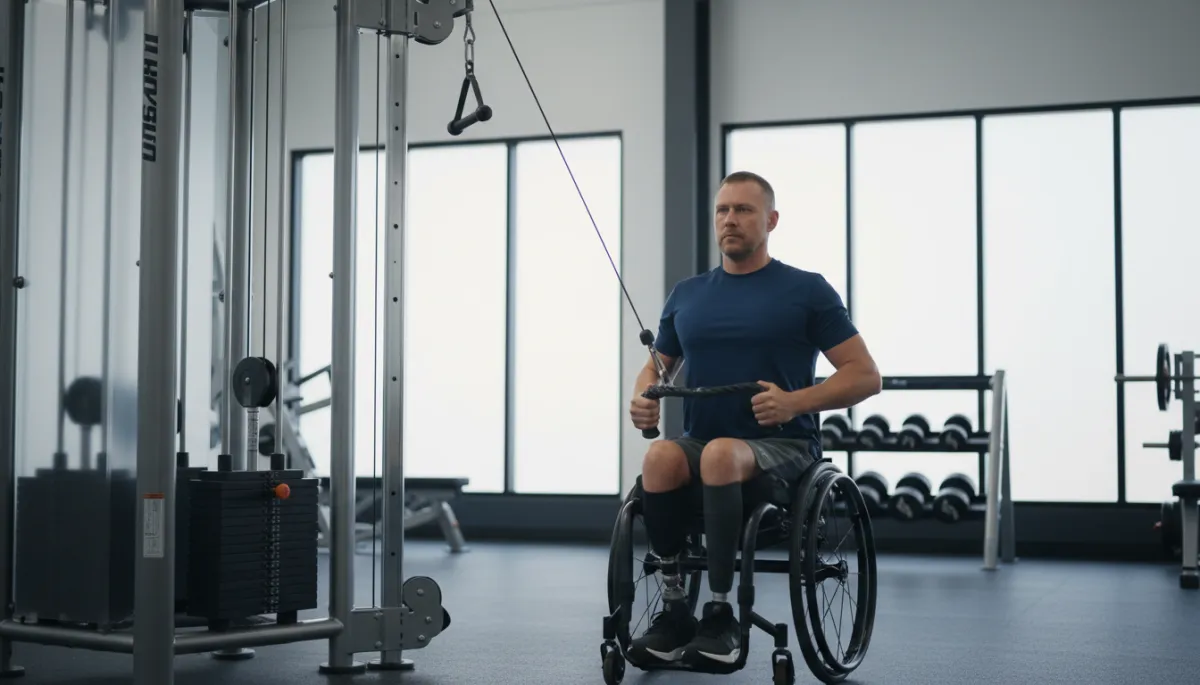
Thoughtful adaptive exercise builds real strength without adding stress to injured areas.
Sample Veteran-Friendly, Low-Impact Workout Plan
To bring all of this together, here’s a sample weekly structure that blends low-impact fitness, adaptive exercise, and rehabilitation routines. Adjust the days, exercises, and volume to match your injury profile and energy level. Think of this as a template, not a strict order.
Day 1: Low-Impact Cardio + Core Stability
Warm-up (5–10 minutes): Easy walking or cycling, gentle joint circles for shoulders, hips, and ankles.
Cardio (15–25 minutes): Choose a low-impact fitness option such as stationary bike, elliptical, or pool walking. Aim for a pace where you can talk but feel your heart rate up slightly.
Core work (10–15 minutes): Bird dogs, dead bugs, and side planks, 2–3 sets each. Focus on control and breathing, not speed.
Day 2: Upper-Body Strength (Injury-Friendly)
Warm-up: Gentle band pull-aparts, scapular squeezes, and pain-free arm circles, 5–8 minutes total.
Strength circuit (2–3 rounds): Seated row, chest press with a neutral grip, biceps curls, and triceps pressdowns. Choose weights that feel “challenging but safe” for 10–12 reps.
Rehabilitation routines (5–10 minutes): Any shoulder or upper-back corrective exercises prescribed by your physical therapist, such as external rotations or wall slides.
Day 3: Recovery-Focused Movement
Light walking, gentle stretching, or a beginner-friendly yoga or tai chi session. The goal here is circulation, relaxation, and joint mobility—perfect for injury recovery and mental reset.
Day 4: Lower-Body Strength (Joint-Friendly)
Warm-up: 5–10 minutes of easy cycling or marching in place, plus hip and ankle mobility drills.
Strength circuit: Box squats or chair squats, glute bridges, step-ups to a low platform, and calf raises. Perform 2–3 sets of 8–12 reps with focus on control and alignment.
Cool-down: Gentle stretches for quads, hamstrings, and hips to support ongoing injury recovery.
Day 5: Optional Mixed Cardio or Activity Day
Use this day for a low-impact fitness activity you enjoy: a hike on easy terrain, a longer swim, a bike ride with a friend, or a group adaptive exercise class at your local gym or VA facility.
You don’t have to hit all five days every week. Even two or three consistent days of veteran workouts designed around your injuries can build strength, confidence, and momentum over time.
Making Rehabilitation Routines Part of Your Everyday Life
One of the biggest mindset shifts for staying fit with injuries is treating your rehabilitation routines as a permanent part of your training, not a temporary assignment. Think of them as your daily maintenance, like cleaning your weapon or checking your gear before heading out. A few minutes of targeted rehab can keep your joints happier and your workouts safer for the long haul.
Add 5–10 minutes of rehab work at the start or end of your workouts—band exercises, mobility drills, or balance training tailored to your injuries.
Keep simple tools at home: a light resistance band, a foam roller, and a tennis or lacrosse ball for self-massage can all support injury recovery between gym sessions.
Schedule rehab sessions on your calendar like appointments. When it’s written down, it’s easier to treat it as non-negotiable self-care instead of an optional extra.
📌 Key Takeaway: The small, consistent rehab habits you build now can mean fewer flare-ups and more freedom later.
Supporting Your Injury Recovery Beyond the Gym
Staying fit with injuries isn’t just about what you do in the gym or on the track. Your body heals and adapts based on the bigger picture—sleep, stress, nutrition, and mental health all play a role. Here are a few friendly reminders that can make your veteran workouts more effective:
Sleep is recovery fuel. Aim for 7–9 hours when possible. If sleep is tough due to pain or PTSD, talk with your healthcare team about strategies or resources that can help.
Nutrition supports healing. Lean protein, colorful fruits and vegetables, and enough overall calories give your tissues what they need to repair. Under-eating can slow down your progress even if your workouts are on point.
Stress management matters. Chronic stress can increase pain sensitivity and make recovery feel slower. Simple practices like deep breathing, quiet time outdoors, or talking with a counselor can support your body’s healing process.
Staying Motivated When Your Body Feels Different Than It Used To
One of the hardest parts of training with fitness injuries—especially for veterans—is accepting that your “new normal” might not look like your old PT test days. That can bring up frustration, grief, or even shame. It’s completely human to feel that way, and it doesn’t mean you’re giving up. It just means your story is evolving.
Set function-based goals. Instead of chasing old numbers, aim for goals like “walk 20 minutes without pain,” “carry groceries comfortably,” or “play with my kids or grandkids without needing a day to recover.”
Track small wins. Less stiffness in the morning, better balance, one extra minute on the bike—these are all signs your adaptive exercise and rehabilitation routines are working.
Find your squad. Whether it’s a veteran workout group, an adaptive sports league, or just a buddy who texts you to check in, community makes it easier to stay consistent on the hard days.
“Your body may have changed, but your strength, discipline, and resilience are still very much yours.”
When to Get Professional Help With Your Fitness Injuries
There’s a difference between normal post-workout soreness and warning signs that you need extra support. Reaching out for help is not a sign that you’re weak; it’s a sign that you’re serious about your health and longevity. Consider talking with a healthcare provider, physical therapist, or adaptive exercise specialist if you notice any of the following:
Pain that wakes you up at night or gets worse week after week despite modifying your workouts.
Numbness, tingling, or weakness that affects your ability to move or feel parts of your body normally.
Swelling, redness, or warmth around a joint that doesn’t settle down with rest and ice.
Dizziness, chest pain, or shortness of breath that feels out of proportion to your effort.
Many VA facilities, community clinics, and private practices offer veteran-friendly rehabilitation programs and adaptive exercise coaching. If you’re not sure where to start, your primary care provider or VA representative can often point you toward services that match your needs and benefits.
Bringing It All Together: Your Path to Stronger, Safer Movement
Staying fit with injuries is not about pretending you’re not hurt and muscling through. It’s about honoring what your body has already done for you—especially if you’re a veteran—and choosing fitness that supports your life now. With the right mix of low-impact fitness, adaptive exercise, and consistent rehabilitation routines, you can:
Reduce everyday pain and stiffness so you can move more freely.
Build strength and endurance without constantly aggravating your injuries.
Support your mental health with regular, manageable movement that fits your life.
You’ve already proven you can handle hard things. Now the mission is different: protect your body, protect your future, and build a version of fitness that works with your injuries instead of against them. Start where you are, use what you have, and remember that every safe, intentional workout is a win—no matter how small it looks on paper.
If you’re ready to move but unsure where to begin, pick one idea from this guide—a short walk, a few core exercises, or a simple rehab routine—and try it this week. Your body, your mind, and your future self will thank you for showing up, one low-impact step at a time.