

Understanding Your C&P Exam: Key Differences
Veterans, C&P Exam, Disability Claims, VA Examination
Why Your C&P Exam Is NOT a Treatment Appointment (And What That Means)
Many veterans walk into their first C&P Exam expecting it to feel like a regular doctor’s visit or treatment appointment. When it does not, they leave frustrated, confused, or worried that something went wrong. Understanding the true purpose of a Compensation & Pension (C&P) exam—and how it differs from a medical treatment appointment—is critical for protecting your Veteran Benefits, strengthening your disability claims, and managing your expectations throughout the VA examination process.
What a C&P Exam Really Is
A C&P Exam, or Compensation & Pension examination, is a medical evaluation ordered by the Department of Veterans Affairs to help decide a disability claim. It is part of the evidence-gathering process, not part of your ongoing health care. The examiner’s primary job is to:
Confirm that a diagnosed condition exists (or does not exist)
Assess the severity of that condition at the time of the VA examination
Provide an opinion about whether the condition is connected to your military service or another service-connected condition
The examiner may be a VA clinician or a contractor from a private organization working on behalf of the VA. Regardless of who performs it, the C&P Exam is focused on documentation, measurement, and medical opinions that will directly influence how the VA decides your disability claims and what level of Veteran Benefits you may receive.
📌 Key Takeaway: A C&P Exam is an evaluation for disability purposes, not a visit to diagnose new problems or plan your treatment.
How a Treatment Appointment Is Different
A treatment appointment—whether at a VA medical center, community clinic, or private provider—is designed to help you get better or manage your condition. The focus is on your health and well-being, not on rating percentages or legal standards for disability claims. During a typical treatment appointment, your provider will:
Review your symptoms and medical history in depth
Order tests or imaging if needed to diagnose or monitor your condition
Discuss treatment options, such as medications, therapy, surgery, or lifestyle changes
Adjust your care plan based on how you are responding to treatment
In a treatment setting, you can expect more conversation, more questions about your daily life, and an emphasis on what can be done next to improve or stabilize your condition. While treatment records can absolutely support your disability claims, the purpose of these appointments is clinical care, not benefits decision-making.
Why the Distinction Matters for Your Veteran Benefits
Understanding that a C&P Exam is not a treatment appointment helps you manage expectations and avoid common mistakes that can harm your claim. The VA uses the C&P report as a key piece of evidence when deciding:
Whether your condition is “service-connected”
What disability rating you should receive (for example, 10%, 50%, 100%)
The effective date of your benefits in some cases
Because of this, your mindset going into a C&P Exam should be different from your mindset for a routine medical visit. You are not there to ask, “What can we do to treat this?” Instead, you are there to clearly and honestly demonstrate how your condition affects you so the VA can apply its rating criteria correctly and fairly.
💡 Pro Tip: Think of treatment records and C&P Exams as working together. Treatment shows the long-term pattern of your condition; the C&P Exam captures a focused snapshot for rating purposes.
What Actually Happens During a C&P Examination
While every VA examination is a little different, most C&P Exams follow a structured process based on VA Disability Benefits Questionnaires (DBQs). These are standardized forms that guide the examiner through specific questions and measurements related to your claimed condition. During the exam, you can generally expect the examiner to:
Review your medical records and claim file, including prior treatment notes and service records, if available
Confirm your identity and explain the purpose of the exam in brief terms as a medical evaluation for disability claims, not treatment
Ask targeted questions about your symptoms, history, and how the condition affects your daily life and work
Perform physical or mental health assessments relevant to your claimed disability (for example, range-of-motion testing, neurological checks, or mental status exams)
Document objective findings and, in some cases, provide a medical opinion about service connection or aggravation
The examiner may not go into detail about your treatment options, side effects of medications, or long-term management strategies. That is not because they do not care; it is because the purpose of the visit is limited to evaluating your disability claims in accordance with VA regulations.
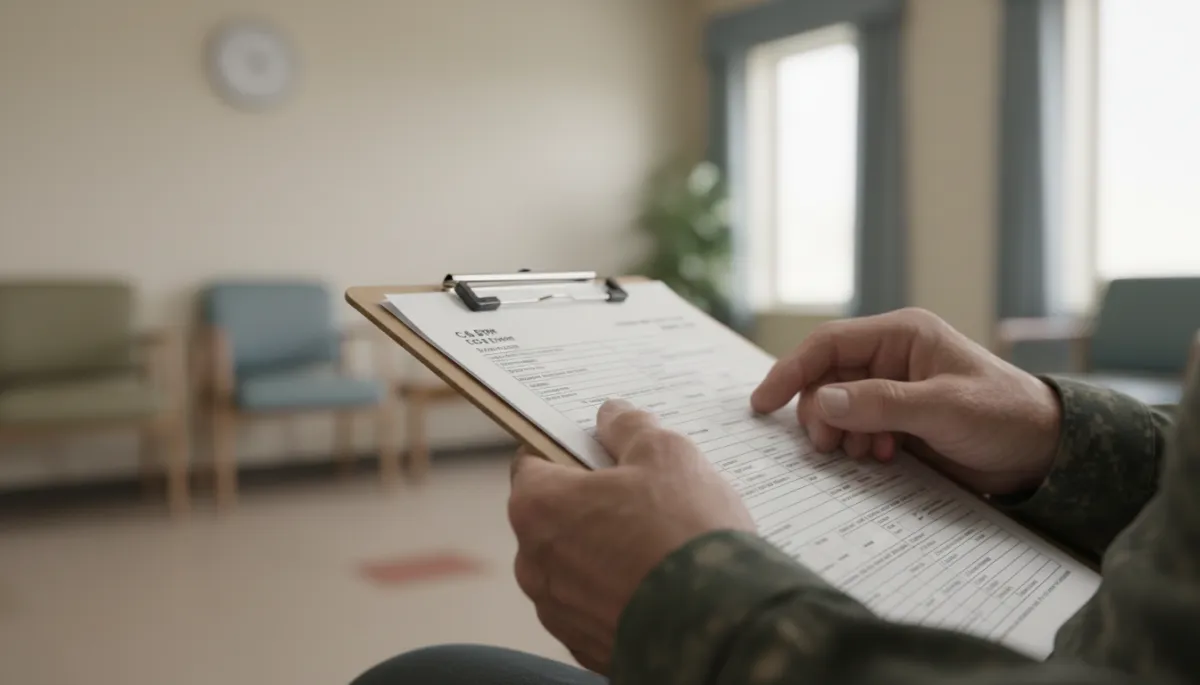
Clear documentation and honest reporting at your C&P Exam directly shape your disability rating.
Common Misconceptions About C&P Exams and Treatment
Confusion between C&P Exams and treatment appointments leads many veterans to feel discouraged or misled. Below are some of the most frequent misconceptions—and the reality behind them:
Misconception 1: “The examiner will help me figure out what’s wrong.”
Reality: By the time you reach a C&P Exam, the VA generally expects that you already have a diagnosis or at least documented symptoms under review. Examiners may note new findings, but their primary role is to confirm and evaluate conditions for disability purposes. If you need help figuring out what is wrong, that is a conversation for a treatment appointment with your primary care provider or specialist, not your C&P examiner.
Misconception 2: “If the examiner doesn’t offer treatment, they don’t care.”
Reality: The examiner’s job is constrained by the VA’s rules for disability claims. They are not acting as your treating doctor during this visit, even if they also work in a clinical role elsewhere. Their professional responsibility in the C&P setting is to provide an impartial medical evaluation, not to manage your ongoing care plan. Lack of treatment recommendations in the exam report is normal and does not reflect how seriously they take your condition.
Misconception 3: “If I tell them everything is fine, they’ll still see how bad it is.”
Reality: Many veterans are used to “toughing it out” and minimizing symptoms during treatment appointments. In a C&P Exam, this habit can work against you. The VA examination report relies heavily on what you say and what the examiner observes that day. If you downplay your pain, functional limits, or mental health symptoms, the written report may not reflect how serious your condition really is. The VA, in turn, may assign a lower rating or deny the claim altogether.
Misconception 4: “If the C&P Exam goes badly, I can’t fix it.”
Reality: While it is always better to be prepared the first time, a negative or incomplete C&P Exam is not necessarily the end of the road. You may be able to request a new VA examination, submit additional medical evidence from your treating providers, or file a Supplemental Claim or appeal. Understanding the limited purpose of the C&P Exam helps you gather the right kind of evidence to challenge an unfair or inaccurate decision about your Veteran Benefits.
Preparing for Your C&P Exam: Practical Steps
Because the C&P Exam is a focused medical evaluation tied directly to your disability claims, preparation is essential. You do not need to rehearse a script or exaggerate symptoms, but you should take time to organize your thoughts and evidence so you can present a clear, accurate picture of your condition. Consider the following steps before your VA examination:
Review your claim. Remind yourself which conditions you claimed and why. If you filed for multiple disabilities, you may have separate C&P Exams for each, or one exam that covers several issues. Knowing what is under review helps you stay focused during the appointment.
List your key symptoms. Write down your most significant symptoms and how often they occur. Include physical limitations (for example, difficulty walking, lifting, or standing), mental health symptoms (such as anxiety, depression, flashbacks, or sleep problems), and how these issues affect work, relationships, and daily tasks.
Think in terms of “worst days.” The VA rates many conditions based on their overall impact, not just how you feel on a good day. When describing your condition, it is appropriate to explain what your worst days look like, how often they happen, and what you cannot do during those times.
Gather supporting records. Bring a list of your medications, names of treating providers, and any recent private medical records that may not be in the VA system yet. While the examiner may already have access to much of this information, having it ready can be helpful if questions arise.
Plan to be honest, not heroic. This is not the time to minimize or hide your struggles. Be straightforward about pain, limitations, mental health symptoms, and how your condition affects your life. Honesty includes acknowledging both good and bad days, but do not leave the examiner with the impression that your condition is less severe than it is.
📌 Key Takeaway: Preparation for a C&P Exam is about clarity and accuracy, not performance. Your goal is to help the examiner understand the real-world impact of your disabilities.
How Treatment Records Support Your Disability Claims
Although a C&P Exam is not a treatment appointment, your ongoing medical care plays a major role in the outcome of your disability claims. The VA looks at the full picture: service records, treatment notes, diagnostic tests, and C&P findings. Regular treatment can strengthen your claim in several ways:
Documenting chronicity. Repeated treatment visits over time show that your condition is ongoing, not temporary. This helps support higher ratings for chronic disabilities and can be especially important for mental health conditions and pain disorders that fluctuate day to day.
Showing severity and functional impact. Notes from your doctors and therapists often describe how your symptoms affect work, relationships, and daily activities. These descriptions can be powerful evidence when the VA weighs your C&P Exam against your long-term medical history.
Supporting nexus opinions. In some cases, a treating provider may write a medical opinion linking your condition to service or explaining how a service-connected disability has worsened another condition. These opinions can complement or challenge the conclusions of a VA examination.
Skipping treatment or only seeking care right before a C&P Exam can leave significant gaps in your record. The VA may question whether your condition is as severe as you claim if there is little or no documentation of ongoing issues. By contrast, consistent treatment, even when progress is slow, shows the reality of living with a disabling condition and can lead to more accurate ratings and stronger Veteran Benefits.
What to Do After Your C&P Exam
Once your C&P Exam is complete, it is natural to replay the visit in your mind and worry about what the examiner wrote. While you cannot usually see the examiner’s report immediately, there are constructive steps you can take while you wait for the VA’s decision on your disability claims:
Write down your recollection. As soon as you can, make notes about what the examiner asked, what you said, and any key observations you remember. If you later feel the report is inaccurate, these notes can help you respond clearly in an appeal or Supplemental Claim.
Continue your treatment. Do not wait for the VA’s decision to keep addressing your health needs. Schedule follow-ups, refill medications, and pursue therapies recommended by your treatment providers. This protects your health and continues to build your medical record.
Review the decision carefully. When the VA issues a rating decision, read it closely. Look for references to your C&P Exam, your medical evaluation results, and the reasons given for granting or denying benefits. Understanding the VA’s rationale is the first step in deciding whether to accept the decision or seek review.
Seek help if needed. If you disagree with the outcome or believe the VA examination was incomplete or inaccurate, consider reaching out to a Veterans Service Organization (VSO), accredited representative, or attorney experienced in VA disability law. These professionals can help you interpret the decision, identify missing evidence, and decide on the best path forward.
Protecting Yourself by Knowing the Role of Each Appointment
In the VA system, not all medical visits serve the same purpose. A C&P Exam is a targeted medical evaluation designed to answer specific questions about your disability claims, while a treatment appointment is focused on diagnosing, treating, and monitoring your health conditions. Confusing these roles can lead to disappointment, misunderstandings with examiners, and even weaker claims for Veteran Benefits.
By recognizing that a VA examination is not a chance to negotiate treatment or seek new prescriptions, you can approach it with a clearer strategy: be honest, be detailed, and be prepared to explain how your service-connected conditions affect your daily life. At the same time, continuing regular treatment with your providers ensures that your medical records tell the full story of your health, beyond the limited snapshot of a single C&P visit.
💡 Pro Tip: Think of your C&P Exam as one chapter in a longer book about your health and service. The rest of the chapters are written through your treatment appointments and daily experiences.
Final Thoughts: Turning Knowledge into Action
Understanding why your C&P Exam is not a treatment appointment gives you an important advantage in navigating the VA disability system. When you know what the VA examination is designed to do—and what it is not designed to do—you can prepare more effectively, communicate more clearly, and respond more confidently to the VA’s decisions about your Veteran Benefits.
As you move forward, keep these core principles in mind:
A C&P Exam is a structured medical evaluation for disability claims, not a substitute for regular health care.
Treatment appointments are where you and your providers focus on diagnosis, management, and improving your quality of life.
Strong disability claims are built on both accurate C&P findings and consistent, well-documented treatment histories.
You have options—even if an initial VA examination or decision does not fully reflect the reality of your disabilities.
Ultimately, your goal is twofold: to take care of your health through appropriate treatment and to ensure that your service-connected conditions are fairly recognized through the VA disability process. Knowing the difference between a C&P Exam and a treatment appointment—and what each one means—puts you in a stronger position to do both.
Next step: Get personalized guidance for your specific situation by visiting www.valorhealth.net and scheduling a consultation today.