
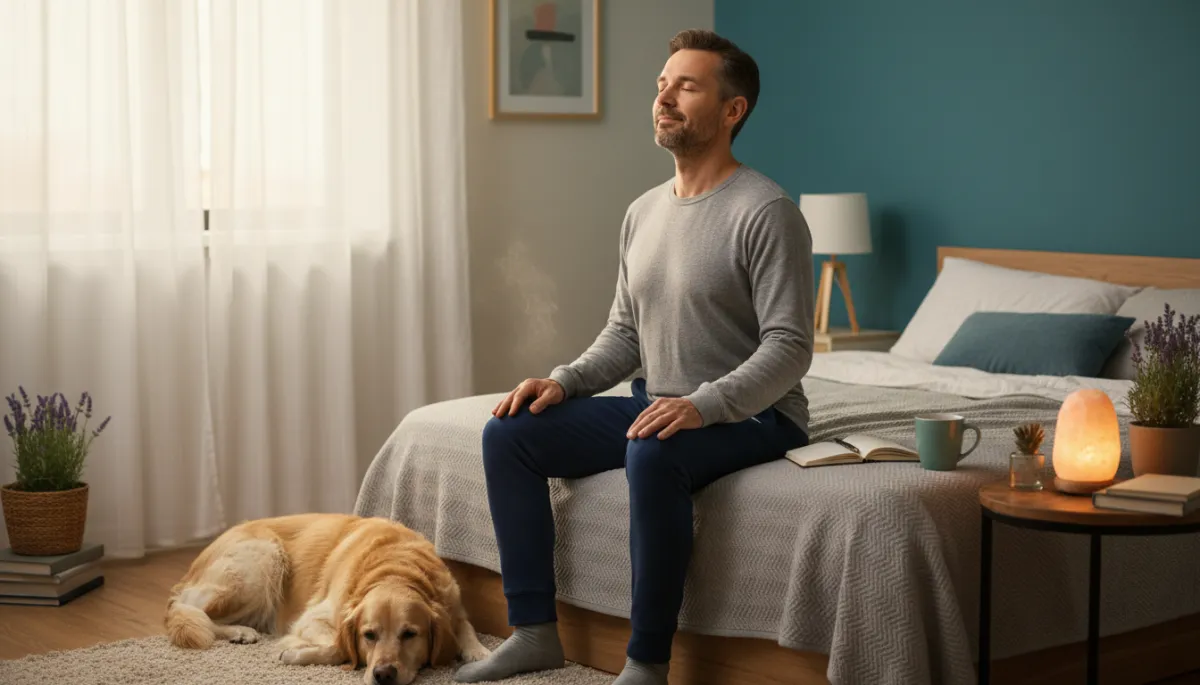
Improve Sleep for Veterans with PTSD and Anxiety
Veterans Sleep, PTSD Sleep Tips, Anxiety Relief, Sleep Improvement, Veteran Wellness, Mental Health Support
How Veterans Can Improve Sleep (Even With Anxiety or PTSD)
If you’re a Veteran who struggles to fall asleep, stay asleep, or wake up feeling rested, you are far from alone. Military life changes how your body and mind respond to stress, noise, and danger. When you come home, those habits don’t just switch off. The good news is that better sleep is possible, even if you live with anxiety, nightmares, or PTSD. This guide walks through practical, compassionate strategies to support Veterans Sleep, boost overall Veteran Wellness, and strengthen your Mental Health Support network—without judgment and at a pace that feels realistic for you.
Why Sleep Feels So Hard After Military Service
In uniform, you were trained to stay alert, react fast, and sleep whenever and wherever you could. That survival skill kept you and others safe. The challenge is that your nervous system may still act like it’s in a combat zone, even when you’re home in a quiet bedroom. This “always on” state makes restful Veterans Sleep tough, especially if you’re coping with PTSD, chronic pain, or anxiety about the future.
Many Veterans describe common patterns:
Lying awake replaying events from deployments or imagining worst-case scenarios
Waking from vivid nightmares or night sweats with a racing heart and tense muscles
Feeling jumpy at every small noise, as if something might go wrong at any second
None of this means you’re broken or weak. It means your body learned how to protect you, and now it needs help learning how to relax again. The PTSD Sleep Tips and Anxiety Relief strategies in this article are designed with that in mind—respecting what you’ve been through while helping you move toward real Sleep Improvement and Veteran Wellness.
📌 Key Takeaway: Trouble sleeping after service is common and understandable. It’s a nervous system issue, not a character flaw.
Step 1: Redefine What “Good Sleep” Means for You
Many Veterans hold themselves to unrealistic sleep standards: “I should fall asleep in five minutes and never wake up.” In reality, even healthy sleepers wake briefly during the night. Instead of chasing perfect sleep, aim for better sleep—more nights where you feel reasonably rested and less controlled by exhaustion or fear of going to bed.
A friendly first step in Sleep Improvement is to ask:
How many nights a week do I feel somewhat rested now?
What would a “better” week of sleep look like—realistically?
Maybe your first goal is going from three decent nights a week to four. Or from waking up five times a night to three. These small, realistic targets support both Veteran Wellness and Mental Health Support because they’re achievable and build confidence over time.
💡 Pro Tip: Keep a simple sleep log for two weeks. Just jot down bedtime, wake time, and how rested you feel (1–10). This gives you a baseline and shows progress you might otherwise miss.
Step 2: Build a Sleep-Friendly Routine That Respects Your Training
In the military, routines were non-negotiable. You can use that same strength to support Veterans Sleep now—but in a way that feels kind, not rigid. Think of a sleep routine as your personal “evening mission plan” for Anxiety Relief and calm.
Set a Consistent Sleep Window
Aim to go to bed and wake up at roughly the same time every day, even on weekends. Your brain loves predictability. Over time, a regular schedule helps your internal clock know when it’s safe to power down, making Sleep Improvement more natural and less forced.
Create a 30–45 Minute Wind-Down Ritual
Instead of going from full-speed activity straight into bed, give your body a gradual landing. Some Veteran-friendly ideas:
Take a warm shower or bath to relax tight muscles and signal “off duty” time
Read a physical book, not a screen, to ease your mind away from stressors
Do light stretching, yoga, or gentle mobility drills to release stored tension
Think of this as pre-mission prep for sleep: you’re setting conditions so your body can stand down. This supports both Anxiety Relief and long-term Veteran Wellness.
Make Your Bedroom Feel Safer and Calmer
For many Veterans, the bedroom can feel like a vulnerable place. You’re lying down, lights are off, and your guard is lowered. Small environmental changes can make a big difference in Veterans Sleep quality:
Use blackout curtains and a fan or white-noise machine to block unpredictable sounds and lights that might trigger hypervigilance
Keep the room cool (around 60–67°F) to help your body naturally wind down
Arrange the bed so you can see the door and windows if that makes you feel safer; your comfort matters more than design rules
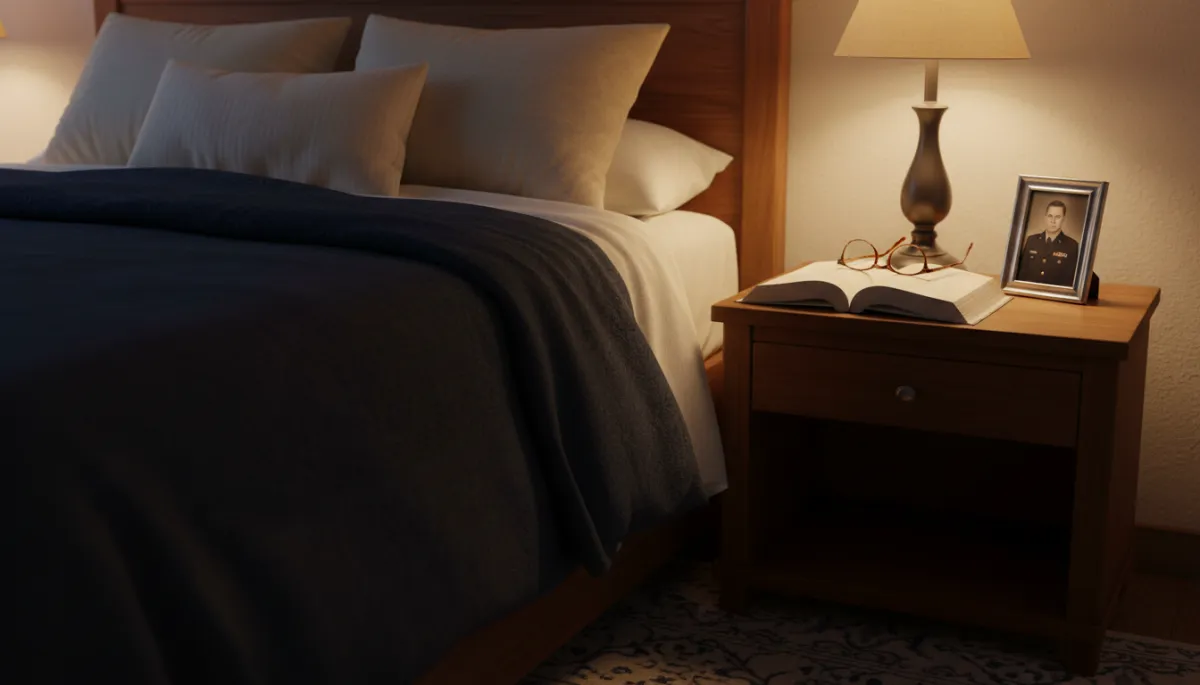
A calm, predictable bedroom environment can gently signal your body that it is safe to rest.
Step 3: PTSD Sleep Tips for Nightmares and Flashbacks
PTSD can turn nights into a battleground: intense dreams, sudden awakenings, and the feeling that you’re right back in the worst moments of your service. While no single strategy works for everyone, certain PTSD Sleep Tips can reduce the frequency and intensity of nightmares and help you return to sleep more quickly when they do happen.
Use Grounding Techniques When You Wake Up Distressed
When you wake from a nightmare, your brain may still feel like it’s in danger. Grounding techniques gently remind your nervous system that you’re here, now, and safe. You can try:
Naming five things you can see, four things you can touch, three things you can hear, two things you can smell, and one thing you can taste; this 5-4-3-2-1 method pulls your mind back to the present moment
Placing your feet firmly on the floor, feeling the support beneath you, and repeating quietly, “I’m home. I’m safe. This is just a memory.”
💡 Pro Tip: Practice grounding during the day so it feels more familiar and easier to use at night when emotions are high.
Consider Imagery Rehearsal Therapy (With Support)
Imagery Rehearsal Therapy (IRT) is a research-backed PTSD Sleep Tip used by many clinicians. With a therapist, you write down a recurring nightmare and then deliberately change the ending to something less threatening or more empowering. You mentally rehearse this new version while awake. Over time, some Veterans notice their nightmares become less intense or show up less often. This is a powerful example of how Mental Health Support can directly improve Veterans Sleep.
Adjust Your Evening Media Intake
Watching combat footage, violent shows, or high-stress news right before bed can prime your brain for more intense dreams. As part of your Sleep Improvement plan, experiment with a “media curfew” one to two hours before bedtime. Swap heavy content for lighter shows, music, or reading that doesn’t echo your trauma. This small choice can have a big impact on both Anxiety Relief and Veteran Wellness overnight.
Step 4: Anxiety Relief Tools You Can Use in Bed
Racing thoughts and tension are common barriers to Veterans Sleep. The goal isn’t to “shut off” your mind—that pressure usually backfires—but to give your brain something calmer to focus on. Here are simple Anxiety Relief tools you can use while lying in bed or during your wind-down routine.
Tactical Breathing (Box Breathing)
You may have learned controlled breathing techniques in service. Box breathing is a version often used by first responders and service members because it’s simple and effective. It calms the nervous system and can gently support Sleep Improvement:
Inhale through your nose for a slow count of four.
Hold your breath for a count of four.
Exhale gently through your mouth for a count of four.
Hold again for a count of four, then repeat.
Try this for two to five minutes. Many Veterans find it helpful before bed, after a nightmare, or anytime anxiety spikes. It’s a quiet, portable Mental Health Support tool you can use anywhere.
Progressive Muscle Relaxation (PMR)
Trauma and stress often live in the body as tight shoulders, clenched jaws, or a stiff back. Progressive Muscle Relaxation helps release that tension so your body can slip more easily into sleep. Here’s a simple version tailored for Veterans Sleep:
Start at your feet. Gently tense the muscles (curl your toes, flex your feet) for 5–7 seconds, then release completely and notice the difference.
Move up your body: calves, thighs, hips, stomach, chest, hands, arms, shoulders, neck, and face.
You’re teaching your body what “relaxed” feels like again—something that may have faded during high-alert service. This supports both Anxiety Relief and overall Veteran Wellness, not just at night but throughout your day.
Gentle Mental Distractions
If your mind won’t stop replaying worries, give it a quieter task. You might:
Slowly count backward from 500 by sevens, focusing on the numbers rather than your worries
Mentally walk through a familiar, safe place—your childhood backyard, a favorite fishing spot—describing details in your mind
These simple exercises act as soft, nonjudgmental Mental Health Support tools for your brain, gently steering it away from anxiety loops toward something neutral or comforting.
Step 5: Daytime Habits That Quiet Your Nights
What you do during the day shapes your Veterans Sleep at night. You don’t need a perfect routine—just a few steady habits that support your nervous system, your body, and your mind. Think of these as “upstream” Sleep Improvement strategies that pay off after dark.
Move Your Body (Without Overdoing It)
Regular movement is one of the most powerful tools for Anxiety Relief and better sleep. It doesn’t have to look like military PT. It can be:
A 20–30 minute walk outside, ideally earlier in the day for natural light exposure
Light strength training, yoga, or swimming at a pace that feels right for your body now
Moving your body helps burn off excess adrenaline, improves mood, and supports long-term Veteran Wellness. Just try to avoid intense workouts within two hours of bedtime, as they can be too activating for some people.
Watch Caffeine, Alcohol, and Nicotine
Many Veterans lean on coffee, energy drinks, or nicotine to push through fatigue, and some use alcohol to unwind. It’s understandable—but these substances can quietly sabotage Veterans Sleep and Mental Health Support efforts:
Caffeine can stay in your system for 6–10 hours. Try cutting it off by early afternoon and see if your sleep improves over a couple of weeks.
Alcohol may help you fall asleep but often causes lighter, more fragmented sleep and more intense dreams later in the night.
You don’t have to quit everything overnight. Even small shifts—like one fewer drink in the evening or switching an afternoon energy drink to water—can support Sleep Improvement over time.
Create Mini “Reset” Breaks During the Day
If your stress builds all day with no release, it often explodes at night when everything is quiet. Short reset breaks act like pressure valves. Once or twice a day, try:
Stepping outside for five minutes of fresh air and slow breathing
Doing a quick body scan—head to toe—just noticing where you’re tense and softening those areas slightly
These small moments of Mental Health Support can make it easier for your body to shift into rest mode when bedtime comes.
Step 6: When and How to Ask for Professional Help
You handled missions that most people can’t even imagine. Asking for help with sleep or PTSD isn’t weakness; it’s smart strategy. Sometimes, despite your best efforts, Veterans Sleep problems stay severe. That’s when professional Mental Health Support can make a big difference—and you still stay in charge of your care.
Signs It’s Time to Reach Out
You sleep less than 4–5 hours most nights and feel exhausted or irritable every day
Nightmares, flashbacks, or panic attacks are frequent and intense, making you dread bedtime
You rely heavily on alcohol, pills, or other substances to fall asleep or stay asleep
These are strong signals that extra support could help. Reaching out is an act of Veteran Wellness—protecting your future health, relationships, and quality of life.
Where Veterans Can Find Sleep and PTSD Support
VA Health Services: Many VA clinics offer sleep medicine, PTSD treatment, and counseling specifically tailored to Veterans Sleep and trauma-related challenges.
Vet Centers: Community-based counseling centers that provide confidential Mental Health Support, often staffed by people who understand military culture.
Community Therapists: Many therapists specialize in trauma, anxiety, or sleep disorders and welcome Veterans, whether or not they use VA services.
⚠️ Warning: If you ever have thoughts of harming yourself or feel you can’t stay safe, please reach out immediately to a crisis line, emergency services, or someone you trust. Your life and your story matter more than you may feel in that moment.
Step 7: Involve Your Support Network in Your Sleep Goals
Sleep challenges don’t just affect you; they can ripple through your relationships. The people who care about you often want to help but may not know how. Bringing them into your Veteran Wellness and Sleep Improvement plan can reduce tension and increase understanding on all sides.
Talk Openly About What Nights Are Like for You
When you’re ready, share with a partner, friend, or family member what you experience at night—without minimizing it. You might say:
“Sometimes when I wake up from a nightmare, my body reacts like I’m still in danger. I might be jumpy or distant. I’m working on it, and I’d like your support.”
This kind of honest conversation turns your loved ones into allies in your Mental Health Support system instead of leaving them guessing or feeling shut out.
Ask for Specific, Practical Help
Asking a partner to give you a few minutes after a nightmare before asking questions, so you can use grounding techniques first
Asking a friend to walk with you a couple of times a week to support both movement and connection
People often want to help; they just need to know what actually supports your Veterans Sleep and Veteran Wellness goals.
Putting It All Together: A Gentle Sample Night Routine for Veterans
To make these ideas more concrete, here’s an example of how a Veteran might combine PTSD Sleep Tips, Anxiety Relief tools, and Sleep Improvement habits into a single evening. Feel free to adapt it to your life, culture, and preferences.
Two hours before bed: Last caffeinated drink is long gone. You finish a light snack if you’re hungry and dim some lights around the house to tell your brain it’s evening.
One hour before bed: You turn off intense news or combat-related shows and switch to something light or calming. Maybe you read, listen to music, or talk with someone you trust.
Thirty minutes before bed: You take a warm shower, then spend 5–10 minutes on gentle stretching or Progressive Muscle Relaxation, releasing tension from your day.
In bed: You practice 5–10 rounds of box breathing, then use a mental distraction like counting backwards or imagining a peaceful place. If you wake from a nightmare, you sit up, plant your feet on the floor, and use grounding techniques until your body feels calmer, then return to bed.
Over time, routines like this become familiar signals to your brain: “The day is done. I’m home. It’s safe enough to rest.” That message, repeated night after night, is at the heart of long-term Veterans Sleep improvement and deeper Veteran Wellness.
Final Thoughts: Rest Is Part of Your Service to Yourself
You’ve carried heavy loads—physically, mentally, and emotionally. It makes sense that your body and mind don’t instantly relax on command. But you deserve rest just as much as anyone else, and improving your sleep is not selfish. It’s a powerful act of Veteran Wellness that can ripple into every part of your life: your mood, your patience with loved ones, your physical health, and your sense of hope about the future.
The PTSD Sleep Tips and Anxiety Relief strategies in this guide are not about perfection. They’re about small, steady steps: adjusting your bedroom to feel safer, practicing breathing or grounding, moving your body in gentle ways, and reaching out for Mental Health Support when you need it. Each step is a way of telling yourself, “My rest matters. My healing matters.”
If tonight isn’t great, that doesn’t erase your progress. Like any mission, improving Veterans Sleep takes time, patience, and backup. You don’t have to walk this path alone. Support is available, and your story is still being written—one night, one breath, and one small act of care at a time.