

Why Veterans Undersell Symptoms and Its Impact
Veterans, Mental Health, Post-traumatic Stress, Healthcare Access, Veteran Support
Why Most Veterans Undersell Their Symptoms (And Pay for It)
Veterans are famous for toughness—but that same toughness is quietly costing many of them their health, their benefits, and their peace of mind. This article pulls no punches about why underselling symptoms is so common, how it backfires, and what needs to change right now.
The Hidden Cost of Being “Fine”
Ask most Veterans how they’re doing and you’ll hear the same sharp, automatic answer: “I’m fine.” But for far too many, “fine” really means barely holding it together. Nightmares. Flashbacks. Crushing anxiety in crowded stores. Rage that comes out of nowhere. Chronic pain that never really lets up. And still, they say they’re fine. They undersell their symptoms to family, to doctors, to the Department of Veterans Affairs—and then they pay for it in silence and suffering that could have been reduced, treated, or compensated.
This isn’t a small issue. It’s a full-blown crisis in Veteran mental health and healthcare access. When Veterans minimize what they’re going through, they lose out on the very Veteran support they earned in uniform. Their claims get denied. Their treatment plans are watered down. Their friends and families underestimate how serious things really are. And the damage compounds, year after year, until something breaks—marriages, careers, bodies, or lives.
📌 Key Takeaway: Saying “it’s not that bad” might feel humble or tough in the moment, but for Veterans, it’s often the first step toward being under-treated, under-compensated, and dangerously overlooked.
Why Veterans Are Trained to Undersell Their Symptoms
Veterans don’t wake up one day and randomly decide to downplay post-traumatic stress, chronic pain, or depression. They were trained to do it, day after day, for years. The culture of the military is clear: mission first, feelings last. You keep moving. You don’t complain. You don’t make yourself the problem. You suck it up and drive on, no matter what your body or mind is screaming at you.
You learned that admitting pain could get you pulled from the mission.
You learned that mental health issues were “weakness” or “drama.”
You learned that other people always had it worse—so you shut up and pushed harder.
That mindset might keep a unit moving in combat, but in civilian life it becomes a trap. The same habits that once kept you alive can now keep you from getting help. You’re not lying when you undersell your symptoms—you’re doing what you were conditioned to do. But the system you’re in now plays by very different rules, and underselling can destroy your access to care and benefits.
💡 Pro Tip: The skills that made you a strong service member—discipline, endurance, self-control—are powerful. But when it comes to describing your symptoms, those same skills can sabotage you if you don’t consciously switch them off and tell the unfiltered truth.
The Mental Health Minefield: When Post-traumatic Stress Goes Unspoken
Let’s call this what it is: post-traumatic stress is everywhere in the Veteran community, and most of it is underreported, under-treated, or flat-out ignored. Many Veterans won’t even say the words “Post-traumatic Stress” or “PTSD” out loud. They call it “just being on edge,” “not sleeping great,” or “a little jumpy.” That language sounds harmless. The reality isn’t.
Here’s what “a little jumpy” often looks like in real life:
You scan every room for exits and threats, even at your kid’s birthday party.
You sleep in short, broken bursts, drenched in sweat from nightmares you don’t want to talk about.
You explode over small things—traffic, noise, a misplaced comment—and then feel ashamed and confused afterward.
You avoid crowds, fireworks, or even family gatherings because it’s easier to stay home than fight panic the entire time.
That’s not “a little jumpy.” That’s your nervous system still stuck in survival mode. And when you tell a provider, “I’m okay, just some bad dreams now and then,” you erase the intensity of what you’re actually living with. The result? You get a diagnosis that’s too mild, a disability rating that’s too low, and a treatment plan that doesn’t even scratch the surface.
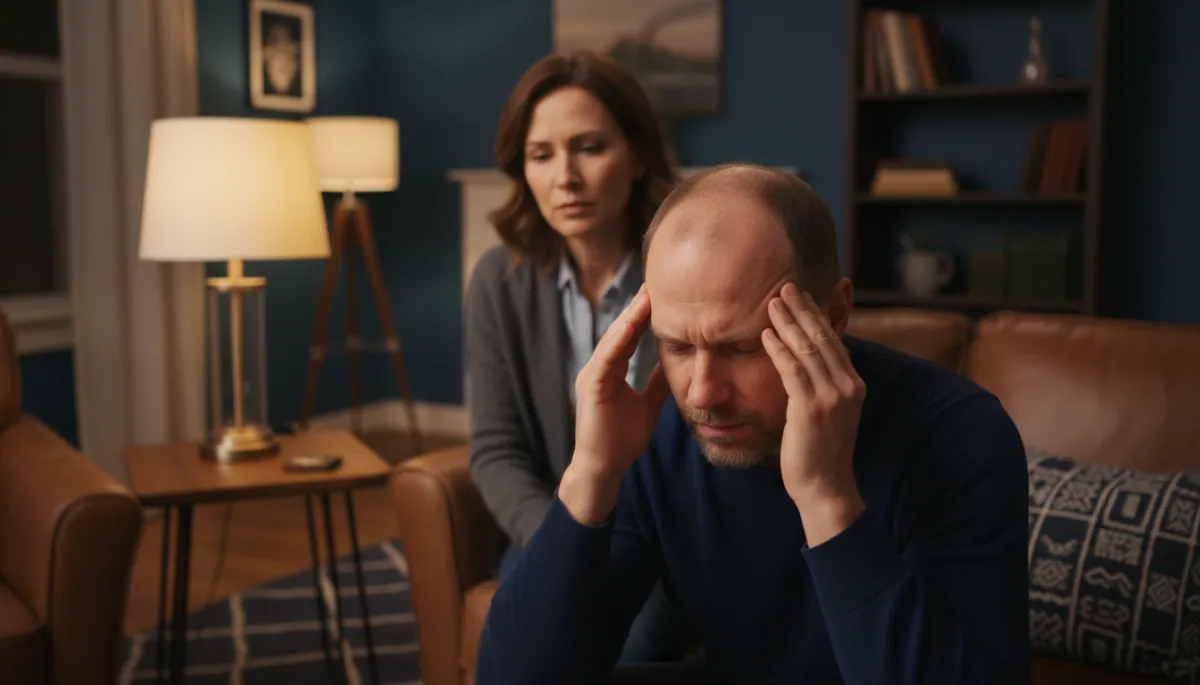
Unspoken symptoms don’t just hurt Veterans; they quietly strain every relationship around them.
The Dangerous Habit of Comparing Your Pain to Others
One of the boldest lies Veterans tell themselves is this: “Other people had it worse, so I don’t deserve help.” Maybe you weren’t in direct combat. Maybe you feel like your deployment was “easy” compared to someone else’s. Maybe you came home without visible injuries while your buddy lost a limb. So you decide your pain doesn’t count. You minimize your trauma. You frame your mental health issues as “nothing” because you think only the worst stories deserve support.
That mindset is brutal—and it’s wrong. Trauma is not a competition. Your brain and body don’t check a scoreboard before deciding whether you’ve had enough exposure to fear, stress, or loss to justify symptoms. If your sleep is wrecked, your temper is out of control, or you’re numb and disconnected from life, those are real problems. They deserve real care, regardless of what someone else went through. Comparing your pain doesn’t honor your brothers and sisters in arms; it just buries your own wounds deeper.
📌 Key Takeaway: Saying “they had it worse” might sound selfless, but it’s actually self-destructive. You can respect other Veterans’ sacrifices and still demand full, honest treatment for your own injuries—physical and mental.
How Underselling Symptoms Wrecks Your Healthcare Access
Here’s the hard truth: the healthcare and benefits systems serving Veterans run on documentation, not assumptions. If it isn’t written down clearly, it might as well not exist. When you gloss over your symptoms, you’re not just being “humble”—you’re actively erasing evidence that you need care and support. And that has direct, brutal consequences for your healthcare access.
If you say your pain is a “3 out of 10” when it’s really an 8, you’re telling the system you can function almost normally. Don’t be surprised when your treatment is minimal or your claim is denied.
If you admit to “occasional nightmares” but leave out the fact that you only sleep two hours at a time, no one will schedule the intensive mental health support you actually need.
If you claim you’re “managing okay” at work but ignore the write-ups, missed days, and near-firings, your provider won’t connect your service-related conditions to your real-world functioning.
The system isn’t good at reading between the lines. It doesn’t reward stoicism. It doesn’t assume your “fine” really means “barely coping.” It takes you at your word. If you undersell, you under-qualify. Period. And once that weak documentation is in your record, it can follow you for years, making every future claim and appointment an uphill battle.
The Financial Fallout: When Benefits Don’t Match Reality
Underselling symptoms doesn’t just cost you emotionally—it hits your wallet, your family’s stability, and your future. Disability ratings, compensation, and certain Veteran support programs are all tied directly to how severe your symptoms appear on paper. If you downplay your struggles, you’re effectively volunteering for a lower rating and less support than you actually deserve.
A Veteran with severe post-traumatic stress who calls it “mild anxiety” might end up with a 10% or 30% rating instead of 70% or higher—thousands of dollars a year left on the table.
A Veteran with chronic back pain who says, “It just bothers me sometimes” may be denied the mobility aids, therapy, or surgery they truly need, forcing them to push through work until their body breaks down completely.
A Veteran who minimizes panic attacks as “just stress” might miss out on job protections, accommodations, or programs designed to help them stay employed safely.
This isn’t about greed. It’s about survival. Those benefits are not charity—they are part of the contract you signed when you put on the uniform. You already paid for them with your body, your mind, and your time away from home. Underselling your symptoms is like ripping up your own paycheck out of misplaced pride.
💡 Pro Tip: When you’re talking about benefits or disability, imagine you’re describing your worst day, not your best. That’s the reality the system needs to see to understand how your conditions actually affect your life.
The Emotional Toll on Families and Relationships
Underselling your symptoms doesn’t just hurt you—it blindsides the people who care about you most. Spouses, partners, kids, and close friends often see the cracks you’re trying to hide. They watch you pace at night, flinch at sudden noises, snap over nothing, or withdraw into silence. But when you insist you’re “fine,” you leave them confused, worried, and shut out of the truth. They know something is wrong, but they can’t name it, can’t plan for it, and can’t fully support you through it.
Over time, this gap between what you say and what they see can turn into resentment and distance. Partners feel rejected. Kids feel like they’re walking on eggshells. Friends stop inviting you out because they don’t know which version of you they’ll get. The tragic part? Many of these relationships could be strengthened, not shattered, if you were brutally honest about what you’re experiencing and actively sought Veteran support and mental health care instead of pretending everything is under control.
Why Honesty About Symptoms Is a Form of Courage
Many Veterans believe that being honest about pain, fear, or trauma is weakness. That belief is not just outdated—it’s deadly. It’s time to flip the script. It takes more guts to say “I’m not okay” than it does to slap on a fake smile and keep crashing. You’ve already proved your physical courage in uniform. Now it’s about moral courage: the willingness to face your own reality without sugarcoating it.
Courage is telling a doctor, “I wake up terrified three nights a week, and I’m afraid to fall asleep.”
Courage is admitting, “I can’t be in crowds without feeling like I’m back in a combat zone.”
Courage is saying, “My temper scares me, and I need help before I hurt someone I love.”
These statements aren’t weakness. They are battle reports from the front lines of your own life. And just like in any mission, accurate intel is everything. If you feed your team—your doctors, therapists, advocates, and family—bad intel, they can’t support you effectively. Bold honesty is the only way to turn scattered symptoms into a clear plan of attack.
Practical Steps: How to Stop Underselling Your Symptoms Today
Changing a lifetime of “I’m fine” doesn’t happen overnight. But you can start shifting today with concrete steps that put you back in control of your mental health, your healthcare access, and your future as a Veteran. Here’s how to do it—boldly and on purpose.
1. Track Your Worst Days, Not Just Your Good Ones
For two to four weeks, keep a blunt, no-filter log of your symptoms. Write down:
How many hours you actually sleep—and how often you wake up in fear or panic.
Any flashbacks, intrusive memories, or moments where you felt like you were back in a traumatic situation.
Panic attacks, rage episodes, or times you shut down completely and couldn’t function.
Pain levels throughout the day and what activities you had to avoid or push through.
Bring this log to your appointments. It’s hard to undersell what’s written in black and white. It also gives providers a clear, detailed picture of your reality—something your quick “I’m doing okay” will never capture.
2. Describe Impact, Not Just Symptoms
Don’t just say, “I have nightmares.” Say, “I have nightmares three to four nights a week, and I’m so exhausted that I fall asleep at work and can’t focus on my kids.” Don’t just say, “My back hurts.” Say, “My back pain is so bad I can’t lift my own child, I miss shifts, and I’ve turned down jobs because I can’t stand all day.” Impact is what drives treatment decisions and disability ratings. If you leave it out, you’re handing the system an incomplete picture that will be used to judge your needs.
3. Bring a Trusted Witness
If you tend to minimize in front of doctors, bring someone who sees the real you—a spouse, partner, adult child, close friend, or fellow Veteran. Let them speak up when you start to soften the truth. They can say, “Actually, he wakes up screaming at least twice a week,” or “She hasn’t driven on the highway in months because of panic.” That outside perspective can cut through your instinct to protect your image and force the conversation back to reality.
4. Use Veteran Support Resources Aggressively
You are not supposed to navigate this maze alone. Veteran Service Officers, peer support groups, mental health hotlines, and nonprofit organizations exist for a reason. They understand the patterns of underselling symptoms and can help you prepare for appointments, claims, and appeals. Lean on them. Ask them to review how you’re describing your symptoms. Let them challenge you when you try to make everything sound smaller than it is. Bold support starts with bold asking.
5. Drop the “I Don’t Want to Be a Burden” Excuse
You didn’t call yourself a burden when you raised your right hand and signed up to serve. You saw yourself as part of a team, doing your part. That hasn’t changed. Being honest about your injuries—physical and mental—is part of your duty now. It allows your family, your providers, and your community to do their part. Hiding your pain doesn’t protect them; it isolates you and leaves them guessing. They can handle the truth. The real question is: can you handle finally telling it?
The Bottom Line: Your Service Was Bold—Your Healing Has to Be, Too
Veterans are some of the strongest people on the planet. But strength isn’t just about how much you can carry; it’s also about knowing when to set the load down and ask for help. Underselling your symptoms is not humility. It’s self-sabotage. It keeps you from the mental health care you need, the healthcare access you deserve, and the Veteran support you already earned through service and sacrifice.
If any part of this hits home—if you recognize yourself in the Veteran who says “I’m fine” while quietly falling apart—it’s time to do something radically brave: tell the full, unedited truth. To your doctor. To your claims officer. To your family. To yourself. Spell out the nightmares, the flashbacks, the rage, the numbness, the pain, the fear. Don’t round down. Don’t compare. Don’t apologize. Own your reality so you can finally change it.
You carried the weight of service. You survived what many people will never understand. Now you owe it to yourself to stop playing small with your own suffering. Be as bold in your healing as you were in your service. Because the moment you stop underselling your symptoms is the moment the system has to stop underserving you.
📌 Final Challenge: At your next appointment, refuse to say “fine.” Walk in with your symptom log, your worst days in mind, and a commitment to speak with the same courage you brought to every mission. You’ve already proven you’re brave. Now prove it where it matters most—by fighting for your own life.
When you’re ready to stop underselling your symptoms and start fighting for the benefits you’ve earned, visit www.warriorbenefits.com to get support tailored specifically for Veterans.